
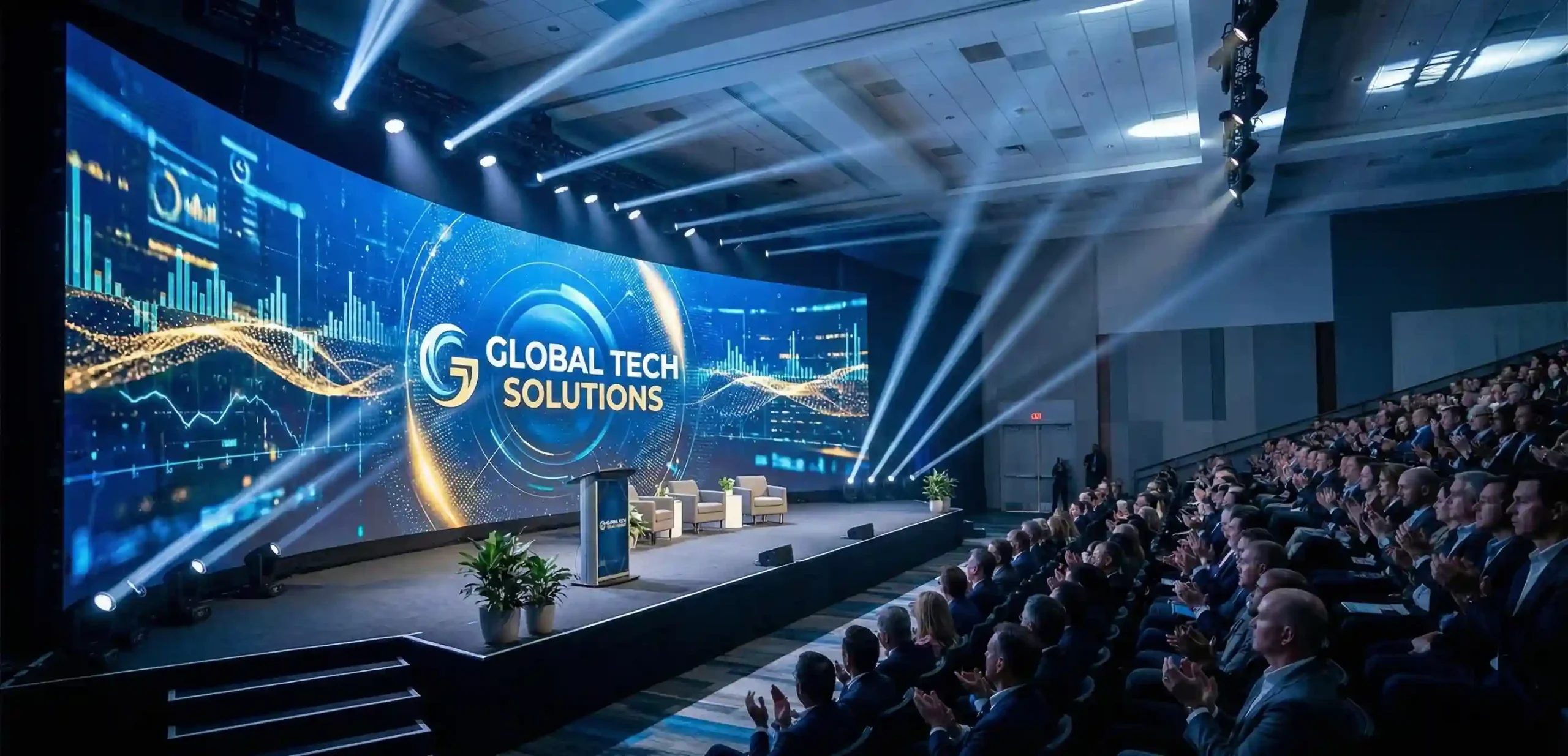
Corporate events have changed dramatically over the past few years. Attendees no longer accept basic projectors and muffled audio. They expect immersive experiences, seamless technology, and production quality that matches what they see at major conferences and branded events.
For event planners and corporate teams in Toronto, understanding the latest audiovisual trends is essential for creating events that engage audiences and deliver measurable results. Whether you are planning an annual general meeting, a product launch, a leadership summit, or a hybrid conference, the right AV technology can transform a forgettable gathering into a memorable experience.
At Future’s Past Events, we work with organizations across Toronto to deliver cutting-edge audiovisual production that keeps audiences engaged from start to finish. Here are the trends shaping corporate events in 2026 and how you can use them to elevate your next event.
LED Walls Are Replacing Traditional Screens
LED video walls have become the centerpiece of modern event design. Unlike traditional projection screens, LED walls offer unmatched brightness, clarity, and flexibility that work in any lighting condition.
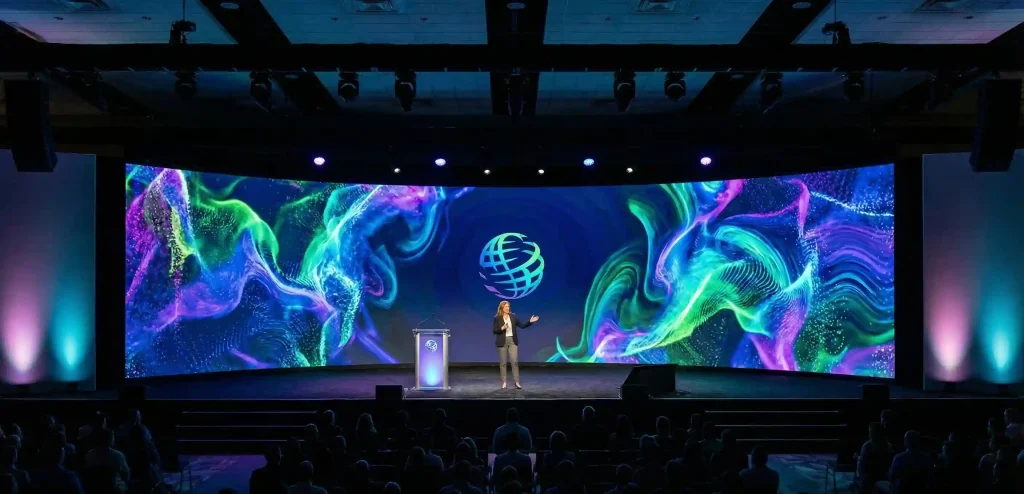
In 2026, expect to see LED walls used in increasingly creative ways. Curved displays wrap around stages to create immersive environments. Floor-to-ceiling installations transform entire rooms into branded experiences. Interactive LED surfaces respond to presenter movements and audience input.
Why LED Outperforms Projection
The visual impact of LED technology allows brands to tell their story in dynamic ways that traditional screens simply cannot match. For keynote presentations, award ceremonies, and product reveals, LED walls create the wow factor that attendees remember long after the event ends.
LED walls also solve practical problems that have plagued event planners for decades:
Consistent Image Quality
Projection setups struggle with ambient light. Conference rooms with windows, ballrooms with chandeliers, and outdoor venues all create challenges for projected images. LED walls eliminate these issues entirely. The self-illuminating panels deliver vibrant, high-contrast images regardless of room lighting. Your content looks exactly as intended whether the room is bright or dim.
Flexibility for Last-Minute Changes
Traditional backdrops and printed materials require weeks of lead time. LED walls accept digital content changes instantly. Need to update a speaker’s title? Add a last-minute sponsor logo? Change the entire visual theme between sessions? LED technology makes it possible without reprinting anything.
Scalability for Any Venue
Modular LED panels can be configured to fit virtually any space. A 10-foot display for an executive boardroom uses the same technology as a 40-foot stage backdrop for a conference keynote. This scalability means consistent visual quality across all your events regardless of venue size.
Creative Applications for LED Technology
Forward-thinking event designers are pushing LED technology beyond simple backdrop displays:
Immersive Stage Environments
Wrapping LED panels around three sides of a stage creates an immersive environment that places presenters inside the visual content. Imagine a CEO delivering quarterly results while surrounded by dynamic data visualizations, or a product manager unveiling new features while standing inside a virtual representation of the product.
Interactive Audience Experiences
Touch-enabled LED surfaces allow attendees to interact directly with displayed content. Information kiosks, wayfinding displays, and interactive product demonstrations all benefit from this technology. Some events use motion-sensing LED installations that respond to crowd movement, creating memorable shared experiences.
Seamless Virtual Backgrounds
For hybrid events and broadcasts, LED walls provide realistic virtual backgrounds without the artifacts and glitches of green screen technology. Presenters can stand in front of any environment, from corporate offices to exotic locations, with natural-looking results that enhance rather than distract from their message.
Hybrid Events Are Here to Stay
The debate about whether hybrid events would survive beyond the pandemic is over. They are now a permanent fixture in the corporate event landscape.
Research shows that 86 percent of B2B organizations reported positive ROI within seven months of hosting a hybrid event. The ability to reach broader audiences while maintaining the energy of in-person gatherings makes hybrid formats invaluable for conferences, training sessions, and company-wide meetings.
The Evolution from Afterthought to Intentional Design
However, the approach to hybrid events has matured significantly. Early hybrid setups often felt like an afterthought, with remote attendees watching a basic livestream while in-room participants enjoyed the real experience. That approach no longer works.
Successful hybrid events in 2026 treat virtual attendees as full participants rather than passive viewers. This fundamental shift requires rethinking every aspect of event design.
Dedicated Virtual Moderators
The most effective hybrid events assign dedicated hosts specifically for remote audiences. These moderators screen questions from virtual attendees, facilitate online discussions, and ensure remote participants feel included in the conversation. Without this dedicated attention, virtual attendees quickly disengage.
Camera Placement and Production Quality
Basic webcam footage no longer meets audience expectations. Professional multi-camera setups capture speakers from flattering angles, audience reactions, and detailed product demonstrations. Smooth transitions between camera angles keep virtual viewers engaged in ways that static single-camera feeds cannot.
Interactive Elements That Bridge Both Audiences
Real-time polls, Q&A sessions, and collaborative activities should include both in-person and virtual participants equally. When a speaker asks for audience input, responses from the room and from remote attendees should appear together on screen. This integration creates a unified experience rather than two separate events happening simultaneously.
Technology That Makes Hybrid Seamless
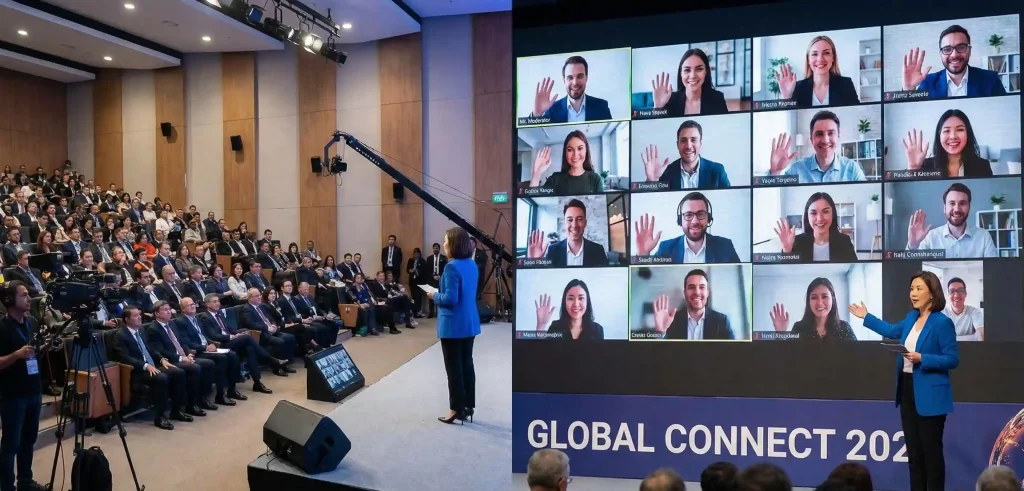
The technology supporting hybrid events has improved dramatically. A single platform can now manage livestreaming, synchronize virtual and in-person agendas, and enable both audiences to participate in the same polls and discussions in real time.
Unified Event Platforms
Modern event management platforms handle registration, agenda management, networking, and content delivery for both audience types through a single interface. Attendees select their participation method during registration, and the platform delivers appropriate experiences to each group automatically.
Low-Latency Streaming
Early hybrid events suffered from significant delays between live action and virtual delivery. Current streaming technology reduces latency to seconds rather than minutes, enabling genuine real-time interaction between in-person and remote participants.
On-Demand Content Libraries
Hybrid events extend their value through on-demand content access. Sessions recorded during live events become available for replay, allowing attendees in different time zones to engage with content at convenient times. This extended access increases ROI for both organizers and sponsors.
Audio Quality Has Become Non-Negotiable
While visual elements often get the most attention, audio quality is the foundation of any successful event. Poor sound ruins even the most visually stunning production.
For hybrid events especially, reliable audio is critical. High-quality microphones, noise-canceling technology, and professional mixing ensure that both in-room and remote participants stay engaged. Virtual attendees will tolerate imperfect video far longer than they will tolerate audio that cuts out, echoes, or sounds muffled.
The Technical Foundation of Great Event Audio
In 2026, professional audio solutions have become more sophisticated and more accessible. Understanding the components of great event audio helps planners make informed decisions.
Microphone Selection and Placement
Different event formats require different microphone approaches. Panel discussions benefit from individual lapel microphones for each participant. Keynote presentations work well with headset microphones that allow presenters to move freely. Town hall meetings may require handheld wireless microphones for audience questions. Ceiling-mounted microphone arrays capture clear audio throughout meeting rooms without visible equipment cluttering tables.
Room Acoustics and Treatment
Even the best microphones struggle in rooms with poor acoustics. Hard surfaces create echoes and reverberation that muddy speech clarity. Professional AV teams assess venue acoustics and deploy treatment solutions ranging from portable acoustic panels to strategic speaker placement that minimizes problematic reflections.
Audio for Hybrid and Broadcast
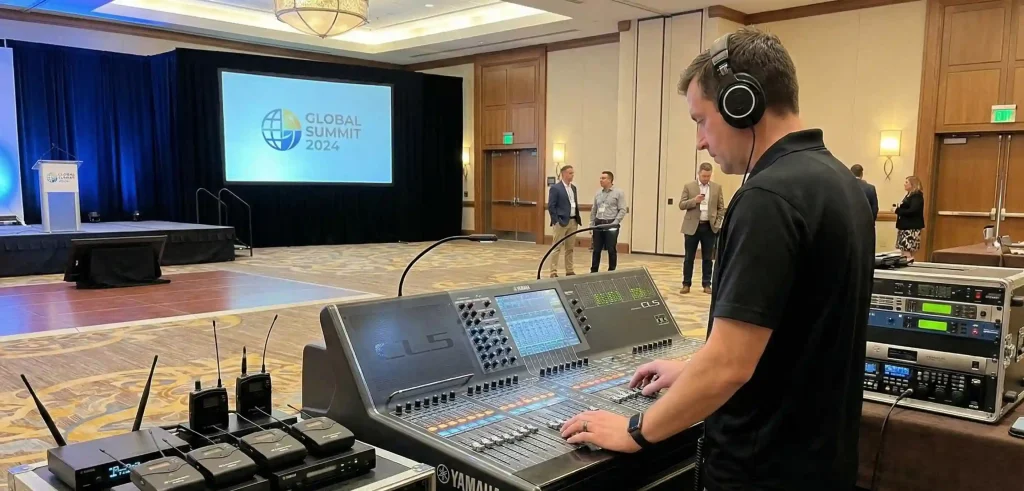
Hybrid events place additional demands on audio systems. The mix delivered to remote audiences often differs from what plays through in-room speakers.
Separate Broadcast Mixes
In-room audio includes ambient sound that helps live attendees feel connected to the environment. Virtual attendees need cleaner, more direct audio with less room ambiance. Professional hybrid productions create separate mixes optimized for each delivery method.
Backup and Redundancy
Audio failures during live broadcasts are unacceptable. Professional setups include redundant microphones, backup mixing consoles, and alternative signal paths that allow seamless switching if primary equipment fails. This redundancy protects against embarrassing technical difficulties during critical moments.
Integration with Streaming Platforms
Getting high-quality audio from the venue to virtual platforms requires proper signal routing and encoding. Professional AV teams ensure audio signals maintain quality through every step of the delivery chain, from microphone to remote attendee headphones.
AI-Powered Personalization Is Changing Attendee Experiences
Artificial intelligence is reshaping how events are designed and delivered. AI-driven tools now help organizers create personalized experiences that feel curated for each individual attendee.
Before the Event: Smarter Planning
AI tools assist event planners long before attendees arrive.
Predictive Attendance Modeling
AI analyzes historical data, registration patterns, and external factors to predict attendance more accurately. This helps planners right-size venues, catering orders, and staffing levels, reducing waste and controlling costs.
Content Recommendations
For events with multiple tracks or sessions, AI can recommend programming based on attendee interests indicated during registration. Personalized agenda suggestions help attendees navigate complex schedules and discover relevant sessions they might otherwise miss.
Networking Match Optimization
AI-powered networking tools analyze attendee profiles to suggest valuable connections. Rather than leaving networking to chance, these systems identify participants with complementary interests, goals, or expertise and facilitate introductions.
During the Event: Real-Time Enhancement
AI capabilities extend throughout the live event experience.
Dynamic Content Adjustment
Real-time sentiment analysis gauges audience reactions and engagement levels. Presenters and organizers can receive feedback indicating when audiences are highly engaged versus when attention is waning, allowing for on-the-fly adjustments to pacing and content.
Automated Transcription and Translation
AI-powered transcription services provide real-time captions that improve accessibility and comprehension. Automated translation extends this capability to multilingual audiences, breaking down language barriers that previously limited event reach.
Intelligent Q&A Management
For sessions with heavy audience participation, AI helps moderators manage question queues by grouping similar questions, identifying the most popular topics, and suggesting question order that maximizes relevance and engagement.
After the Event: Deeper Insights
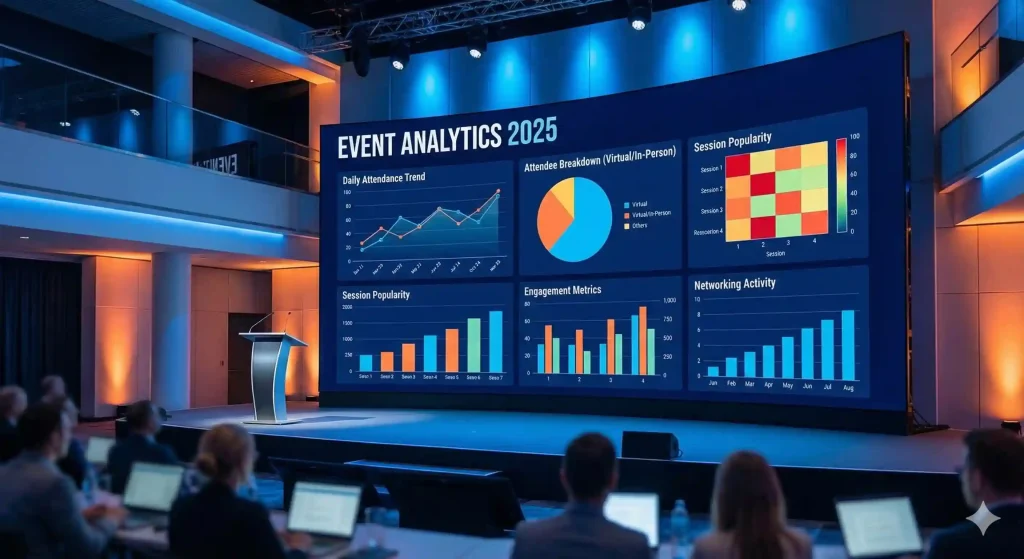
Post-event analysis powered by AI provides actionable intelligence for future planning.
Engagement Analytics
AI processes data from multiple sources, including session attendance, app interactions, poll responses, and networking activity, to build comprehensive pictures of attendee engagement. These insights reveal what worked and what needs improvement.
Content Performance Analysis
Which sessions generated the most engagement? Where did attendees spend their time? What topics sparked the most discussion? AI-powered analytics answer these questions with data rather than assumptions.
Sustainability Is Now a Core Expectation
Environmental responsibility has moved from nice-to-have to must-have for corporate events. Attendees, especially younger professionals, expect organizations to demonstrate sustainability commitments in their event planning.
Sustainable AV Choices
This trend manifests across every aspect of event production, including audiovisual technology.
Energy-Efficient Equipment
LED lighting consumes significantly less power than traditional stage lighting while producing less heat, reducing both energy costs and air conditioning demands. Modern audio amplifiers and video processors are designed for efficiency, delivering powerful performance with lower power consumption than previous generations.
Equipment Lifecycle Management
Responsible AV providers maintain and repair equipment to extend useful life rather than replacing functional gear unnecessarily. When equipment does reach end of life, proper recycling ensures materials are recovered rather than landfilled.
Hybrid Events and Carbon Reduction
Virtual participation options represent one of the most significant sustainability benefits of modern event technology.
Reduced Travel Emissions
Air travel is often the largest source of event-related carbon emissions. Enabling remote attendance allows organizations to include participants who would otherwise fly to events, significantly reducing the carbon footprint per attendee.
Extended Content Value
Recording and repurposing event content allows organizations to reach audiences who cannot attend live sessions. This extended reach multiplies the value of production investments while avoiding the emissions that would result from additional live events.
Demonstrating Commitment to Stakeholders
Beyond environmental benefits, sustainable event practices strengthen brand reputation. Corporate attendees increasingly expect vendors and partners to demonstrate environmental responsibility. Events that visibly prioritize sustainability reinforce organizational values and build trust with eco-conscious audiences.
Event planners in 2026 are selecting AV partners based partly on their sustainability practices. Vendors who can demonstrate eco-friendly equipment choices and waste reduction strategies have a competitive advantage.
Data-Driven Event Analytics Prove ROI
Corporate events represent significant investments, and stakeholders increasingly demand proof of return. Real-time data and post-event analytics have become essential tools for demonstrating event value.
Real-Time Visibility
Modern event technology platforms provide immediate insight into attendee behavior as events unfold.
Session Attendance Tracking
Badge scans, app check-ins, and room sensors reveal exactly how many attendees participated in each session. This data helps organizers identify popular topics and adjust room assignments in real time when sessions exceed capacity.
Engagement Metrics
Beyond simple headcounts, engagement metrics reveal how actively attendees participated. Poll response rates, question submissions, app interactions, and networking activity all indicate engagement levels that go deeper than physical presence.
Live Dashboards
Organizers can monitor event performance through dashboards that update continuously. When engagement drops in a particular session, staff can investigate and intervene. When networking areas become overcrowded, additional space can be opened.
Post-Event Analysis
Comprehensive analytics help justify budgets, identify improvement opportunities, and inform planning for future gatherings.
Comparative Performance
How did this year’s conference compare to last year’s? Which changes improved outcomes and which fell flat? Historical data enables meaningful comparisons that guide continuous improvement.
Sponsor Value Documentation
Sponsors want proof that their investment delivered results. Analytics documenting booth traffic, session attendance, and brand impressions provide concrete evidence of sponsorship value that supports renewal discussions.
Analytics for Hybrid Events
For live streaming and hybrid events, analytics reveal how virtual audiences engaged compared to in-person attendees.
Virtual Engagement Patterns
When did remote attendees join and leave sessions? How long did they stay engaged? Did they participate in interactive elements? Understanding virtual attendee behavior helps organizers optimize the remote experience.
Content Performance Across Channels
Some content resonates better with in-person audiences while other material performs well virtually. Analytics help identify these patterns so organizers can tailor content delivery to each audience type.
Flexible Formats Replace Rigid Agendas
Traditional conference formats with back-to-back presentations in a single ballroom are giving way to more flexible, modular approaches.
Why Flexibility Matters
Shorter attention spans and hybrid work patterns have increased demand for varied formats within single events.
Research consistently shows that attention declines significantly after 15-20 minutes of passive listening. Events designed around hour-long presentations fight against human cognitive limits. Shorter sessions with varied formats maintain engagement more effectively.
Diverse Learning Preferences
Attendees learn and engage differently. Some prefer lecture-style presentations. Others thrive in small group discussions. Still others want hands-on workshops or self-directed exploration. Flexible formats accommodate these varied preferences within single events.
Networking Expectations
Many attendees value networking opportunities as much as or more than formal content. Rigid schedules that pack sessions back-to-back leave little time for the conversations that attendees find most valuable. Flexible formats build in substantial networking time.
Format Options for Modern Events
Event designers are incorporating diverse formats to maintain engagement and accommodate varied preferences.
Micro-Sessions and Lightning Talks
Brief presentations of 10-15 minutes deliver focused insights without demanding extended attention. Multiple speakers can share diverse perspectives within time blocks that would traditionally feature single presenters.
Learning Pods and Roundtables
Small group formats encourage participation and discussion. Attendees engage more actively when they can contribute rather than simply listen. Facilitators guide conversations while participants share experiences and insights.
Exhibition and Exploration Time
Dedicated time for visiting exhibitors, exploring demonstrations, and engaging with interactive installations respects attendee autonomy. Rather than rushing between sessions, participants can engage deeply with content that interests them most.
AV Requirements for Flexible Formats
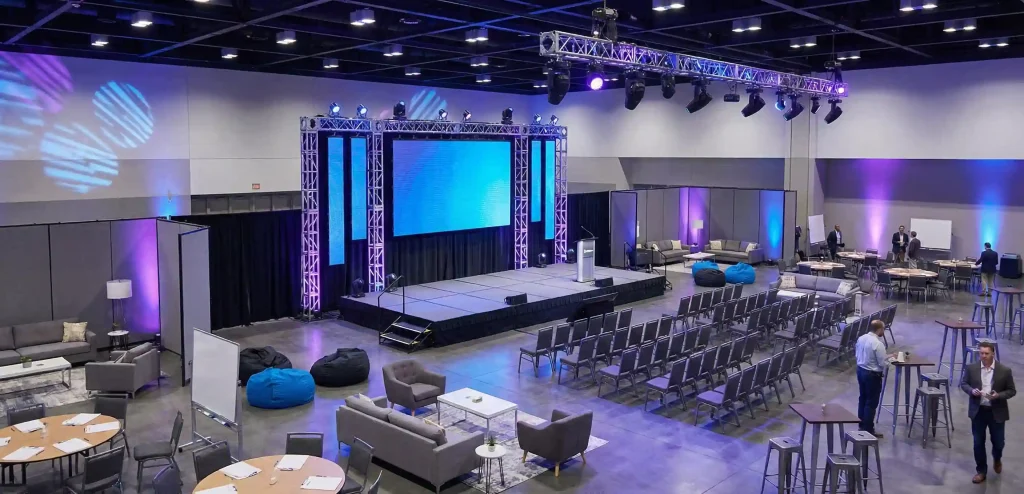
This shift requires AV setups that can adapt quickly.
Modular Equipment
Modular staging systems allow room configurations to change between sessions. Portable audio equipment supports breakout discussions without requiring separate technical crews for each space. Video displays can be repositioned to accommodate different audience arrangements.
Quick Changeover Capabilities
When formats change throughout the day, AV teams must reconfigure equipment quickly. Wireless systems, pre-programmed lighting scenes, and modular staging enable rapid transitions that keep events on schedule.
Support for Multiple Simultaneous Activities
Events with concurrent sessions, breakout discussions, and networking activities require AV support across multiple spaces simultaneously. Experienced production teams coordinate these parallel activities to ensure consistent quality throughout the venue.
Preparing Your 2026 Events for Success
The trends shaping corporate events in 2026 share a common theme: creating experiences that are smarter, more inclusive, and genuinely impactful. Technology enables these improvements, but success requires thoughtful planning and experienced production partners.
Planning Checklist for Event Success
Here is what event planners should consider as they prepare for upcoming events:
Start with Clear Objectives
Define what success looks like before selecting technology. A sales kickoff has different requirements than an executive retreat or an industry conference. AV choices should reinforce the experience you want attendees to have. Document specific, measurable goals that will guide every subsequent decision.
Plan for Hybrid from the Beginning
If your event includes any virtual component, design for both audiences from the start rather than adding livestreaming as an afterthought. This ensures remote participants receive an experience worth their time. Hybrid considerations should influence venue selection, agenda design, and budget allocation from the earliest planning stages.
Invest in Professional Audio
Do not cut corners on sound. Poor audio undermines everything else and damages your brand perception with audiences who struggle to hear presenters clearly. Budget for professional microphones, mixing equipment, and experienced audio engineers who can deliver broadcast-quality sound.
Build Flexibility into Your Budget
A contingency fund of 10 to 15 percent gives you room to adapt when requirements change or opportunities arise during planning. Technology needs often evolve as events take shape, and flexibility prevents costly compromises when new requirements emerge.
Choose Experienced Production Partners
The complexity of modern corporate events requires teams who understand both the technology and the creative elements that make events memorable. Look for partners with demonstrated experience in your event type and venue requirements.
Prioritize Rehearsals and Technical Checks
Complex AV setups require time for proper configuration and testing. Build rehearsal time into your schedule for presenters to practice with actual equipment and for technical teams to identify and resolve issues before audiences arrive.
Partner with Toronto’s Leading AV Production Team
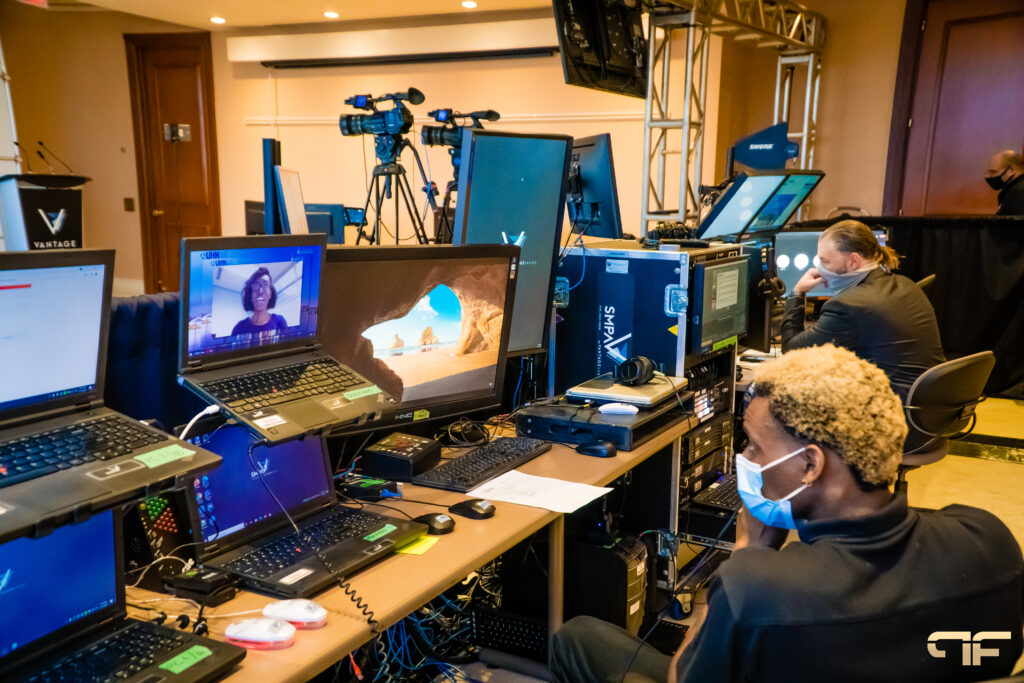
At Future’s Past Events, we bring over 25 years of experience to every corporate event we support. From intimate executive meetings to large-scale conferences, our team delivers the audiovisual production, hybrid event capabilities, and technical expertise that Toronto organizations trust.
We stay ahead of industry trends so our clients benefit from the latest technology without the learning curve. Our comprehensive services include:
Complete Production Services
Professional audio systems for crystal-clear sound in any venue. LED video walls and displays that create stunning visual impact. Stage lighting that sets the right mood and focuses attention. Full technical crews who manage every detail during your event.
Hybrid and Virtual Event Production
Live streaming with broadcast-quality production values. Virtual event platforms that engage remote audiences. Recording and post-production for on-demand content delivery. Technical support for presenters and remote participants.
Equipment Rental and Support
Access to professional-grade AV equipment for organizations that need gear without full production services. Flexible rental terms from single-day events to extended installations. Technical consultation to ensure you select the right equipment for your needs.
Whether you are organizing an annual general meeting, a product launch, a leadership summit, or a multi-day conference, we handle every technical detail so you can focus on your content and your audience.
Ready to discuss your next event? Contact Future’s Past Events at (416) 939-7525 or email us at [email protected] to schedule a consultation. Let’s create an event experience your attendees will remember.
Comments are closed.