
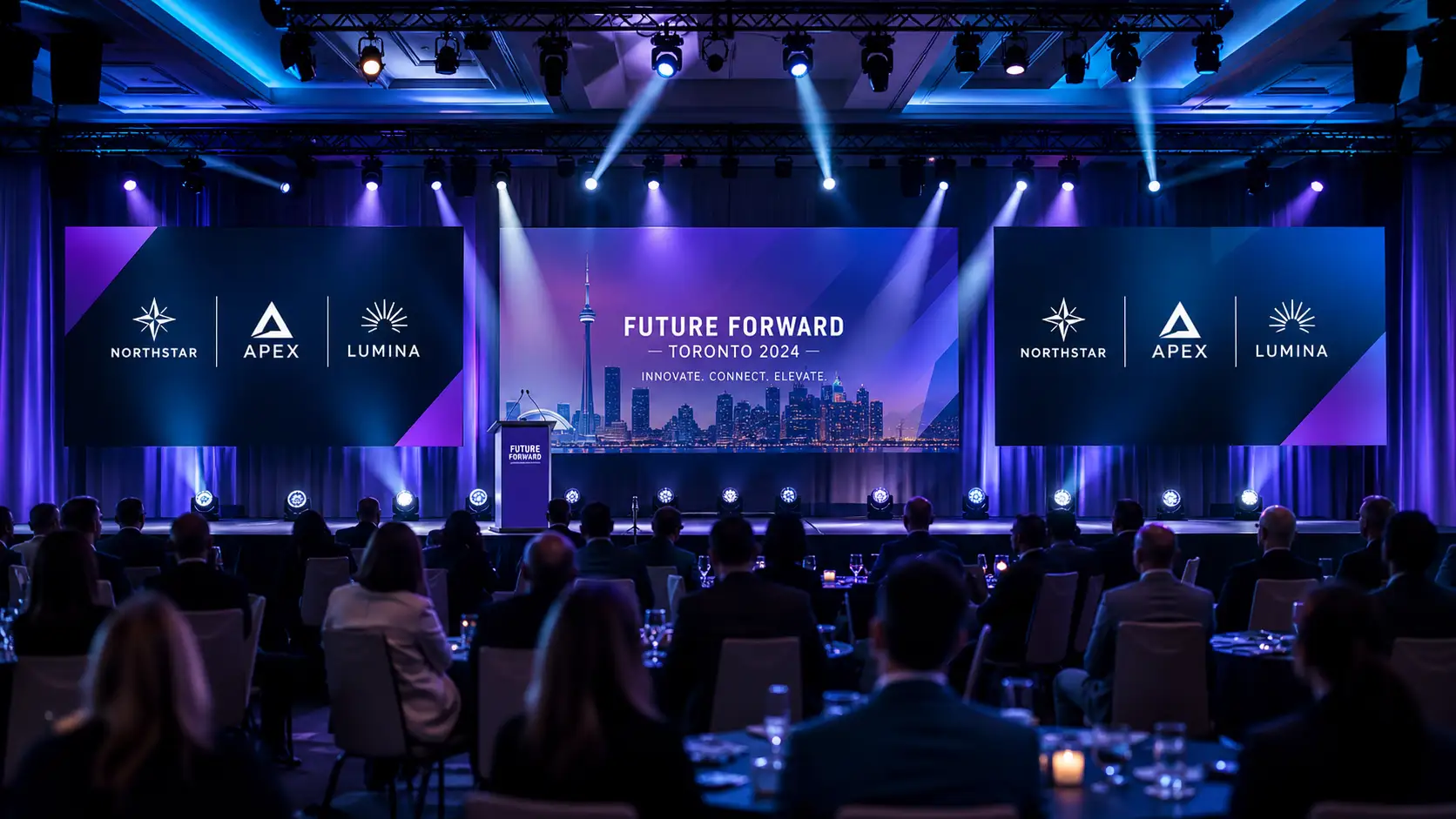
Event sponsorship packages work best when they do more than list logo placements, booth spaces, and generic exposure. A strong package helps sponsors understand why your audience matters, how their brand will show up, and what kind of value they can expect before, during, and after the event.
That matters because sponsors are not simply buying visibility. They are investing in access, trust, attention, and measurable outcomes. Whether you are planning a corporate conference, association meeting, gala, tradeshow, hybrid event, or branded networking experience, your sponsorship package should feel like a thoughtful marketing opportunity rather than a donation request.
The challenge is that many event sponsorship packages feel too vague. They use familiar terms like bronze, silver, and gold, but they do not explain what the sponsor actually receives. Others promise exposure without showing where that exposure happens, who sees it, or how it connects to the attendee experience.
A better approach is to build your sponsorship package around sponsor goals, audience value, production quality, and clear deliverables. When those pieces work together, sponsors can see the opportunity before they ever step into the room.
What Event Sponsorship Packages Should Really Do
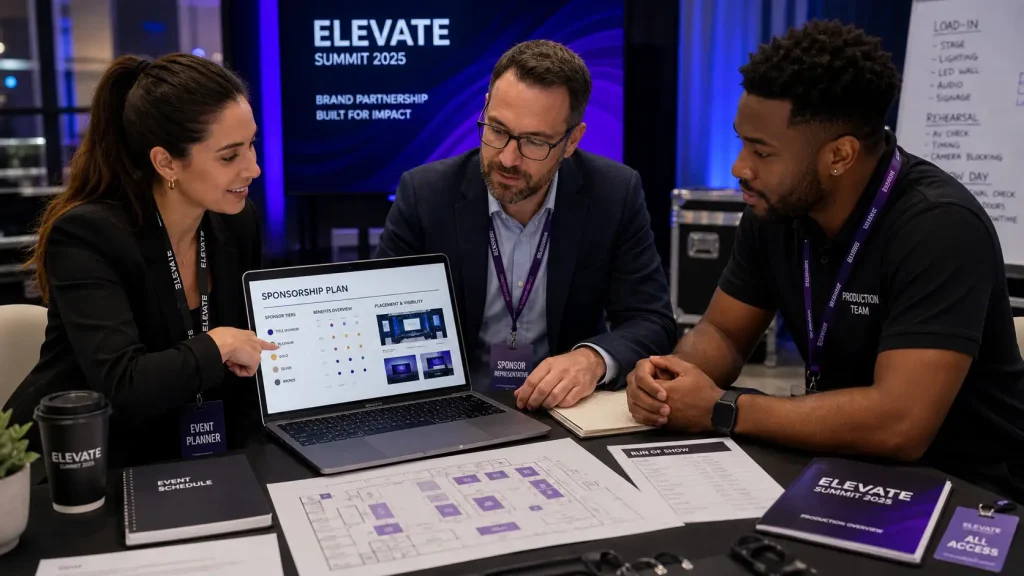
At their core, event sponsorship packages should help sponsors answer one simple question: “Why is this event worth our investment?”
The answer should not rely only on attendance numbers. A room of 300 highly relevant decision-makers may be more valuable than a room of 1,500 people with no clear connection to the sponsor’s market. That is why the best sponsorship packages explain the audience, the environment, the content, and the moments where the sponsor can show up meaningfully.
If you are building sponsorship opportunities for a corporate event, sponsors may care about executive visibility, thought leadership, networking access, and brand association. For a tradeshow, they may care more about booth traffic, product demos, lead generation, and prominent screen placement. For a hybrid event, digital visibility and online engagement become just as important as the in-room experience.
That is why sponsorship planning should start early. Sponsor benefits often affect stage design, signage, screen content, lighting, event flow, registration, livestream graphics, and post-event reporting. If sponsorship is added too late, the benefits can feel forced instead of integrated.
1. Start With Sponsor Goals, Not Just Event Assets
Many planners start by listing what they can sell: logo on screen, booth table, social post, speaking opportunity, lanyard branding, or program mention. Those assets matter, but they should not be the starting point.
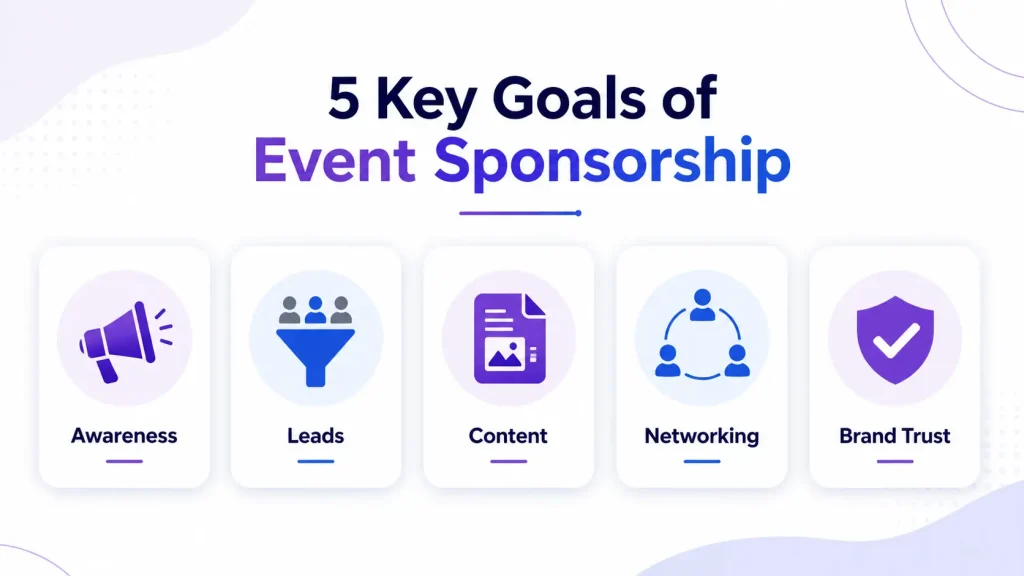
Instead, start with sponsor goals. A sponsor may want brand awareness, product education, qualified leads, community goodwill, recruitment visibility, executive access, or content they can reuse after the event. Each goal needs a different type of benefit.
For example, if a sponsor wants awareness, premium screen placement and branded walk-in visuals may be valuable. If they want leads, a sponsored demo area or QR-enabled content station may make more sense. If they want credibility, a moderated panel, keynote introduction, or sponsor-supported educational session could create stronger value.
This is where event sponsorship packages become more strategic. Rather than selling random placements, you are designing sponsor outcomes.
A useful question to ask is: “What would make this sponsor feel that the event helped them reach the right people in the right way?” Once you know that answer, your package becomes easier to build and easier to sell.
2. Define the Audience Clearly
Sponsors need to know who will be in the room. A simple attendance number is not enough. Strong event sponsorship packages explain audience quality in a way that helps sponsors evaluate fit.
Include details such as attendee roles, industries, seniority, geography, purchasing influence, professional interests, and expected engagement. For internal corporate events, the audience may include employees, executives, partners, franchisees, investors, or regional teams. For association events, the audience may include members, vendors, speakers, policymakers, and industry leaders.
If your event includes remote participants, describe that audience as well. Hybrid attendance can create additional sponsor value through livestream mentions, branded holding slides, lower-third graphics, digital sponsor pages, and post-event video clips.
Audience clarity also helps you avoid mismatched sponsorships. A sponsor whose offer does not align with the attendee base may struggle to see value, even if the event is well produced. A sponsor whose goals match the audience will be more likely to invest, activate properly, and renew.
3. Build Sponsorship Levels That Are Easy to Compare
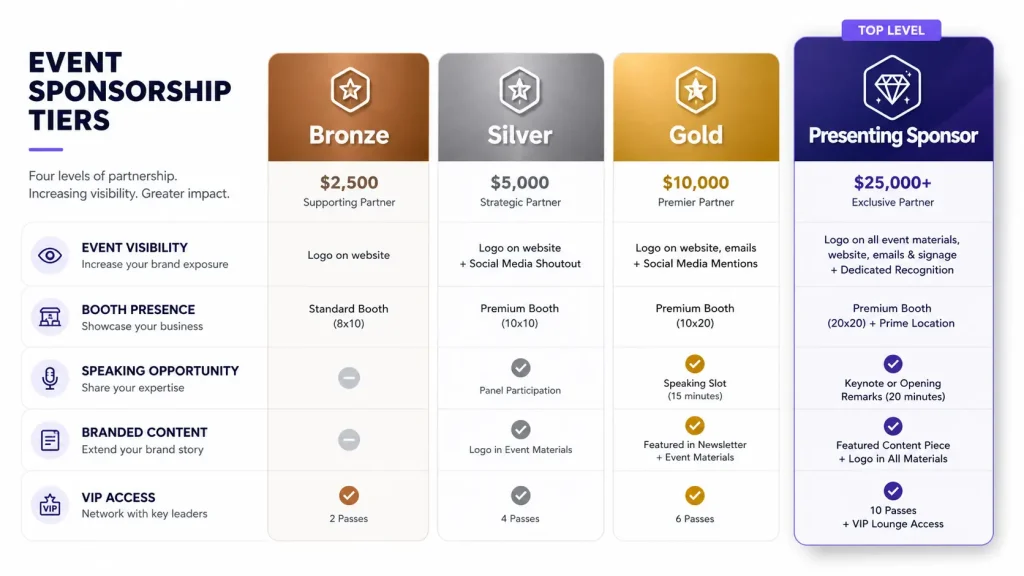
Sponsorship levels help potential sponsors understand their options quickly. Common structures include presenting sponsor, platinum, gold, silver, bronze, supporting sponsor, or category-exclusive sponsor.
The names matter less than the clarity. Each tier should show what changes as the investment increases. Higher levels may include better placement, more speaking access, stronger brand visibility, exclusivity, VIP access, more digital exposure, or a larger post-event content package.
Resources such as Eventbrite’s guide to sponsorship levels can be useful when thinking through tier structure, but your final package should always reflect your specific event, audience, and production format.
Here is a simple way to think about tier differences:
| Sponsorship Level | Best For | Example Benefits |
|---|---|---|
| Presenting Sponsor | Maximum visibility and association | Naming recognition, main stage mentions, premium screen branding, opening remarks, post-event report |
| Gold Sponsor | Strong brand presence and engagement | Session sponsorship, logo on event screens, booth or activation area, social promotion |
| Silver Sponsor | Targeted visibility | Break sponsorship, signage, digital listing, selected screen mentions |
| Bronze Sponsor | Entry-level support | Website listing, program mention, shared sponsor slide, basic attendee visibility |
The goal is not to overload every tier. The goal is to make each level distinct enough that sponsors can choose confidently.
4. Make Sponsor Benefits Specific
Generic sponsor benefits are easy to ignore. “Logo placement” sounds basic. “Logo displayed on main ballroom screens during walk-in, breaks, and closing rotation” sounds more specific and more valuable.
Specificity helps sponsors imagine the experience. It also prevents confusion later. If a sponsor expects their logo on the main stage screen but the organizer only meant a small website logo, disappointment is almost guaranteed.
Strong event sponsorship packages should define where, when, and how sponsor benefits appear. For example:
- Logo on registration confirmation emails
- Branded walk-in slides before the opening session
- Sponsor reel played during breaks
- Logo on lower-third graphics during livestream segments
- Sponsored coffee break signage near high-traffic areas
- Branded lounge, demo station, or networking area
- Recognition from the stage by the host or MC
- Post-event thank-you mention in recap communications
The more detailed your benefits are, the easier it becomes for sponsors to understand value. It also makes execution smoother for your event team, creative team, venue, and audio/visual production partner.
5. Use Screens, Lighting, and Staging to Make Sponsor Visibility Feel Premium
Sponsor visibility should feel polished, not pasted on. A sponsor logo thrown onto a crowded slide may technically meet the requirement, but it rarely creates a premium impression.
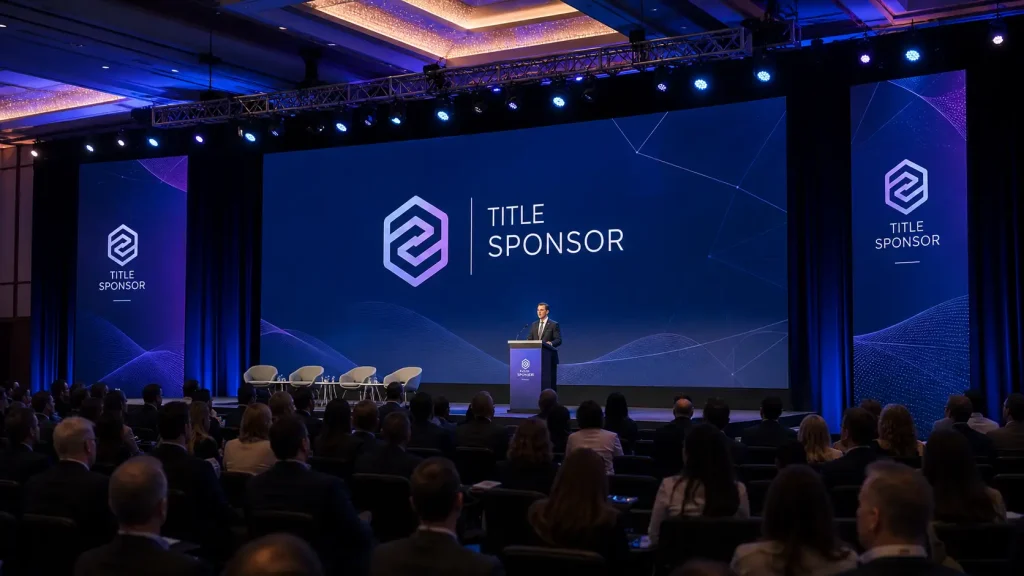
Production design can turn sponsor recognition into a better experience. Large screens, LED walls, projection, lighting cues, stage backdrops, branded scenic elements, and clean graphics can make sponsors feel integrated into the event environment.
For example, a presenting sponsor might receive a branded opening visual on the main screen as guests enter the room. A session sponsor might be recognized with a tasteful title slide, lighting transition, and verbal mention before the speaker begins. A tradeshow sponsor might receive rotating screen content near a high-traffic aisle or lounge.
This is where event production and sponsorship strategy overlap. If the room includes staging, lighting, digital screens, branded graphics, and decor, sponsorship can become part of the visual language of the event.
That does not mean every surface should become an ad. In fact, the best sponsor visibility is often selective and intentional. Sponsors want to be seen, but attendees should still feel like they are attending a thoughtful event, not walking through a wall of logos.
6. Include Digital and Hybrid Sponsorship Opportunities
Modern event sponsorship packages should not stop at the physical room. Even in-person events often include digital touchpoints before and after show day.
Digital benefits may include email recognition, registration page placement, event app visibility, social content, digital sponsor pages, downloadable resources, livestream graphics, sponsored polls, or post-event video clips.
Hybrid events create even more opportunities. A sponsor can appear on holding slides before the stream begins, in lower-third graphics, on branded transition screens, or in a dedicated online networking segment. A sponsor might also support a virtual Q&A, remote audience lounge, or replay library.
Industry resources such as EventMobi’s sponsorship package guide also point to the importance of designing sponsor value around both live and digital engagement. That approach is especially useful when your audience is split between in-room attendees and remote participants.
If your event includes streaming, make sure sponsor visibility is coordinated with your technical plan. Sponsor graphics should be properly formatted, tested, and added to the event run of show. That way, digital sponsor moments happen cleanly instead of becoming last-minute production requests.
7. Add Sponsor Activation Ideas, Not Just Branding
Branding is visibility. Activation is interaction. The strongest sponsorship opportunities often include both.
A sponsor activation gives attendees a reason to engage. That might be a product demo, photo moment, branded lounge, expert consultation desk, charging station, coffee bar, interactive survey, giveaway, live poll, or educational mini-session.
The best activation ideas feel useful to attendees. A sponsor should not interrupt the event experience. They should improve it.
For example, a technology sponsor at a conference could support a charging lounge with branded screens and product demos. A wellness sponsor could host a quiet reset area during a busy corporate event. A financial sponsor could support an expert Q&A station at an association meeting. A sponsor at a tradeshow could offer a live product demonstration supported by lighting, sound, and screen content.
When activation is done well, attendees remember the sponsor because the interaction helped them. That is much stronger than passive logo exposure alone.
8. Explain How Sponsor Value Will Be Measured
Sponsors are under pressure to justify spending. Your sponsorship package should show that you understand this.
You may not be able to promise exact sales or leads, but you can define what will be tracked. Depending on the event, that may include attendance, session participation, booth traffic, QR scans, content downloads, livestream views, social engagement, email clicks, survey responses, or post-event video performance.
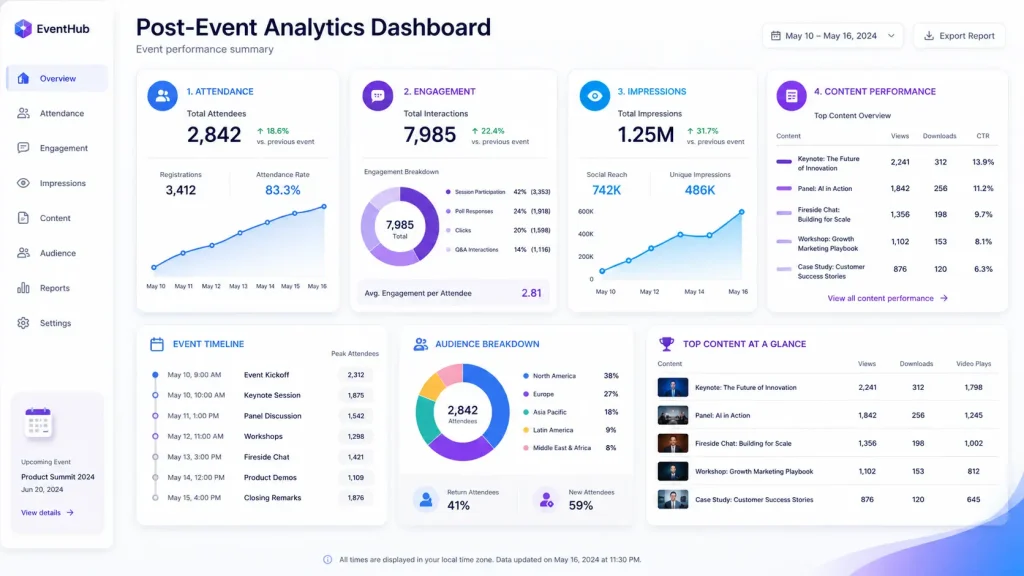
Even a simple post-event sponsor report can make your event sponsorship packages feel more professional. The report might include photos of sponsor visibility, attendee numbers, engagement data, screenshots of digital placements, social metrics, and a summary of delivered benefits.
A common question is: “Do smaller events still need sponsor reporting?”
Yes, but the report can be simple. For a smaller corporate event or gala, a concise recap with photos, attendance numbers, sponsor mentions, and qualitative feedback may be enough. The important part is showing that the sponsor’s investment was respected and delivered.
This also helps with renewals. If a sponsor can clearly see what they received, the next conversation becomes easier. Instead of starting from zero, you can discuss how to improve the next sponsorship.
9. Keep the Package Flexible Without Making It Confusing
Clear tiers are helpful, but not every sponsor will fit perfectly into a preset level. Some sponsors may care about speaking opportunities. Others may only want digital visibility. Others may want category exclusivity, hospitality access, or a branded experience.
That is why it can be useful to include optional add-ons. These might include sponsored lounges, VIP receptions, branded video content, extra screen time, sponsored breaks, custom signage, product demos, or post-event content packages.
The key is to keep flexibility controlled. If every sponsor receives a fully custom package, your team may struggle to manage deliverables. If every package is too rigid, you may miss valuable opportunities.
A balanced structure might include three or four core sponsorship tiers plus a short menu of premium add-ons. This gives sponsors choice while keeping planning manageable.
Common Mistakes to Avoid When Creating Event Sponsorship Packages
Even well-intentioned sponsorship plans can fall flat if the offer feels unclear or generic. Here are some of the most common mistakes.
Offering too many benefits without a clear hierarchy
More is not always better. A package with 40 small benefits can feel overwhelming. Sponsors need to understand the most valuable parts quickly.
Overpromising visibility
If every sponsor is promised premium placement, no one truly has premium placement. Be clear about exclusivity, screen time, logo size, signage locations, and speaking roles.
Ignoring the attendee experience
Sponsor visibility should never make the event feel cluttered or disruptive. Attendees should experience sponsorship as useful, relevant, or smoothly integrated.
Forgetting production requirements
Some sponsor benefits require AV support, screen content, lighting, space planning, printing, rigging, power, internet, or rehearsal time. Add these requirements to the planning process early.
Failing to collect assets on time
Logos, videos, slides, sponsor descriptions, URLs, and booth requirements should have clear deadlines. Late assets create stress and can weaken sponsor delivery.
How to Make Sponsorship Feel Valuable Before Show Day
One of the best ways to improve event sponsorship packages is to create value before the event begins. Sponsors should not have to wait until show day to receive exposure.
Pre-event value can include announcement posts, email recognition, registration page placement, speaker promotion, sponsor spotlights, digital ads, or short sponsor interviews. These touchpoints warm up the audience and make the sponsor feel more connected to the event.
Pre-event promotion also helps attendees understand why a sponsor is involved. Instead of seeing a logo for the first time on show day, they already recognize the brand and its role in the event.
For conferences, AGMs, galas, and leadership meetings, this can be especially useful. Sponsors often want to be associated with the event’s theme, not just the event space. A pre-event content plan gives them that connection.
How to Keep Sponsor Moments Smooth on Show Day
Show day is where planning becomes visible. Sponsor benefits should be included in the production timeline, not handled separately.
If a sponsor video plays before a keynote, it belongs in the run of show. If a sponsor logo appears on the main screen during breaks, it should be tested with the screen format. If a sponsor receives a stage mention, the host or MC should have the exact wording in advance.
This is especially important for events with multiple speakers, livestreaming, remote presenters, or timed sessions. The more complex the event, the more important it is to coordinate sponsorship with production.
For hybrid events, review sponsor graphics alongside your technical requirements. Internet stability, streaming layouts, audio cues, and screen sharing can all affect sponsor delivery. If you are planning a streamed component, it may also help to review related planning considerations such as event bandwidth requirements and broader AV technology trends.
What Should an Event Sponsorship Package Include?
A practical event sponsor package should include enough detail for a sponsor to make a confident decision. At minimum, it should explain the event, audience, sponsorship levels, benefits, pricing, deadlines, deliverables, and reporting plan.
It should also include contact information and next steps. Sponsors should know exactly who to speak with, how to reserve a package, when assets are due, and what happens after they commit.
For larger events, you may also want to include floor plans, sample screen mockups, audience data, past event photos, testimonials, and examples of sponsor visibility. These details make the opportunity feel more real.
Think of the package as a sales tool and an execution tool. It should attract sponsors, but it should also help your internal team deliver what was promised.
Turning Better Sponsorship Planning Into Better Events
Strong event sponsorship packages are not built by filling in a template and hoping sponsors respond. They are built by understanding your audience, aligning benefits with sponsor goals, and designing sponsor visibility into the event experience from the beginning.
When the strategy is clear, sponsorship feels natural. Sponsors receive better value. Attendees experience a more polished event. Organizers gain stronger partnerships and more reliable revenue opportunities.
The production side matters too. Screens, sound, lighting, staging, livestream graphics, signage, room flow, and timing all affect how sponsors are seen and remembered. A great sponsorship idea can lose impact if it is not executed cleanly in the room.
That is where Future’s Past Events can support the bigger picture. For organizations planning corporate events, conferences, galas, hybrid programs, tradeshows, and branded experiences in Toronto and the GTA, the team brings together the technical and creative pieces that help sponsor moments feel intentional. From corporate event production and hybrid event support to audio visual services, staging, lighting, decor, and tradeshow production, every detail can help turn sponsor promises into a stronger live experience.
If you are planning an event with sponsor obligations, brand visibility, stage moments, digital screens, livestream elements, or custom activations, it is worth bringing production conversations into the process early. To discuss how your event environment can support stronger sponsor value, contact Future’s Past Events and start planning with the full experience in mind.
Comments are closed.