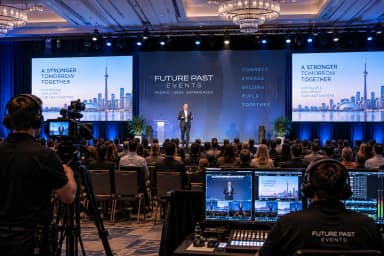
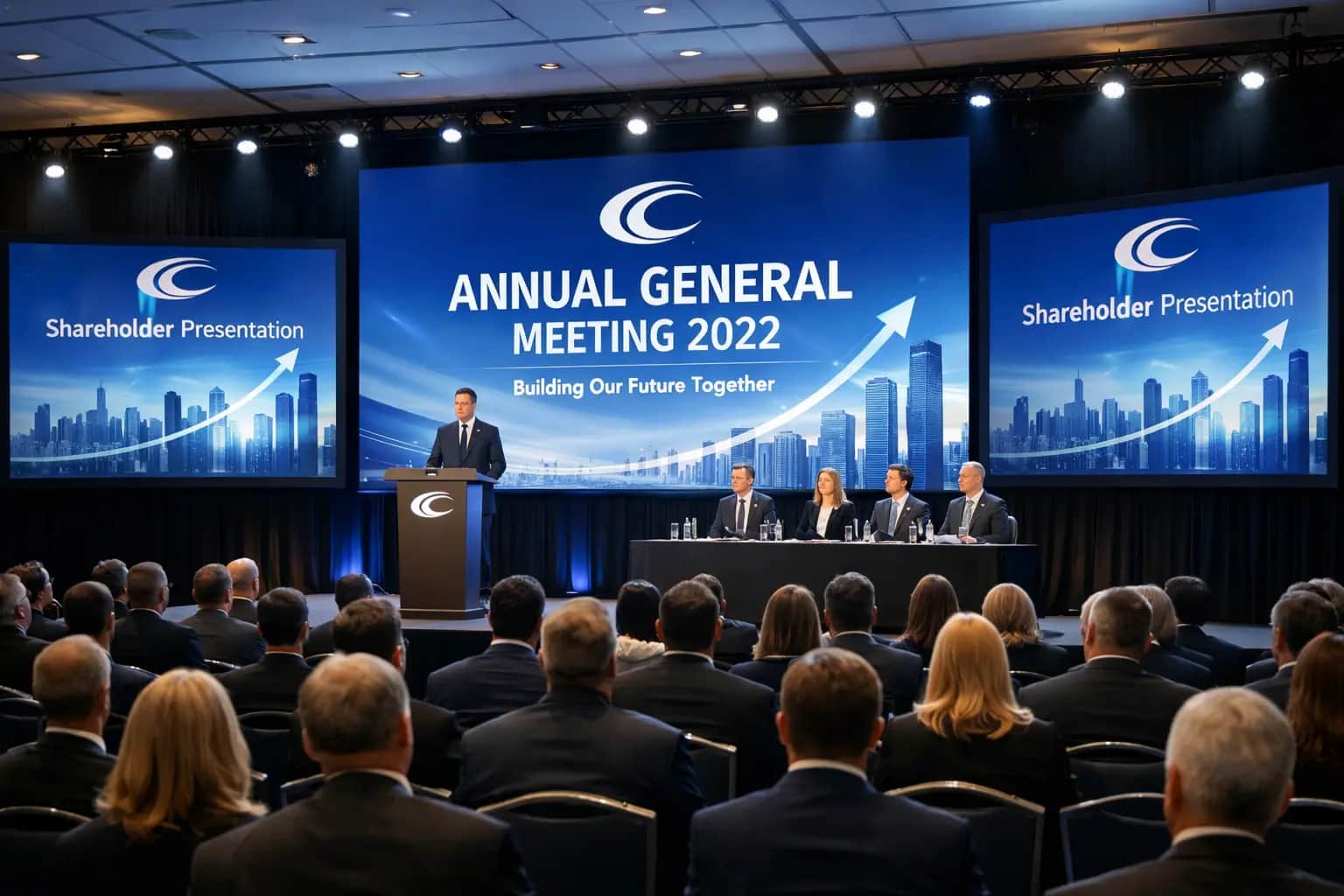
AGM event checklist planning starts much earlier than most organizations expect. A successful annual general meeting is not just about booking a room, sharing reports, and moving through a vote. It is about making sure governance, communication, timing, technology, and attendee experience all work together without friction.
A strong AGM event checklist helps teams stay organized while reducing avoidable stress on show day. Whether your annual general meeting is in-person, hybrid, or fully virtual, the same principle applies: the more structured the preparation, the smoother the meeting feels to shareholders, board members, presenters, and guests.
For many companies, AGM planning also overlaps with the same operational demands found in larger corporate event production work. You still need the right room setup, clear audio, reliable visuals, controlled timing, and a production plan that keeps important moments moving in the right order.
This guide breaks down a practical AGM event checklist you can use to prepare for annual meetings, shareholder meetings, and other board-facing corporate events without letting critical details slip through the cracks.
Why an AGM Event Checklist Matters More Than Most Teams Expect
An annual general meeting may look simple from the audience side. There is usually a podium, a few reports, a vote, a question period, and a formal close. Behind the scenes, though, an AGM event checklist has to cover much more than that.
You may need to coordinate registration, board arrival, executive timing, presentation playback, microphones for shareholder questions, webcast access, voting flow, accessibility, legal documentation, and post-meeting recording. Even one weak point can disrupt the confidence of the meeting.
This is also why AGM meetings benefit from the same production mindset used in broader event production services. A meeting that feels calm and well-managed usually depends on careful preparation, not luck.
Before you go too far into logistics, it is also wise to confirm meeting requirements with your legal counsel or corporate secretary based on your governing documents, the Canada Business Corporations Act where applicable, and Corporations Canada guidance on shareholder meetings and electronic participation.
A Simple AGM Planning Timeline
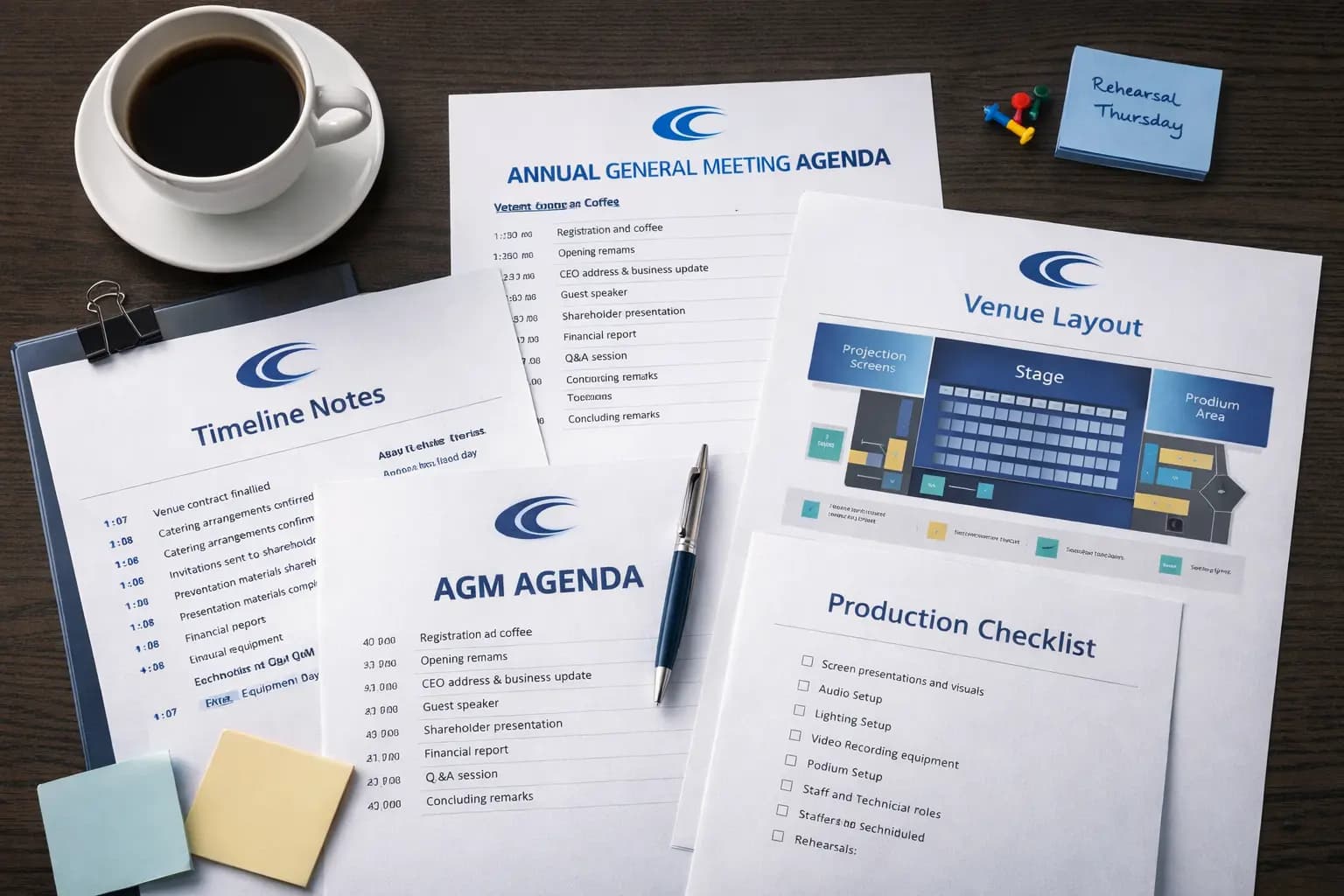
A useful AGM event checklist should include timing, not just tasks. This keeps the team focused on what needs to be finalized first and what can wait.
| Timing | What to lock in |
|---|---|
| 8–10 weeks out | Date, meeting format, governance review, venue shortlist, high-level production scope |
| 6–8 weeks out | Agenda draft, presenter list, registration process, AV needs, webcast or hybrid requirements |
| 3–4 weeks out | Presentation deck development, voting workflow, signage, room layout, supplier coordination |
| 1–2 weeks out | Run of show, rehearsals, backups, technical testing, final attendee communication |
| Show day | Registration, cue execution, audio checks, timing control, question management, recording, wrap-up |
AGM Event Checklist: 12 Essential Steps
1. Confirm governance requirements before you plan the room
The first item on any AGM event checklist should be governance, not staging. Before you decide how the event will look, confirm what the meeting must legally and procedurally accomplish.
That includes the notice process, required documents, resolutions, quorum expectations, voting method, shareholder question procedures, and whether remote participation is allowed. The operational plan should support these requirements, not compete with them.
This is also the point where many teams decide whether the meeting will be in-person, hybrid, or virtual. If remote attendance is part of the plan, your AGM event checklist should expand immediately to cover streaming, remote access, testing, and support for virtual participants.
2. Define the business outcome of the meeting
Not every AGM has the same tone or objective. Some are straightforward governance sessions. Others are more visible public-facing moments tied to performance, leadership confidence, investor messaging, or a major strategic transition.
A practical AGM event checklist should identify the real purpose behind the meeting. Is the goal simply to complete formal annual business efficiently? Is it to reinforce confidence among shareholders? Is it to support a leadership message? Is it to create a polished investor-facing experience?
When the objective is clear, decisions around staging, visuals, speaker support, room layout, and timing become much easier.
3. Build the right meeting format and venue plan
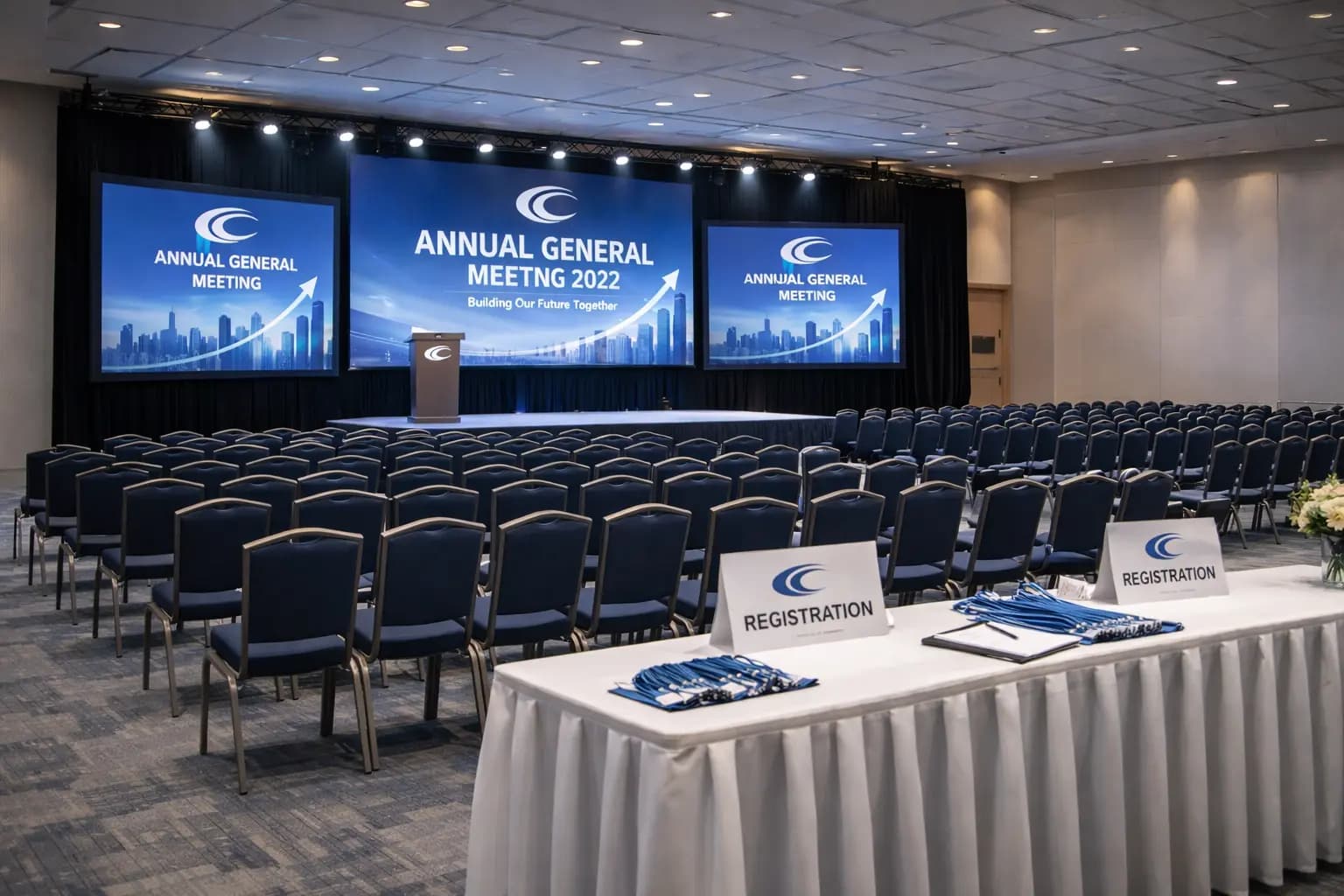
An AGM event checklist should always address format early. That means choosing between in-person, hybrid, or virtual delivery and then selecting a venue or platform that supports the decision properly.
For in-person meetings, think beyond capacity. Consider registration flow, visibility, room acoustics, board seating, podium position, loading access, backstage holding space, and where shareholder questions will happen. If you are still deciding, this guide on choosing an event venue is a useful planning reference.
For hybrid formats, ask whether remote participants will simply watch or actively participate. That one decision changes your entire technical scope.
A smaller room does not always mean a simpler production plan. In fact, AGM meetings in compact spaces can feel more stressful if sightlines, audio coverage, and registration flow are not handled well.
Should your AGM be in-person, hybrid, or virtual?
The answer depends on shareholder needs, governance rules, and your audience profile. A hybrid format often works well when some participants need remote access but the meeting still benefits from an in-room leadership presence. If that is your direction, it helps to review what strong hybrid event production actually requires before assuming a laptop and webcam are enough.
4. Finalize agenda flow, speaker roles, and decision points
One of the most important parts of an AGM event checklist is turning the formal agenda into an operational sequence. Your written agenda may look simple, but the live execution usually involves many more moving parts.
Who opens the meeting? Who handles the chair remarks? When are resolutions introduced? When do reports appear on screen? Who moderates questions? Who confirms voting transitions? Where does the legal or governance advisor sit if a procedural issue comes up?
These details should be mapped before rehearsal week. If the flow is unclear on paper, it will feel even less clear in the room.
5. Build a registration and attendee access plan
An AGM event checklist should also cover the front door experience. Registration is not just hospitality. It is often part of the meeting’s credibility. Slow check-in, unclear directional signage, or inconsistent credentialing can create frustration before the chair even opens the meeting.
Think through how shareholders, board members, executives, media, advisors, and guests will be greeted and directed. If you have a hybrid or webcast component, the attendee access plan should also include email instructions, login steps, backup contacts, and who handles support if someone cannot connect.
This is one area where operational calm makes a big difference. A clean registration experience sets the tone for the rest of the AGM.
6. Make audio, video, and presentation visibility non-negotiable
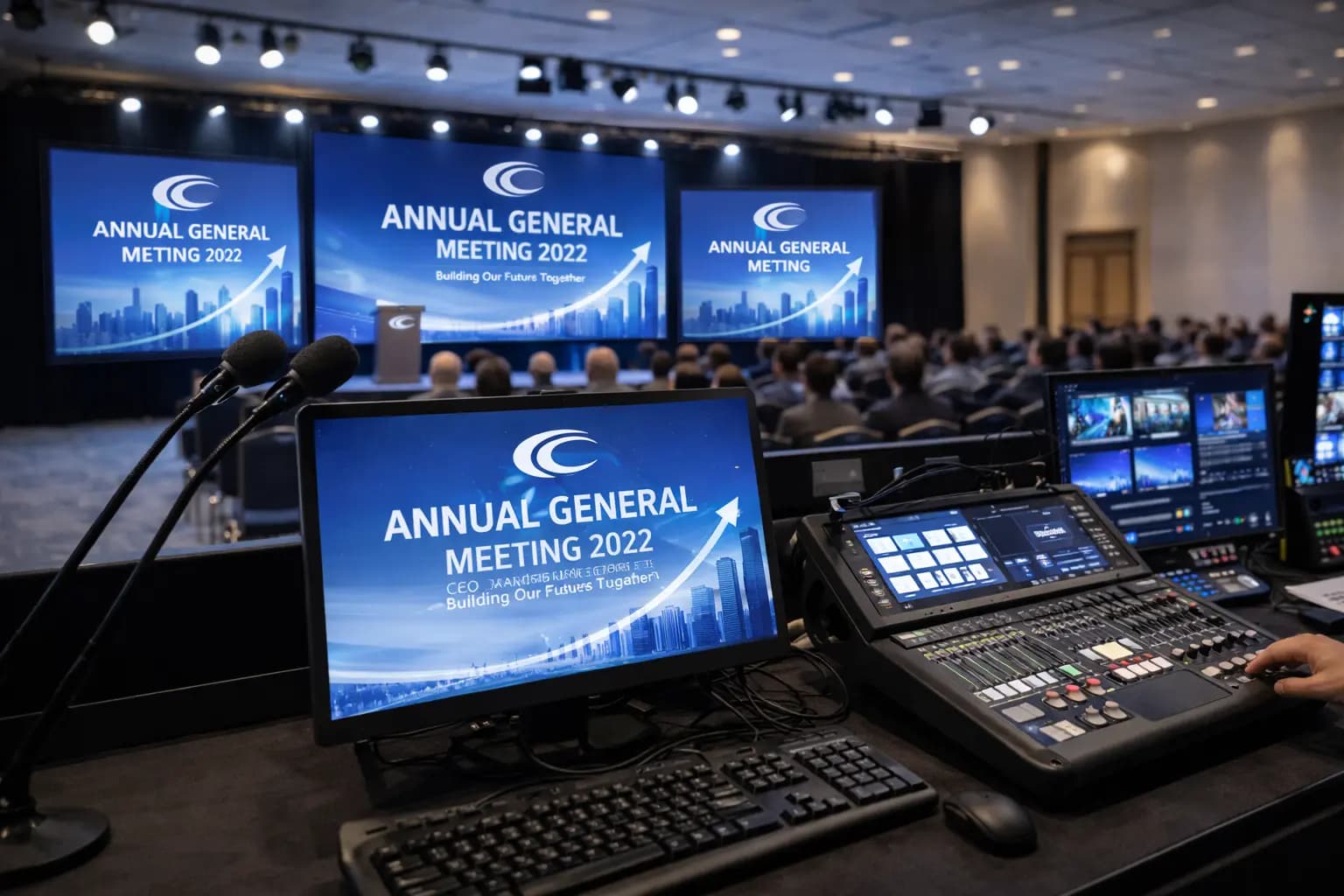
A polished AGM event checklist never treats AV as an afterthought. If people cannot hear clearly, see the supporting visuals, or follow the presentation flow, the meeting will feel less organized than it actually is.
At minimum, your AGM should account for podium microphones, table microphones if needed, handhelds for shareholder questions, clean projection or display support, presentation switching, and confidence monitoring for presenters. If the room is larger, delay speakers, additional screens, and camera support may also matter.
For teams planning in the GTA, this is where audio/visual support or more tailored audio visual services in Toronto become practical, not optional. Good sound and clean screen visibility protect the credibility of the meeting.
Do smaller AGM meetings still need professional AV?
Usually, yes. Even a modest AGM can suffer if microphones feed back, slides are hard to read, or questions from the floor are lost. A smaller meeting may not need a complex show system, but it still needs clear communication. That is why an AGM event checklist should scale production intelligently rather than ignore it.
7. Design the room so the meeting feels clear and confident
Visual confidence matters during an AGM. The room should look structured, not improvised. A strong AGM event checklist should include stage layout, board table placement, branding, screen location, sightlines, and traffic flow.
If you are using a main stage or raised platform, make sure presenters can move comfortably without awkward mic handoffs or blocked sightlines. If your branding needs a more polished setting, elements from staging, lighting, and decor can help elevate a meeting without making it feel theatrical.
For example, simple branded drape, well-placed lighting, and a clean podium position can make an AGM feel more deliberate and easier to follow.
8. Prepare for hybrid participation, livestreaming, and voting flow
If remote attendance is part of your AGM event checklist, do not treat it as a side feature. It becomes part of the meeting infrastructure.
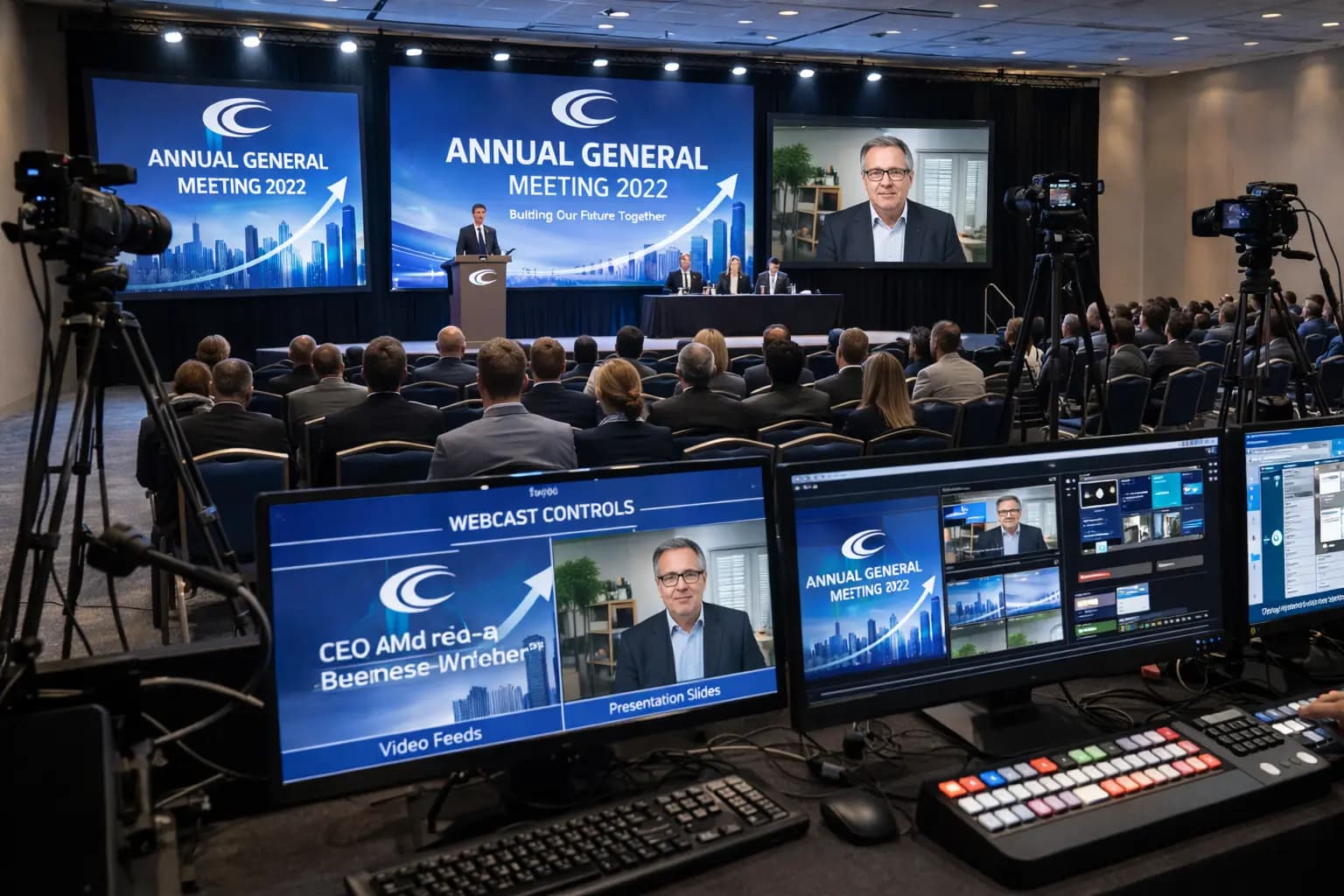
Hybrid AGM delivery means you need a stable stream, clean audio capture, camera angles that make speakers easy to follow, a clear method for remote participation, and a support plan for questions and voting. It also means testing internet capacity properly. That is where a guide like event bandwidth requirements becomes highly relevant.
For teams planning a webcast or remote-attendance AGM in the city, there is also useful overlap with the operational thinking behind organizing a virtual event in Toronto.
What changes when shareholders attend remotely?
Your AGM event checklist needs to expand in three ways. First, the meeting has to be understandable both in the room and on screen. Second, speaker transitions and voting cues must be clearer. Third, support becomes more important because remote attendees cannot simply ask the person beside them what is happening.
9. Turn the agenda into a detailed run of show
An agenda tells people what happens. A run of show tells the team how it happens. For that reason, every AGM event checklist should end up in a live execution document that covers timing, speaker cues, slide changes, microphone handoffs, voting transitions, question periods, and contingency notes.
If you have not built one before, this article on creating an event run of show is a helpful model. It is one of the clearest ways to prevent small timing issues from becoming visible meeting problems.
Even a simple AGM benefits from knowing exactly when doors open, when the chair starts, when the first resolution appears, who advances slides, and who has authority if timing changes.
10. Rehearse the critical moments, not just the speeches
A useful AGM event checklist includes rehearsal, but not just for presenters. The most important rehearsal points are usually operational.
Test the opening sequence. Test slide playback. Test every microphone. Test remote connections. Test the switch between reports and resolutions. Test the question process. Test the webcast feed. Test the recording. And test what happens if one of those pieces fails.
This is also the best moment to review backup planning. The site’s guide on avoiding technology failure in your event is a useful reminder that most show-day issues are easier to solve before guests arrive.
11. Prepare accessibility, recording, and archiving properly
An AGM event checklist should account for what happens after the live meeting experience as well. Do you need a recording for internal archive purposes? Will a webcast replay be available? Are captions, readable slides, and accessible documents part of the attendee experience?
These details are often left late, but they affect both professionalism and usability. Presentation readability, camera framing, lighting quality, and audio capture all matter more when the content may be reviewed again afterward. This also connects to broader event-tech standards discussed in why AV technology matters more than ever in 2026.
For companies with stricter governance expectations, this part of the AGM event checklist should also identify who owns the final archive, where files will be stored, and who signs off on the final record.
12. Assign one decision maker for each live function
One of the simplest but most overlooked parts of an AGM event checklist is role clarity. On show day, every live function should have an owner.
Who manages registration? Who cues the chair? Who advances slides? Who handles microphones? Who supports the webcast? Who fields shareholder access issues? Who makes the call if timing shifts or a presenter is delayed?
When nobody owns a function, the meeting feels slower and more reactive. When every function has a clear lead, even unexpected issues become manageable.
Common AGM Planning Mistakes This Checklist Helps Prevent
A good AGM event checklist is valuable because it prevents the mistakes that tend to repeat from one annual meeting to the next.
One common issue is underestimating the technical side of a “simple” meeting. Another is assuming a standard corporate boardroom layout will support shareholder visibility and clear question handling. Another is building the agenda without thinking through the live sequence and transitions.
Budget is another area where teams often guess too late. If you are working through production scope, room setup, and support priorities, this post on managing your event budget can help you separate must-haves from nice-to-haves without cutting the wrong corners.
The goal is not to make the AGM feel overproduced. It is to make it feel controlled, clear, and trustworthy.
Turning Your AGM Event Checklist Into a Smooth Show Day
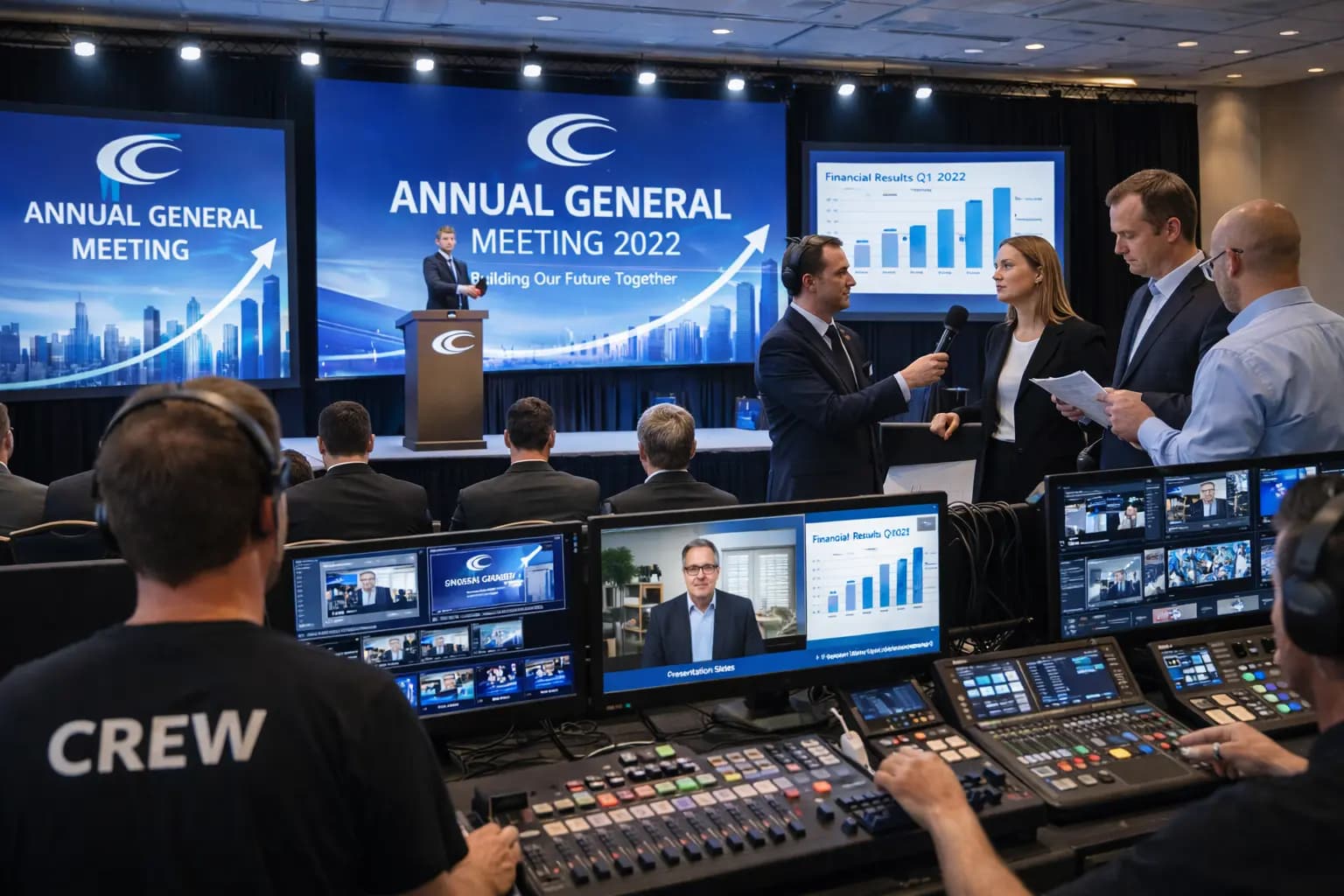
The best AGM event checklist is the one that turns preparation into confidence. When the meeting format is clear, the room is designed properly, the technology is tested, and the live sequence is mapped in detail, the annual general meeting becomes much easier to run and much easier for attendees to trust.
For companies in Toronto and the GTA, Future’s Past Events can support that process with corporate event production, audio/visual solutions, staging, hybrid event support, and broader planning help across the full services lineup.
If your organization wants an AGM that feels polished from registration to final close, you can also learn more about the team, explore available AV rentals, or reach out directly through the contact page.
Because when an annual general meeting is important to your organization, a thoughtful AGM event checklist is not just a planning tool. It is part of delivering a meeting that feels professional, credible, and ready from the moment the doors open.
Related posts
Awards Show Production: 10 Steps to a Ceremony That Runs on Time
Awards show production is what turns a list of winners into a night people remember. Every category needs a clean reveal, every winner needs to reach the stage without a long silence, and the whole program has to finish before the room loses its energy. That only happens when the show is…
Corporate Holiday Party AV: 9 Steps to a Memorable Year-End Night
Corporate holiday party AV decides whether the evening feels like a celebration or like a conference room with a buffet. The CEO's toast has to be heard over three hundred conversations, the year-in-review video has to play on cue, and the room has to change from dinner to dance floor without…
Town Hall AV: 9 Steps to a Clear, Reliable Corporate Town Hall
Town hall AV can make the difference between a leadership message that feels clear and confident and one that gets lost in weak audio, hard-to-read slides, awkward transitions, or a poor remote experience. A corporate town hall may look like a simple meeting, but once you add executives, audience Q&A, presentations,…