

Event sustainability checklist planning is no longer a nice extra. It is one of the clearest ways to reduce waste, make better vendor decisions, and run a more efficient event without sacrificing quality.
That matters for corporate meetings, conferences, annual general meetings, hybrid events, trade shows, and branded activations. Budgets are tighter, expectations are higher, and small planning choices can make a major difference in what guests notice, what your team manages onsite, and what gets discarded when the event ends.
A strong event sustainability checklist is not about stripping away the details that make an event memorable. It is about making every detail more intentional.
The checklist helps you ask better questions before contracts are signed. It helps prevent unnecessary waste and keeps the production team, venue, caterers, sponsors, and suppliers aligned from setup through strike.
If your team already uses an event communication plan, an event run of show, or an event venue walkthrough checklist, adding sustainability criteria is a practical next step.

Why an Event Sustainability Checklist Matters
Many event teams hear the word “sustainability” and assume it means higher costs, complicated reporting, or unrealistic restrictions.
In practice, the opposite is often true.
A well-built event sustainability checklist can improve planning discipline. It helps teams reduce over-ordering, simplify printed materials, select more practical rentals, reuse scenic elements, limit unnecessary freight, and communicate more clearly with venues and suppliers.
It also prevents sustainability from becoming vague.
Instead of saying, “Let’s try to make this event greener,” the team can define what that goal means for the specific program.
For one event, the priority may be reducing disposable serviceware. For another, it may be selecting a venue close to public transit. A hybrid conference may focus on reducing unnecessary travel while protecting the attendee experience. A trade show may prioritize reusable booth materials, efficient lighting, and adaptable signage.
An event sustainability checklist gives those decisions a clear structure.
What an Event Sustainability Checklist Should Cover
The best event sustainability checklist does not attempt to solve every environmental issue at once. It concentrates on the areas where events usually create the most waste, cost, freight, or unnecessary complexity.
Your checklist should review:
- Venue selection and access
- Catering and serviceware
- Printed materials and signage
- Audio visual equipment
- Lighting and power
- Staging and scenic elements
- Event decor
- Transportation and freight
- Vendor coordination
- Waste collection
- Post-event measurement
These areas become easier to manage when they are reviewed according to the event-planning phase.
For example, venue and supplier decisions should be addressed before contracts are signed. Signage and sponsor materials should be reviewed before production deadlines. Waste handling and equipment return plans should be confirmed before show day.
1. Set Clear Sustainability Priorities
You do not need to create a lengthy environmental policy for every event.
You do need two or three priorities that are specific enough to guide real decisions.
Your event sustainability checklist might focus on reducing single-use materials, cutting unnecessary print, increasing the reuse of scenic elements, improving waste sorting, choosing lower-waste catering, or reducing unnecessary transportation.
Specific priorities are easier to communicate than a broad promise to “be more sustainable.”
They can also be shared with suppliers when quotes are requested, allowing vendors to recommend suitable options before the budget and production plan are finalized.
2. Choose a Venue That Supports Your Goals
An event sustainability checklist works best when the venue already has the infrastructure to support it.
Review public transit access, built-in recycling systems, composting availability, digital signage, loading procedures, energy practices, and existing technical infrastructure.
A venue that already suits your event power requirements and production needs may reduce the amount of temporary equipment, additional cabling, transportation, and labour required.
During the site visit, evaluate more than the appearance of the room. Ask where waste will be collected, how catering materials will be handled, where deliveries enter the building, and which existing venue elements can be used instead of bringing in replacements.
A thorough event venue walkthrough should identify both production risks and sustainability opportunities.
3. Build Sustainability Into Vendor Requests
Vendors should not have to guess what matters to your organization.
Include relevant sustainability expectations in quote requests, supplier briefings, and planning meetings. This gives vendors an opportunity to recommend reusable materials, consolidate deliveries, reduce packaging, or adjust quantities.
Questions can remain practical:
Can equipment deliveries be consolidated?
Are reusable alternatives available?
Can scenic components be stored and used again?
What happens to leftover materials after the event?
Can digital documents replace printed copies?
Clear questions produce more useful answers than general sustainability language.
4. Reduce Catering Waste
Food and beverage choices affect packaging, serviceware, leftovers, transportation, and the attendee experience at the same time.
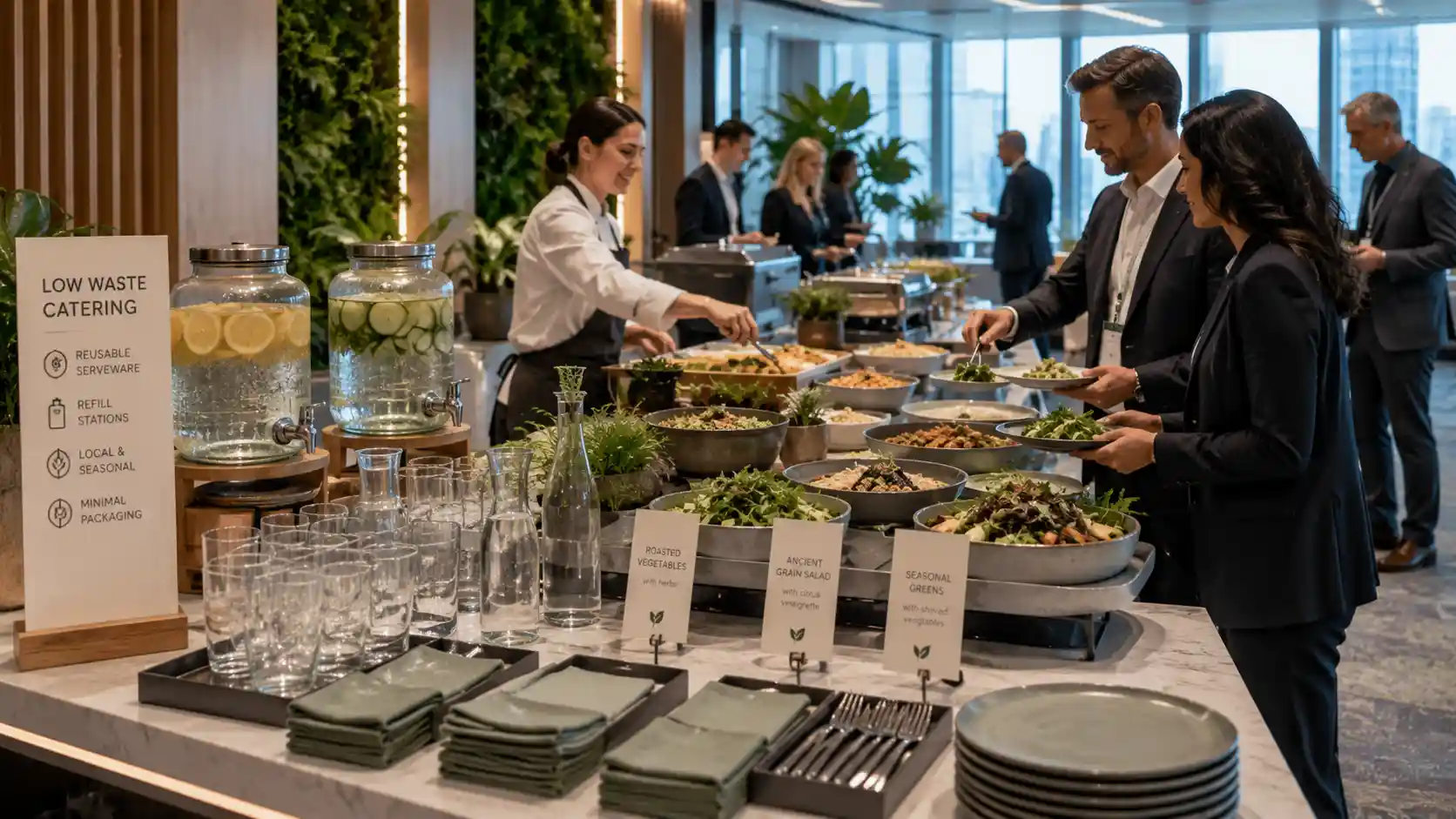
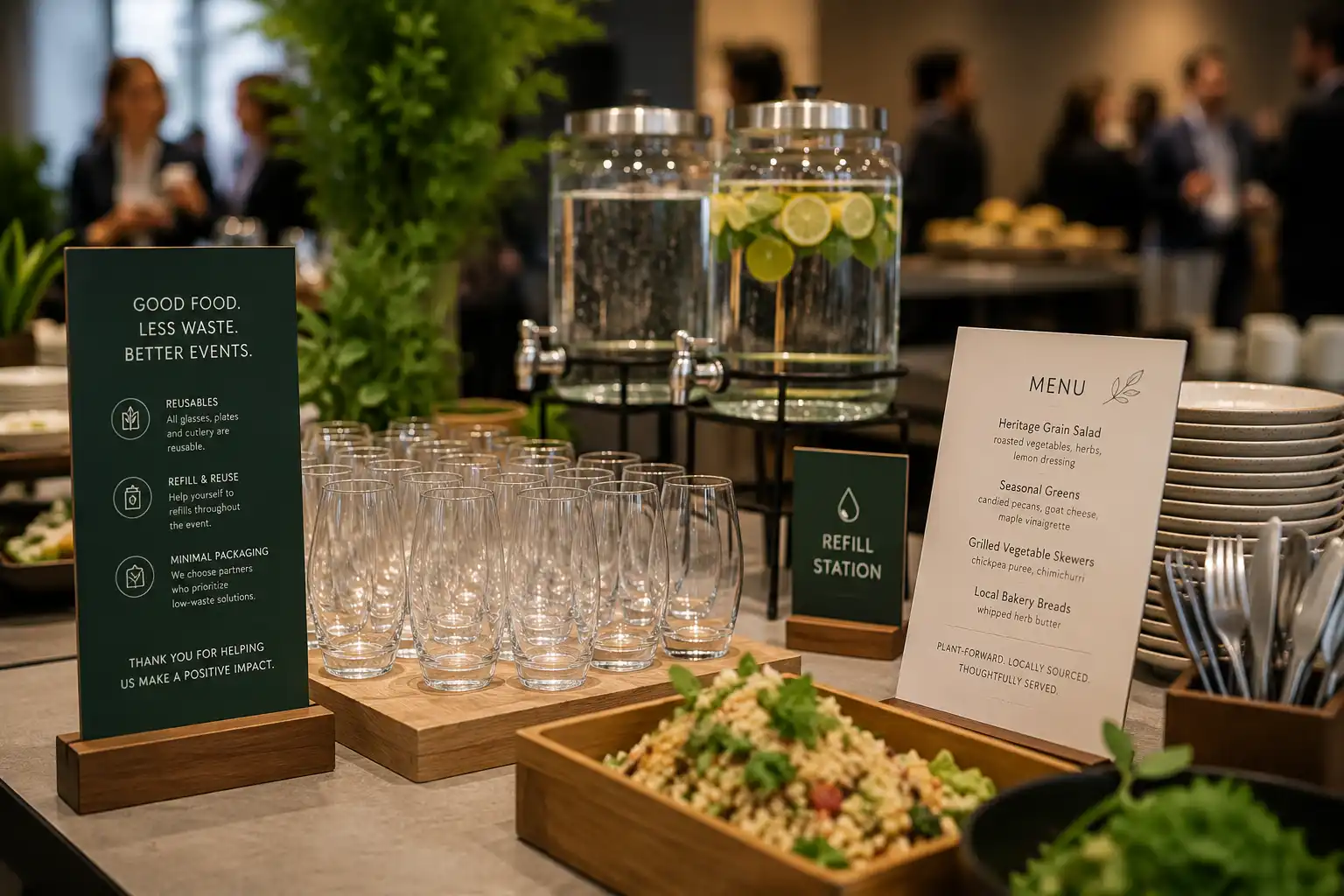
Ask whether water can be served from refill stations rather than individual bottles. Review whether condiments can be offered in bulk. Consider reusable glassware, dishes, and cutlery when the venue can support them.
Menu planning also matters.
Accurate registration numbers and realistic portion estimates can reduce overproduction. Caterers may also be able to recommend seasonal ingredients, lower-waste service styles, or practical plans for managing suitable leftovers.
These choices do not make an event feel less polished. Refill stations, quality glassware, and thoughtful menu presentation can create a more premium experience than disposable alternatives.
5. Make Printed Materials Earn Their Place
Programs, menus, agendas, directional signs, table cards, sponsor inserts, and promotional handouts can accumulate quickly.
Your event sustainability checklist does not need to eliminate print completely. It should ask whether every printed item is necessary, useful, and likely to remain accurate.
Some information is better suited to digital screens or QR codes, particularly schedules that may change before show day. Reusable sign holders and modular wayfinding systems can also reduce the need to rebuild basic signage for every program.
Targeted print can still be valuable. The goal is to print intentionally rather than automatically.
Reducing print dependence also strengthens your event communication plan because important updates can be distributed without reprinting large quantities of material.
6. Plan Sponsor Deliverables Carefully
Sponsor fulfillment is often overlooked during sustainability planning.
Sponsors may request one-time signs, printed inserts, branded gifts, booth materials, or rushed graphics that create limited value and substantial leftover waste.
Review each deliverable based on usefulness and visibility.
Some sponsor recognition can be shifted to digital screens, session introductions, livestream graphics, reusable structures, or modular panels. These options can provide strong exposure without creating materials that will be discarded after one event.
Coordinate sustainability decisions with your event sponsorship packages early. Sponsor value and responsible production should reinforce each other rather than compete.
7. Right-Size the Audio Visual Plan
Good audio visual design is not the same as adding more equipment.
The goal is to choose the right equipment for the room, audience, content, and event format.
One properly positioned display may be more useful than several poorly placed screens. A well-designed sound system may require fewer components while producing clearer coverage. A streamlined microphone plan can reduce battery use and backstage confusion.
The same principle applies to cameras, projectors, switching equipment, streaming systems, and technical control areas.
An event sustainability checklist should ask what guests genuinely need to see, hear, and understand. The answer often leads to better production as well as greater efficiency.
When arranging audio visual services, discuss room size, audience sightlines, presentation formats, streaming requirements, and content needs before selecting equipment.
8. Use Lighting Intentionally
Lighting affects atmosphere, branding, stage visibility, energy use, equipment quantities, and setup time.
A sustainable lighting plan does not need to make the room feel flat or underdesigned.
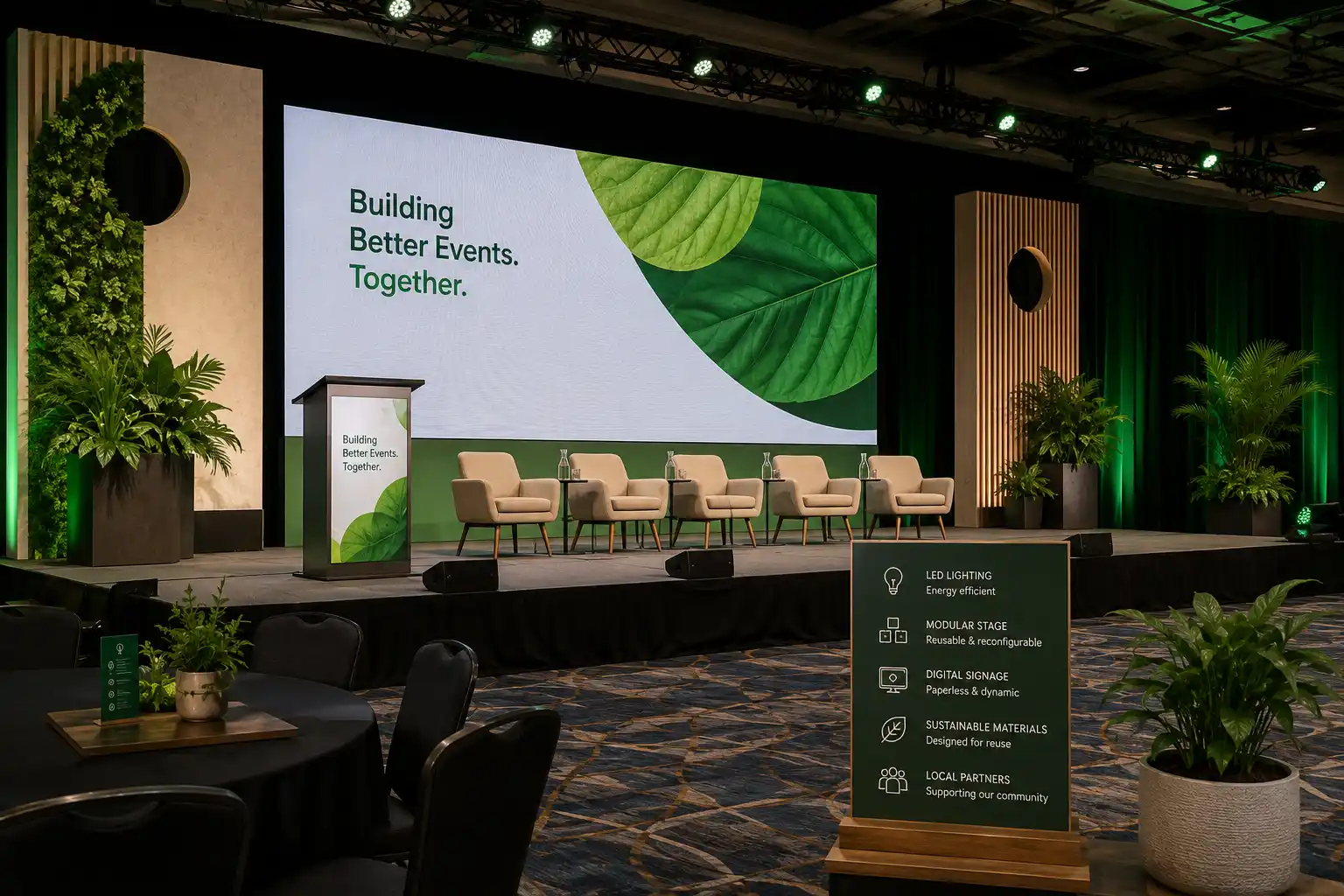
LED fixtures, focused positioning, thoughtful cueing, and a design built around the room’s existing features can create strong visual impact without unnecessary equipment.
Consider what the lighting needs to accomplish.
Does it need to highlight speakers, support cameras, transform the room, reinforce brand colours, or guide guests between spaces? Every fixture should serve a purpose.
Future’s Past Events’ event lighting services can be coordinated with the room layout, stage design, and electrical plan so the system supports both the creative vision and practical requirements.
9. Reuse Staging and Scenic Elements
Custom scenic builds can make an event memorable, but they can also create significant material waste when they are designed for only one use.
Modular staging, adaptable scenic structures, reusable frames, interchangeable graphics, and rental-based designs can deliver a polished result while improving long-term value.
Before approving a custom piece, ask whether it can be resized, re-skinned, stored, or adapted for another program.
The same approach can be used across conferences, award shows, product launches, annual meetings, and multi-city event programs.
Professional event staging can help the team build a strong focal point without automatically relying on a disposable one-time design.
10. Make Decor Memorable, Not Disposable
Decor is one of the easiest areas in which to overproduce.
A stronger event sustainability checklist reviews materials, transportation, storage, reuse potential, and what will happen to each decorative element after the event.
Visual impact can often be created through layered lighting, drape, furnishings, plants, textiles, projection, and reusable scenic pieces rather than large amounts of disposable material.
That is particularly valuable for galas, corporate celebrations, branded activations, and special events where the atmosphere matters.
Sustainable decor should not feel limited. When planned thoughtfully, it often feels more cohesive and refined.
Align the checklist with professional event decor services from the beginning so suitable materials and reuse opportunities can be incorporated into the creative direction.
11. Evaluate Whether Hybrid Delivery Makes Sense
A hybrid event can reduce some attendee travel and expand access, but it is not automatically the most sustainable option.
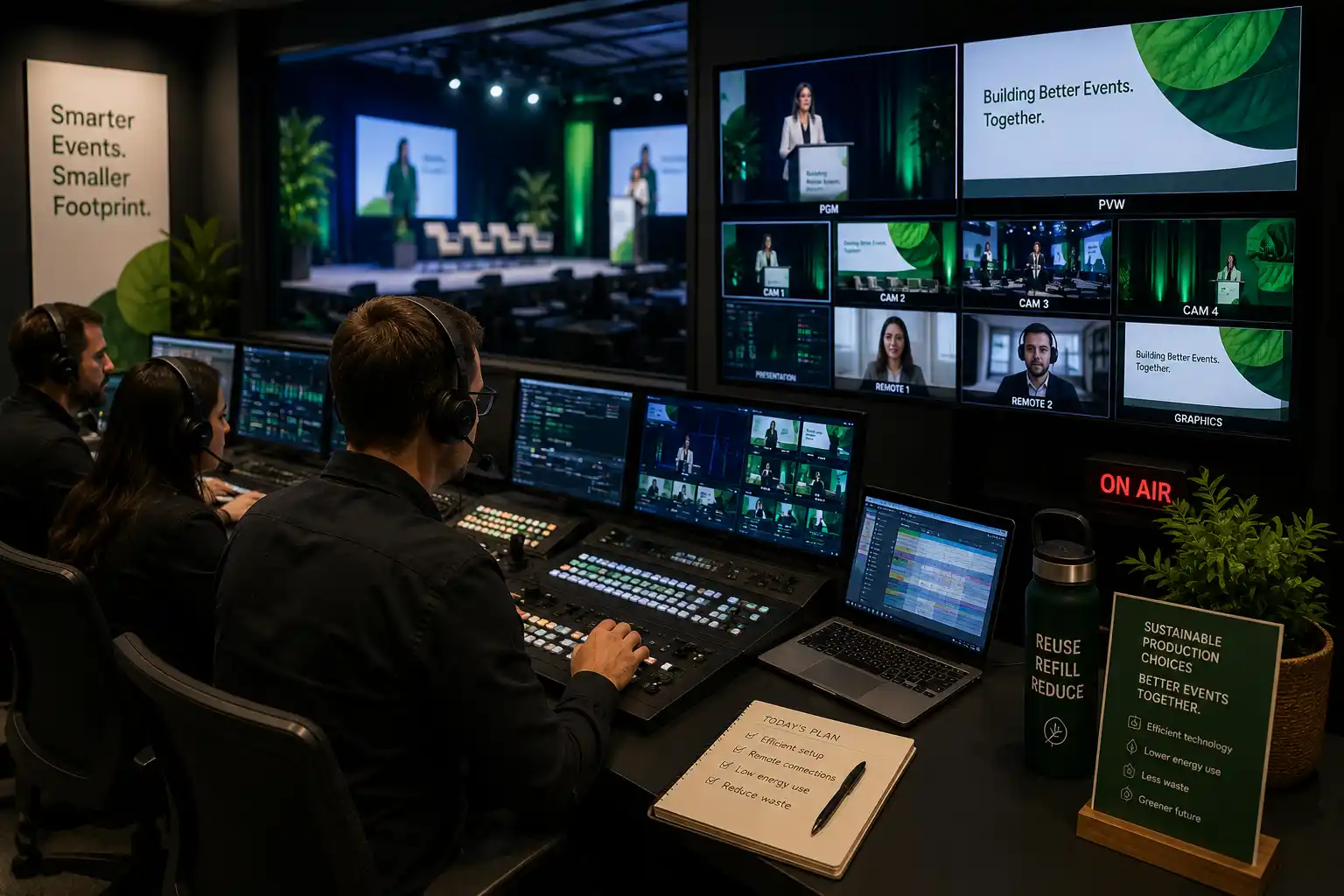
Hybrid delivery requires streaming infrastructure, internet bandwidth, cameras, switching equipment, screens, technical staff, and additional rehearsal time.
The correct question is not, “Is hybrid greener?”
The better question is, “Does hybrid delivery support this event’s objectives efficiently?”
For some conferences, shareholder meetings, training programs, and multi-office events, the answer will be yes. In other situations, an in-person event with professional content recording may provide greater long-term value.
When hybrid delivery is appropriate, coordinate it with experienced hybrid event production, an event cybersecurity checklist, and a detailed event rehearsal checklist.
12. Make Waste Stations Easy to Understand
Providing bins is not enough.
Waste stations must be easy to see, clearly labelled, and positioned where attendees naturally dispose of materials. Recycling, compost, and landfill labels should match the waste system used by the venue.
Confusing stations cause guests to guess, which can contaminate recycling and compost streams.
Use simple language and images when possible. Brief onsite staff about the system so they can answer questions and help prevent mistakes.
Waste planning should also cover backstage areas, registration, catering zones, green rooms, exhibit spaces, and loading areas—not only the main attendee space.
13. Include Sustainability in the Run of Show
Sustainability tasks should have owners and deadlines just like technical cues and speaker movements.
The run of show can note when refill stations must be checked, when waste stations require attention, which signage must be returned to storage, and which scenic elements are being retained.
The strike plan should identify what returns to inventory, what is collected by suppliers, what may be donated, and what requires disposal.
A detailed event run of show helps prevent rushed decisions at the end of a long event day.
It also makes sustainability part of event operations rather than an optional side project.
14. Make Accessibility Part of the Plan
Environmental and social sustainability should support each other.
Digital documents should be readable and easy to access. Wayfinding should be clear. Screens should have suitable text size and contrast. Seating plans should account for mobility needs, and streamed content should include accessibility features when appropriate.
A more sustainable event should never become less accessible because printed materials were removed or services were simplified.
Pair your event sustainability checklist with an event accessibility checklist to make sure environmental decisions improve the guest experience instead of creating new barriers.
15. Measure Results After the Event
You do not need perfect reporting to improve future events.
A short post-event review can provide enough information to strengthen the next checklist.
Ask:
How much printing was reduced?
Which scenic elements can be reused?
Were large amounts of catering or branded material left over?
Did waste stations work as planned?
Were equipment quantities appropriate?
Which supplier decisions produced the greatest benefit?
Were there any sustainability measures that created operational problems?
Document the answers while the event is still fresh. The results can be added to post-event reports, supplier reviews, and planning templates for the next program.
Organizations looking for a more formal framework can also explore the Events Industry Council Sustainable Event Standards, ISO 20121, Destination Canada’s sustainability commitment, and the Government of Canada’s information about reducing plastic waste.
These resources can provide direction without requiring every event to pursue formal certification.
Do Small Events Need an Event Sustainability Checklist?
Yes. A smaller leadership meeting, client presentation, training session, or networking event may not need detailed sustainability reporting, but it can still benefit from better decisions.
The team can reduce unnecessary printing, choose appropriate catering quantities, use efficient audio visual support, and avoid decorative purchases that will only be used once.
Smaller events are often the best place to establish practical habits before applying them to larger conferences and corporate programs.
Can Sustainable Event Planning Lower Costs?
In many cases, it can. Reducing unnecessary print, avoiding over-ordering, reusing scenic pieces, consolidating deliveries, and selecting the correct amount of equipment may lower direct costs.
However, the lowest-waste option is not always the cheapest option at the beginning. A reusable structure may have a higher initial cost but provide greater value across several events.
The event sustainability checklist should consider the full lifecycle of each purchase rather than only the initial price.
Turning an Event Sustainability Checklist Into a Better Show Day
The value of an event sustainability checklist goes beyond environmental messaging.
It supports better planning.
It can lead to fewer rushed purchases, fewer disposable materials, clearer vendor expectations, more efficient technical designs, and better alignment between the guest experience and the production plan.
For organizations planning events in Toronto and the Greater Toronto Area, the right production partner can help turn broad sustainability goals into practical decisions involving staging, transportation, power, lighting, audio visual equipment, and onsite execution.
Future’s Past Events supports this type of coordinated planning through its corporate event services, hybrid event production, trade show services, audio visual services, lighting, staging, and decor.
You can learn more about the company on the Our Story page, review completed work in the event portfolio, or contact Future’s Past Events to discuss a more efficient production plan for your next event.
An event sustainability checklist works best when it is not treated as a separate initiative. It should become part of how the event is planned, designed, built, and delivered from the beginning.
Comments are closed.