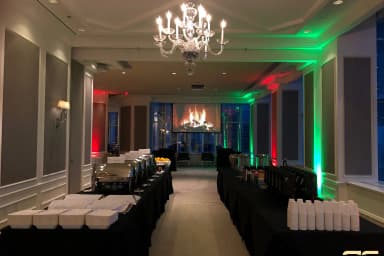
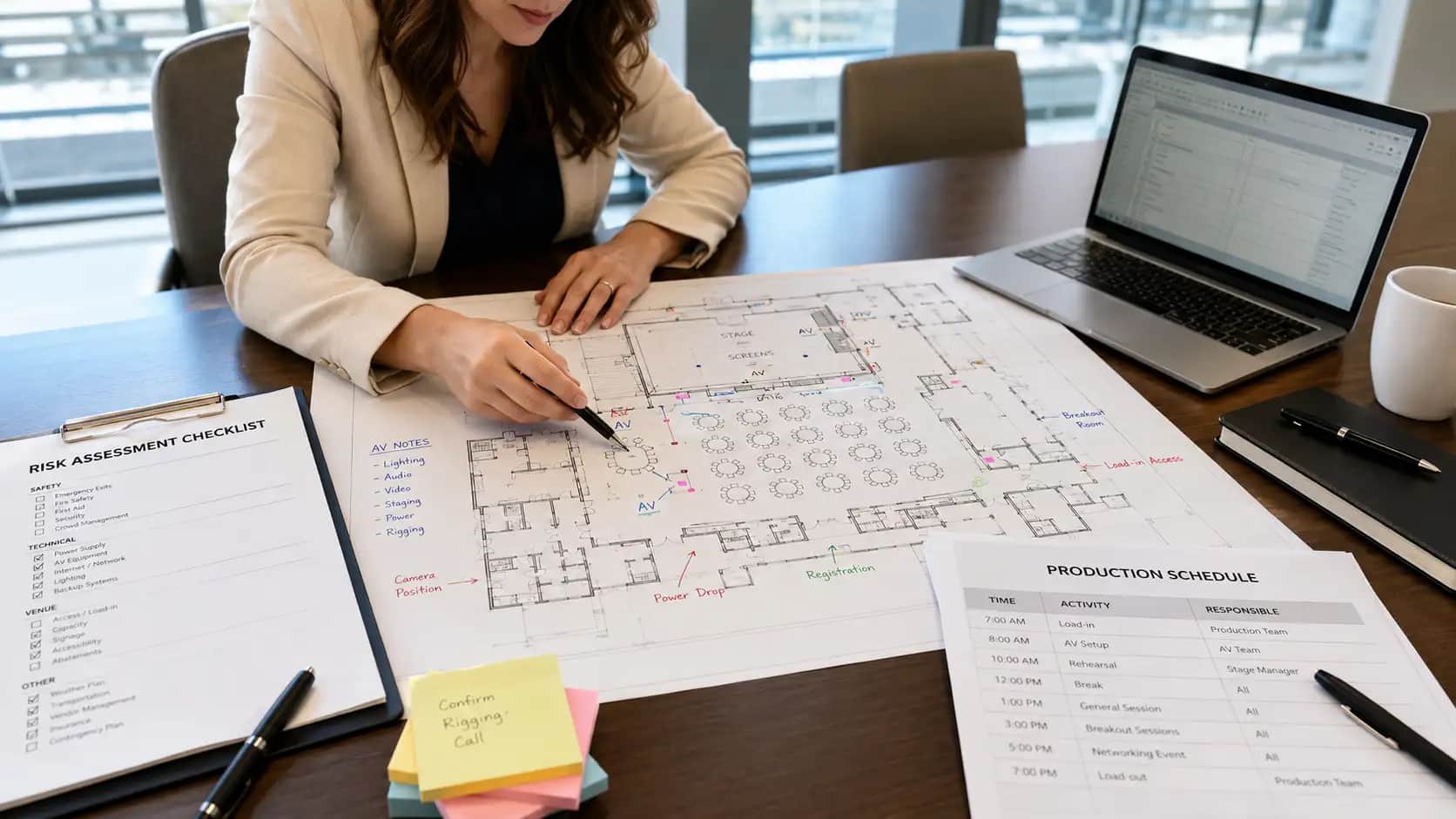
Event risk assessment is one of the most useful planning tools for corporate events because it helps your team spot problems before they become visible to guests, speakers, sponsors, or remote attendees.
A polished event rarely happens by accident. It happens because planners, venue teams, AV partners, suppliers, and internal stakeholders have already discussed what could go wrong, who owns each risk, and what the backup plan looks like. That is especially important now that conferences, AGMs, product launches, trade shows, hybrid programs, and gala-style corporate events depend on more moving parts than ever.
Your audience may only notice the stage, screens, lighting, sound, branding, and program flow. Behind the scenes, however, there are risks tied to power, internet, accessibility, guest movement, speaker readiness, weather, load-in, sponsor activations, cybersecurity, and emergency response. A practical event risk assessment brings those details into one clear conversation.
What Is an Event Risk Assessment?
An event risk assessment is a structured review of anything that could affect safety, timing, communication, production quality, guest comfort, or business outcomes during an event. It does not need to be complicated. In fact, the best version is simple enough for the full planning team to use.
The purpose is to identify risks, estimate how likely they are, understand how serious they could be, and decide what action should be taken before show day. For larger programs, the assessment may be a formal document. For smaller corporate meetings, it may be a working checklist shared between the planner, venue, and production team.
A common question is whether this is the same as an event checklist. Not exactly. A checklist tells you what needs to be done. An event risk assessment asks what could interrupt those plans and how the team will respond.
Why Event Risk Assessment Matters More in 2026
Corporate events have become more layered. A single program might include registration software, branded LED content, livestreaming, remote speakers, sponsor lead capture, Q&A tools, accessibility accommodations, multi-room audio, camera records, social clips, catering timing, and a tight executive agenda.
Each layer adds value. Each layer also adds possible failure points.
That is why an event risk assessment belongs early in the planning process, not during the final week. When you assess risk before contracts, room layouts, AV scopes, and timelines are finalized, you have more flexibility. You can adjust the venue layout, add technical backup, clarify staff roles, improve communication, and reduce last-minute cost surprises.
For example, if your team is already reviewing an event venue walkthrough checklist, risk assessment should happen at the same time. The walkthrough shows what the room can support. The assessment shows where the room could create pressure.
Start With the Event Goal Before You List Risks
A useful event risk assessment begins with the purpose of the event. The risks for an investor update are not the same as the risks for a public-facing product launch, employee town hall, awards dinner, or trade show booth.
Ask one simple question first: what must go right for this event to be considered successful?
For a leadership conference, the answer may be clear communication and executive confidence. For a hybrid event, it may be equal quality for in-room and remote attendees. For a trade show, it may be booth visibility, lead capture, sponsor traffic, and product demo reliability. For an AGM, it may be timing, voting, presentation accuracy, stakeholder trust, and accessibility.
Once the goal is clear, the risk conversation becomes more focused. You are not trying to worry about everything. You are identifying the issues that could affect the purpose of the event.
13 Essential Steps for a Strong Event Risk Assessment
1. Review the Venue Fit Early
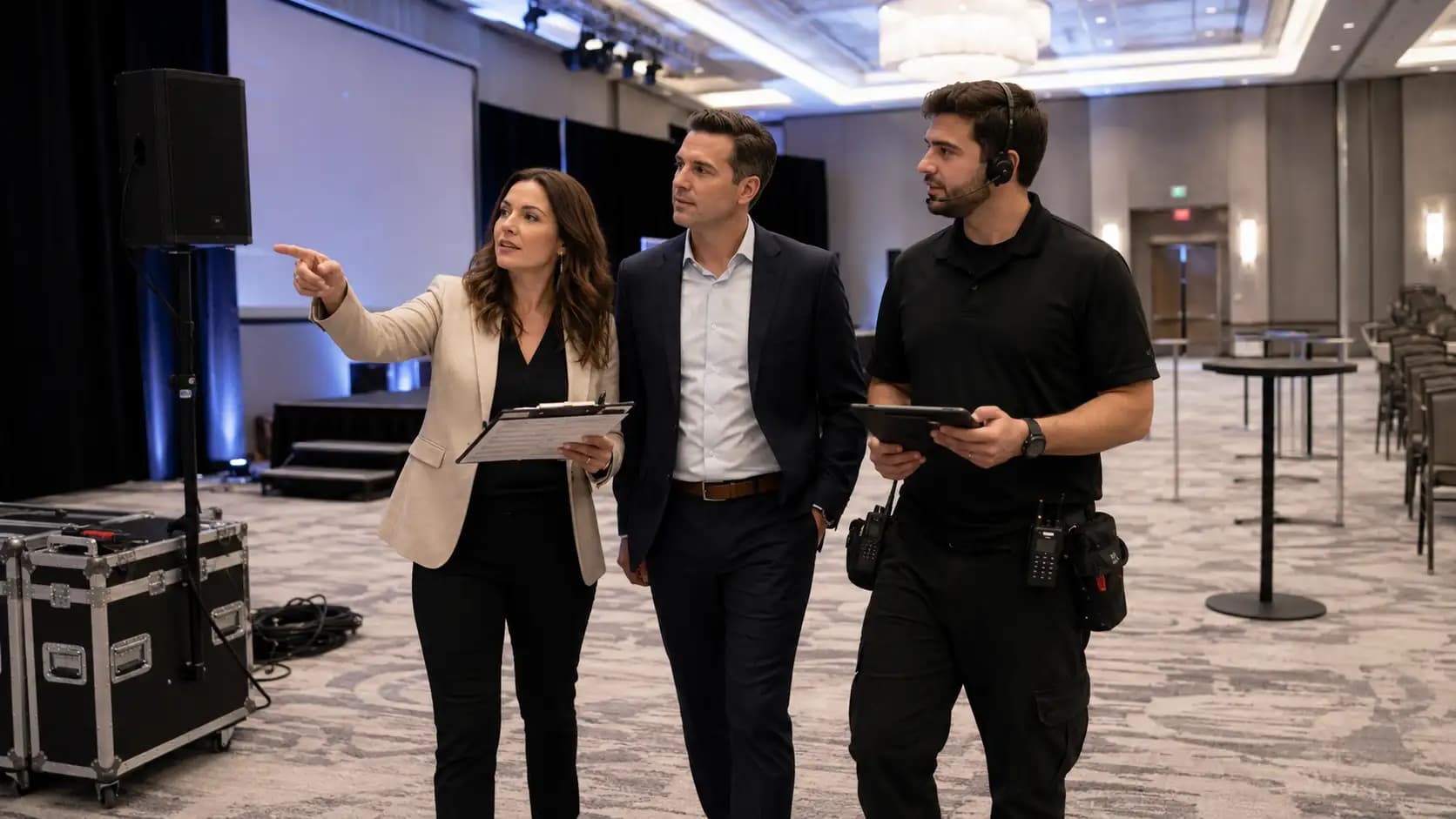
The venue is one of the biggest risk factors in any corporate program. A room may look beautiful but still create problems for sightlines, sound coverage, loading access, guest flow, power, rigging, accessibility, or internet.
During the site visit, assess how the venue supports the actual format of the event. Where will the stage go? Can guests see the screen from the back? Is there enough space for cameras, registration, sponsor displays, and production control? Are there noise restrictions or shared spaces nearby?
This is where an event risk assessment connects naturally with venue planning. The goal is not to reject every imperfect space. The goal is to understand limits early enough to plan around them.
2. Map Guest Flow From Arrival to Exit
Guest flow affects comfort, safety, and timing. A crowded check-in desk can delay the opening session. Poor signage can confuse attendees. A narrow hallway can create bottlenecks during breaks. A sponsor area placed in the wrong location may receive less traffic than expected.
Think through the guest journey step by step: arrival, parking, lobby, registration, coat check, washrooms, session entry, breaks, meals, sponsor visits, networking, and exit. If a guest would naturally ask “Where do I go next?” at any point, the plan needs clearer wayfinding.
For larger gatherings, it is worth reviewing crowd movement guidance from the Canadian Centre for Occupational Health and Safety alongside your internal guest-flow plan.
3. Identify AV and Production Risks
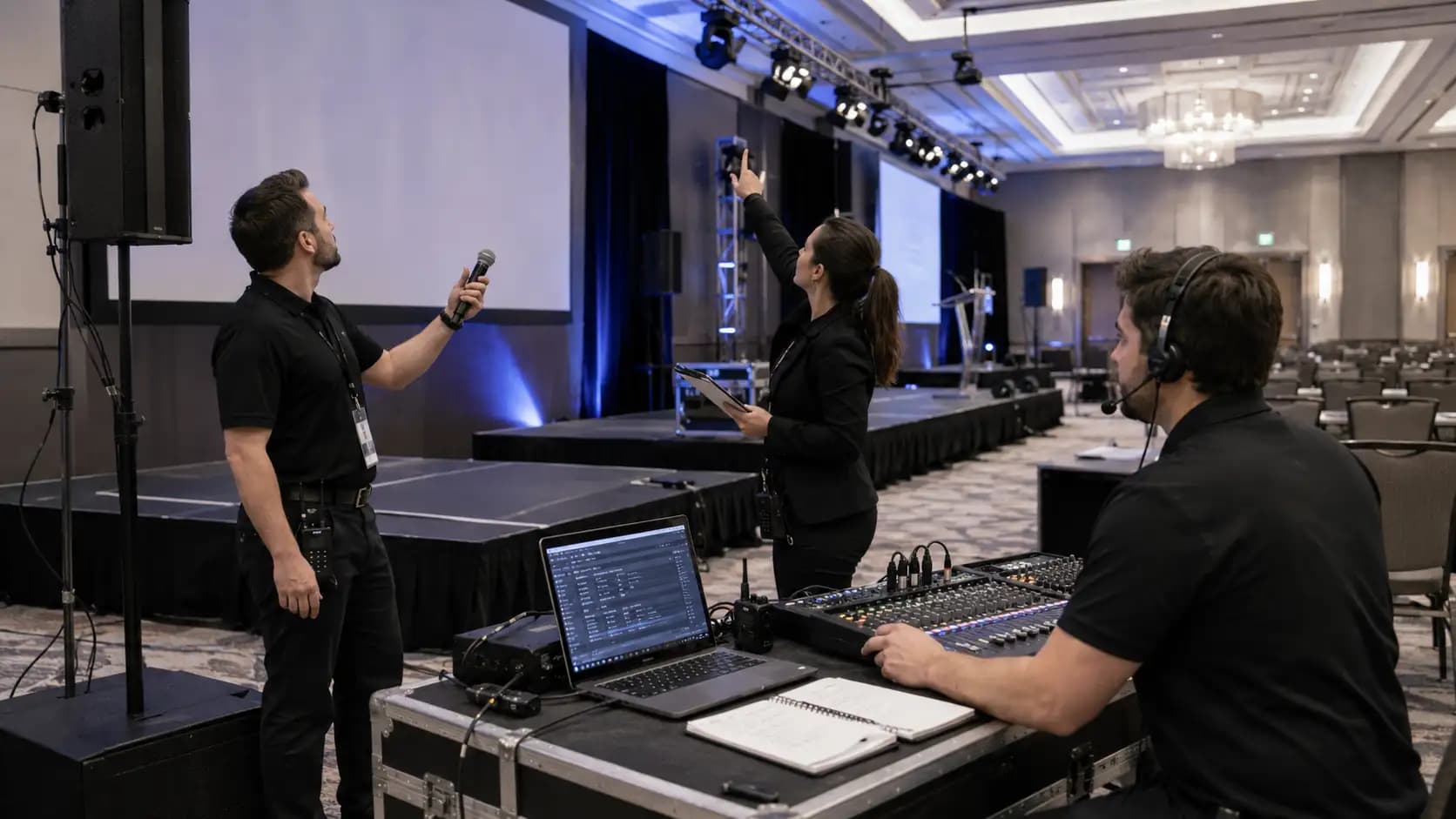
Audio, video, lighting, staging, and show control are central to how guests experience your event. If a microphone fails, a video freezes, a presenter cannot see their notes, or lighting makes the stage feel flat, the issue becomes visible immediately.
Your event risk assessment should include a review of microphones, speakers, projectors, LED displays, confidence monitors, playback systems, cameras, lighting fixtures, staging, and backup equipment. It should also identify who has authority to make production decisions during the program.
For events with complex presentation needs, connect this step with professional audio visual services and your technical rehearsal plan. A rehearsal is where assumptions become proof.
4. Assess Power Requirements Before Design Is Final
Power is easy to overlook because guests do not see it. They only notice when something stops working.
A strong event risk assessment should include the full electrical picture: stage lighting, audio consoles, video walls, projectors, computers, registration devices, badge printers, sponsor screens, livestreaming equipment, charging stations, and catering needs. It should also ask whether critical systems have dedicated circuits or backup options.
Planning teams can use the event power requirements guide as a companion resource when building the technical section of the assessment.
5. Review Internet and Hybrid Event Dependence
Internet is no longer just a guest convenience. It may support registration, livestreaming, remote speakers, polling, Q&A, sponsor demos, cloud presentations, and production communication.
If your event has a virtual or hybrid component, your event risk assessment should separate attendee Wi-Fi from production internet needs. A remote audience should not depend on the same unmanaged network that guests use for casual browsing.
For hybrid programs, review connection speed, redundancy, hardline access, network security, and technical support. You can also connect this step to your event bandwidth requirements planning so the stream, speakers, and audience tools are not fighting for the same connection.
6. Build a Speaker and Content Backup Plan
Speakers are often the heart of the event, which makes speaker readiness a major risk area. A late arrival, outdated slide deck, unsupported video file, dead laptop, missing clicker, or untested remote connection can disrupt the entire schedule.
Include content handling in the event risk assessment. Set deadlines for final decks. Confirm file formats. Collect backups. Test videos. Prepare a speaker holding area. Confirm who controls slide changes. For remote speakers, schedule a technical test before show day and keep a backup communication channel ready.
A strong event run of show should reflect those decisions so the production team knows what happens if a segment starts late or a speaker needs support.
7. Consider Accessibility and Guest Support Needs
Accessibility is not only a compliance issue. It is part of guest experience, safety, and professionalism.
Your event risk assessment should consider accessible entrances, elevators, seating options, captioning, interpreters, dietary needs, sensory considerations, washroom access, parking, and clear communication. It should also identify who receives accommodation requests and how those details are protected.
If your team has not already done so, review an event accessibility checklist before finalizing room layouts or guest communications. Accessibility risks are much easier to solve before signage, staging, and seating plans are locked.
8. Plan for Medical, Weather, and Emergency Scenarios
Not every corporate event needs a full emergency operations plan, but every event should have basic emergency thinking in place. This includes medical support, evacuation routes, emergency contacts, weather disruption, fire alarms, security concerns, and communication procedures.
Public agencies such as Public Safety Canada emphasize preparedness, exercising plans, and learning from events. For workplace and venue planning, CCOHS emergency planning guidance is also a helpful reference.
For event teams, the practical question is simple: if something serious happens, who makes decisions, who contacts the venue, who communicates with guests, and where does the team meet?
9. Include Cybersecurity and Data Privacy
Modern events collect and move data. Registration forms, event apps, QR codes, livestream links, sponsor lead capture, attendee lists, recordings, and post-event reports can all create risk if access is not controlled.
Your event risk assessment should identify what data is collected, who can access it, how long it will be kept, and what happens if a link or file is shared incorrectly. This does not mean every planner needs to become a cybersecurity expert. It means digital trust should be part of production planning.
The event cybersecurity checklist is a useful internal companion for this step, especially for corporate events with guest data, sponsor tools, remote speakers, or recorded content.
10. Assess Sponsor, Exhibitor, and Activation Risks
Sponsor and exhibitor areas can add energy and value, but they also add operational details. Booths may need power, internet, lighting, signage, storage, lead capture, staff access, and dedicated setup time.
Your event risk assessment should ask whether each sponsor commitment can actually be delivered in the selected space. Will premium sponsors be visible? Can demo screens be powered safely? Does the exhibitor area create traffic flow problems? Are QR codes and lead tools clearly explained to attendees?
If sponsorship is part of the program, align this review with your event sponsorship packages so value promises are supported by practical production planning.
11. Clarify Roles, Escalation Paths, and Decision Rights
Many event problems become larger because nobody knows who has authority to decide. During planning, decisions may move slowly. On show day, they need to move quickly.
A strong event risk assessment should list key roles: event lead, venue contact, AV lead, show caller, registration lead, speaker manager, sponsor lead, security contact, accessibility contact, and emergency decision-maker. It should also include phone numbers or radio channels for the show-day team.
A useful question to ask is: if this risk happens at 8:45 a.m., who decides what we do by 8:47?
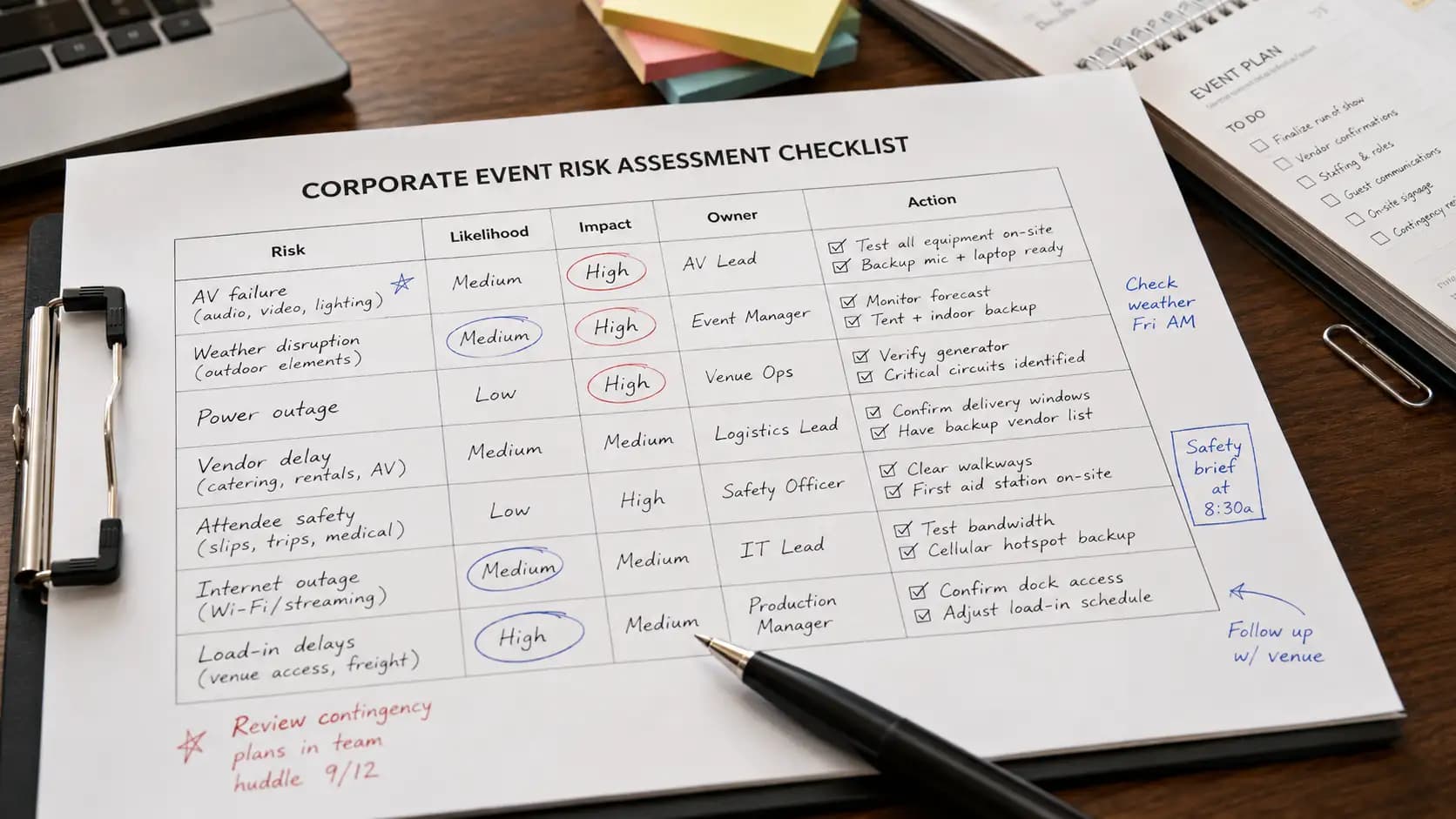
12. Use a Simple Risk Matrix
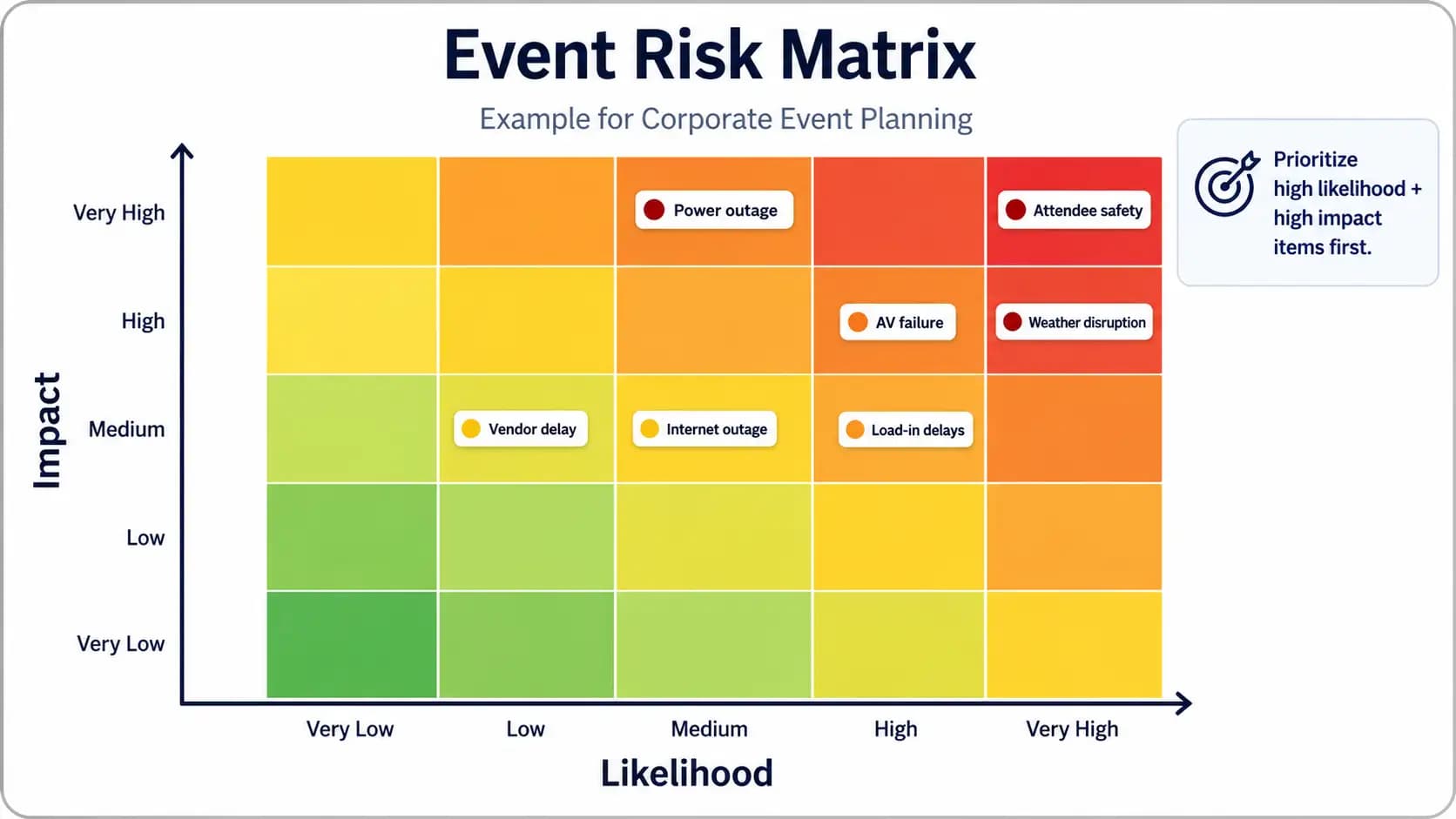
A risk matrix helps your team prioritize without overcomplicating the process. Score each risk by likelihood and impact. A low-likelihood, low-impact issue may only need monitoring. A high-impact issue, even if unlikely, deserves a real backup plan.
| Risk Area | Possible Issue | Impact | Planning Response |
|---|---|---|---|
| AV | Keynote microphone fails | High | Prepare backup mic and assign technician ownership |
| Internet | Livestream connection drops | High | Use dedicated hardline and backup connection |
| Guest flow | Registration line blocks entrance | Medium | Add signage, more check-in stations, and queue plan |
| Content | Speaker sends new deck late | Medium | Set file deadline and rehearsal review process |
This table does not need to be perfect. It needs to start the right conversation.
13. Review the Event Risk Assessment During Rehearsal
The final step is to test the plan. A document is helpful, but rehearsal reveals what the document missed.
During rehearsal, walk through the high-risk moments: opening remarks, video playback, remote speaker joins, sponsor reels, award cues, panel transitions, emergency announcements, and closing sequence. Confirm that the right people are in the room, the right files are loaded, and the right backups are available.
An event risk assessment should not be filed away once it is written. Treat it as a living production tool that gets refined as the event becomes more real.
What Should Be Included in an Event Risk Assessment Document?
If you are building a formal event risk assessment, include the event name, date, venue, planning owner, production owner, risk categories, likelihood, impact, prevention steps, backup actions, and responsible person.
You may also want separate sections for venue, AV, power, internet, speakers, guest flow, accessibility, emergency planning, cybersecurity, suppliers, sponsors, and post-event wrap-up. Keep it readable. A risk document that nobody opens is not useful.
The best format is the one your team will actually use. For many planning teams, a shared spreadsheet works well because responsibilities and updates can be tracked easily.
When Should You Start an Event Risk Assessment?
Start the event risk assessment as soon as the venue, guest count, format, and event goal are being discussed. That may feel early, but early is the point.
If risks are identified while the plan is still flexible, they can often be solved with small adjustments. If they are discovered after the stage is built, the sponsor floorplan is printed, or the stream is live, the fix becomes harder and more expensive.
For major corporate events, revisit the assessment after the venue walkthrough, after the AV scope is drafted, after the run of show is built, and again during rehearsal. Each stage gives you more information.
Common Event Risk Assessment Mistakes to Avoid
The most common mistake is treating risk assessment as negative thinking. It is not. It is a confidence-building tool.
Another mistake is focusing only on emergencies while ignoring practical production risks. A medical emergency matters, but so does poor audio, weak lighting, overloaded power, unclear signage, missing speaker files, and unstable internet. These issues may not be dramatic, but they can still damage the guest experience.
A third mistake is assigning risks to “the team” instead of a named person. If everyone owns a risk, nobody owns it. Every important item should have one clear owner.
How Event Risk Assessment Supports Better Corporate Event Production
A thoughtful event risk assessment makes the entire production smoother. It helps the venue understand what matters. It helps suppliers prepare properly. It helps the AV team build reliable systems. It helps speakers feel supported. It helps sponsors receive the value they were promised. Most importantly, it helps guests experience a polished event without seeing the work behind it.
For corporate planners, this is where risk assessment becomes more than a safety document. It becomes a planning advantage.
When your team knows the possible pressure points, you can make better decisions about room setup, show flow, staffing, equipment, signage, timing, and communication. That leads to fewer surprises and a more professional final result.
Plan More Confident Events With Future’s Past Events
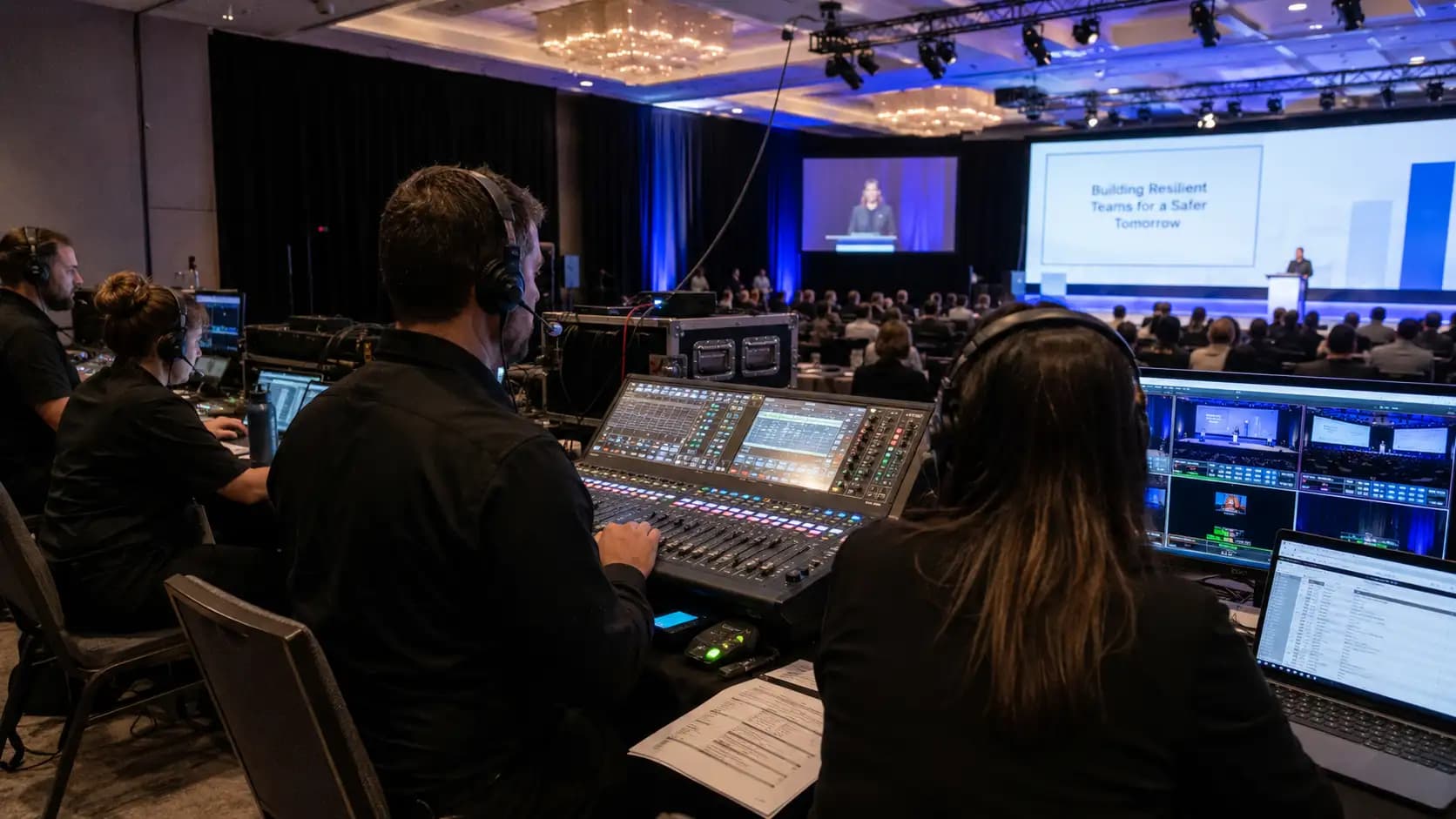
An event risk assessment is most valuable when it is connected to the people who will help bring the event to life. The earlier your planning team, venue, and production partner align, the easier it is to prevent technical issues, guest-flow problems, timing delays, and show-day stress.
Future’s Past Events supports organizations across Toronto and the GTA with professional audio visual production services, corporate event production, hybrid events, trade show production, special events, lighting, staging, and event decor.
If you are planning a conference, AGM, product launch, hybrid event, awards program, or sponsor-driven corporate experience, bring risk assessment into the conversation early. A strong plan does not remove every possibility of change, but it gives your team a clear way to respond with confidence.
To begin shaping a more reliable event plan, connect with Future’s Past Events through the contact page and start the planning conversation with your goals, venue details, guest count, technical needs, and show-day priorities.
Related posts
Sales Kickoff Event Production: 9 Steps to an SKO That Energizes the Team
Sales kickoff event production decides whether your SKO sends the team into the new year fired up or quietly checking email. A sales kickoff asks a lot of a single day: leadership has to set the strategy, product teams have to launch what is new, top performers have to be recognized, and…
Awards Show Production: 10 Steps to a Ceremony That Runs on Time
Awards show production is what turns a list of winners into a night people remember. Every category needs a clean reveal, every winner needs to reach the stage without a long silence, and the whole program has to finish before the room loses its energy. That only happens when the show is…

Corporate Holiday Party AV: 9 Steps to a Memorable Year-End Night
Corporate holiday party AV decides whether the evening feels like a celebration or like a conference room with a buffet. The CEO's toast has to be heard over three hundred conversations, the year-in-review video has to play on cue, and the room has to change from dinner to dance floor without…