
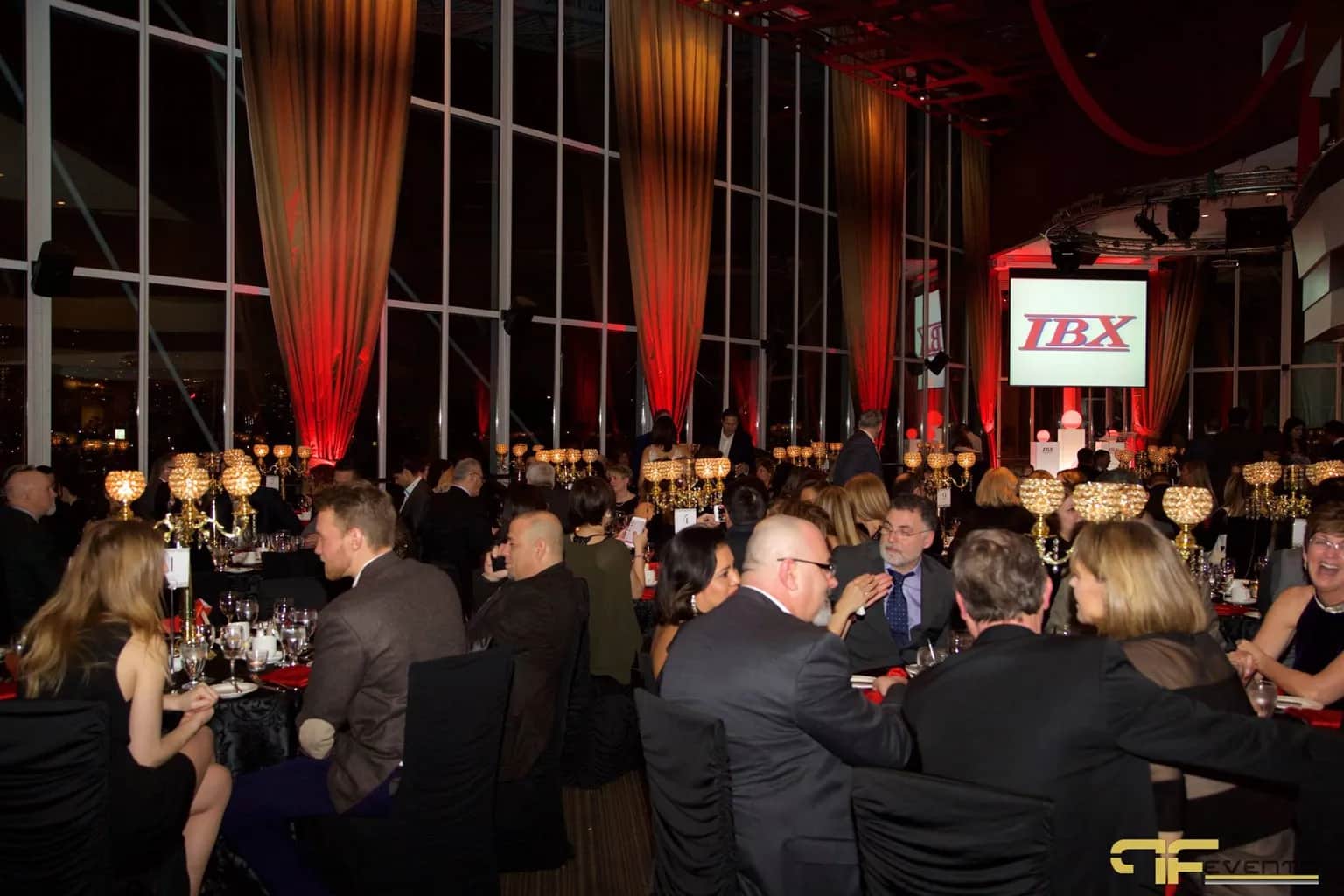
Awards show production is what turns a list of winners into a night people remember. Every category needs a clean reveal, every winner needs to reach the stage without a long silence, and the whole program has to finish before the room loses its energy. That only happens when the show is planned as a show, with cues, rehearsals, and a crew that knows exactly what comes next.
Awards ceremonies are also unforgiving. A conference can recover from a slow session; an awards night cannot recover from a wrong name on the screen, a winner standing at a dead microphone, or a presenter who cannot find the stairs. Bringing the technical plan into your special event production early is the simplest way to keep those moments from happening.
What Is Awards Show Production?
Awards show production is the planning and technical delivery of a recognition ceremony: the staging, lighting, sound, screens, video content, music cues, and show calling that carry the audience from the first welcome to the final award.
It covers more than equipment. A well-produced awards show has a script, a run of show, a cue list, rehearsed presenters, and one person calling every transition. The equipment is what the audience sees; the planning is what makes it look effortless.
How is an awards show different from a gala dinner?
A gala dinner is built around the meal and the room. An awards show is built around a sequence of moments that repeat: announce the category, show the nominees, reveal the winner, bring them to the stage, hand over the award, take the photo, let them speak, and move on.
That repetition is what makes awards production different. If one handover takes ninety seconds too long and there are twenty categories, the program runs half an hour late. The production has to make every cycle fast and consistent without making it feel mechanical.
10 Steps to Better Awards Show Production
Use these ten steps before the venue layout, script, and video content are locked. Each one removes a common reason ceremonies run long or lose the room.
1. Build the show around the award cycle
Start by writing down a single award cycle from start to finish: who announces the category, what plays on the screen, how the winner is revealed, which route they walk, who hands over the award, where the photo is taken, and whether the winner speaks.
Time it. Then multiply it by the number of categories. This one number tells you more about your program than anything else, and it usually shows that something has to give: fewer speeches, grouped categories, or a shorter walk to the stage.
Once the cycle works, the rest of the evening can be built around it: the reception, dinner service, keynote remarks, entertainment, and the closing.
2. Write the run of show and the cue list
An awards show needs a minute-by-minute event run of show that the venue, caterer, host, and AV crew all work from. It lists each segment, who is on stage, what is on the screen, which music plays, and what the lighting does.
From the run of show, the production team builds the cue list: every light change, video roll, music sting, and microphone on or off, numbered in order. During the show, the show caller works from this list, so nothing depends on someone remembering.
Coordinate the program with dinner service. Most venues want speeches paused while plates are served and cleared, and an award announced over the clatter of dessert service loses most of its impact.
3. Design the stage for winners, not just presenters
Winners are the reason the event exists, and they are usually the least prepared people in the room. The stage should make their walk short, safe, and obvious.
Place the stairs on the side closest to the audience, light them, and keep cables well away from the route. Mark where the presenter stands, where the winner receives the award, and where the photo is taken. The event stage size needs to fit the lectern, the award table, the presenter, the winner, and sometimes a whole team accepting together.
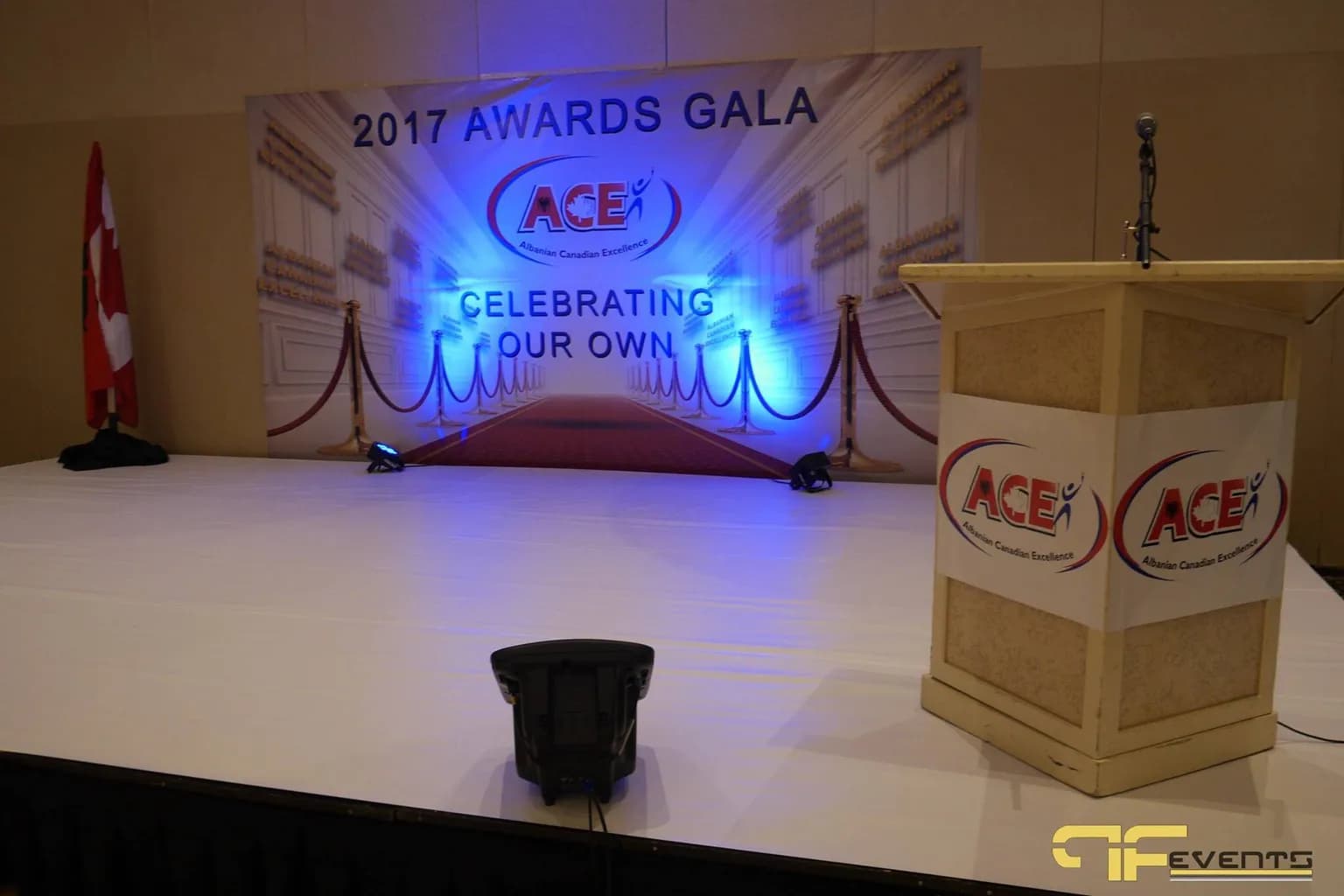
A branded backdrop or staging set gives every winner photo the same professional frame. At ACE's 2017 Awards Gala, a printed "Celebrating Our Own" backdrop, a skirted stage, and a branded lectern did exactly that.
4. Light the stage for the room and for the camera
Awards lighting has two audiences: the guests in the room and the photographer at the front. Both need the faces on stage to be bright, even, and natural.
Start with a clean front light on the lectern and the award handover point, so presenters and winners are never in shadow. Add colour on the backdrop and around the room for atmosphere, and use stage washes that do not overpower the faces. If the event is filmed or livestreamed, the lighting must be set for the camera, which usually means more even front light than the room alone would need.
Then add the moments: a light sweep or a colour change on each winner reveal, a spotlight that follows the winner to the stage, and a warmer look for speeches. Programming these event lighting cues in advance means each reveal looks the same, from the first category to the last.
5. Plan the microphones for every voice on stage
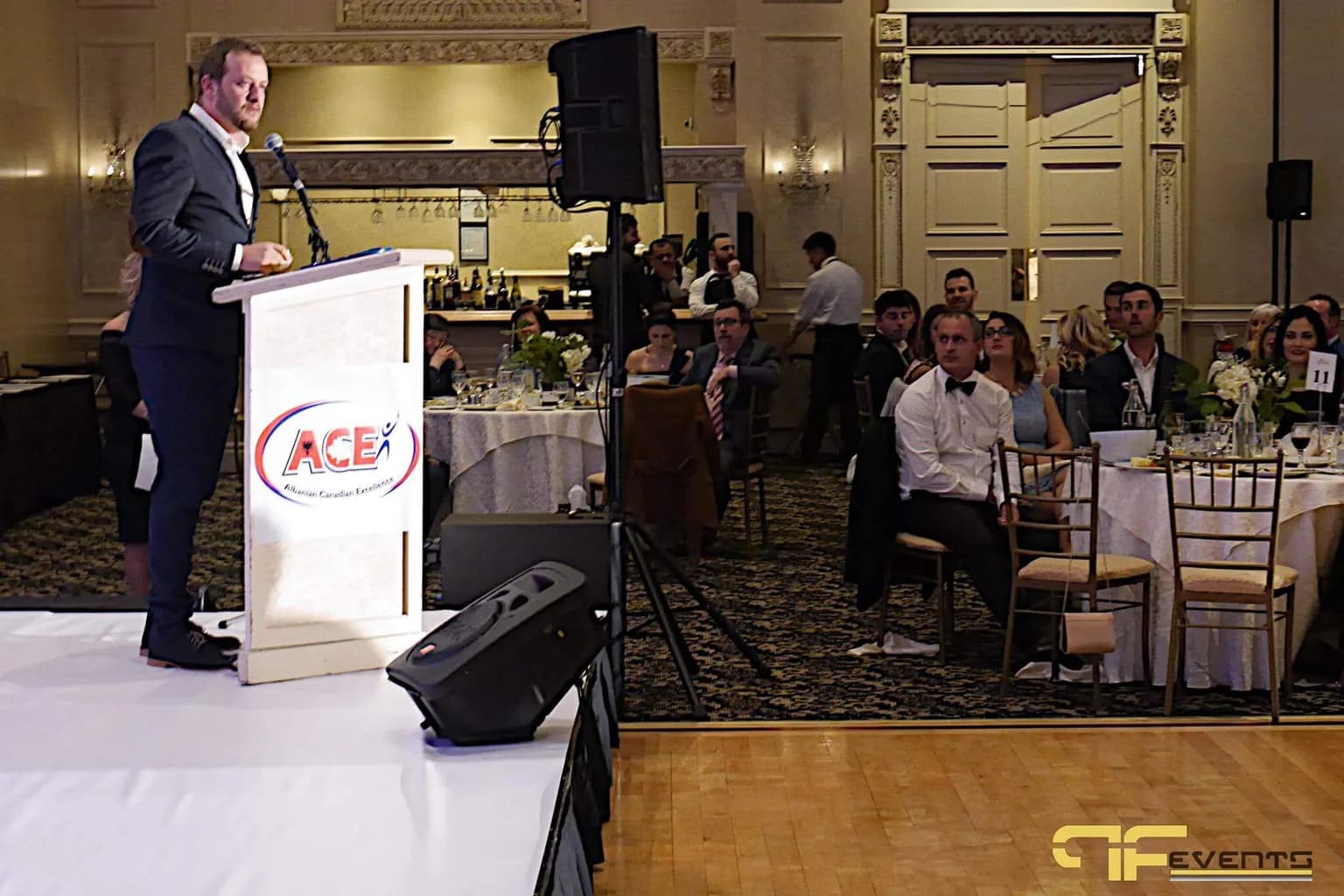
An awards show has more speakers than most events: the host, the presenters for each category, the winners, sponsors, and sometimes performers. Every one of them needs to be heard clearly at the back of the room.
A typical setup is a lectern microphone for the host and presenters, one or two wireless handhelds for winners and walk-around moments, and headset or lapel microphones for anyone who moves across the stage. Decide in advance whether winners speak at the lectern or at a separate microphone, and keep a spare handheld ready.
Sound for speech comes first. A good audio visual services team will position the speakers so every table hears the voice clearly, tune the system for intelligibility, and keep the audio engineer at the console for the entire program, not just the sound check.
6. Prepare the screen content well before the show
The screens carry the information the audience needs: the category name, the nominees, the winner's name, sponsor recognition, and often short nominee videos. Because this content changes for every category, it is where most awards-night errors happen.
Build one presentation for the whole program, in show order, with a clear slide for each moment. Use a consistent template for category titles and winner reveals. Check every name and title against the final winner list, and have a second person proofread it.
Keep winner slides secure. The person running playback should be the only one with the final file, and the slides should be checked on the actual playback system at the venue. If the event is in a bright room or the screen is far from the back tables, choose the screen size and type to match; projection, LED screens, and large displays all have their place.
7. Use music and walk-up cues to keep the energy up
Music fills the silences that awards shows naturally create. A short sting as each category is announced, a reveal cue as the winner is named, and walk-up music while they cross the room all keep the evening moving.
Give the walk-up music a fixed length and a clean fade, so it ends when the winner reaches the lectern. Choose tracks that suit the organization and the audience, and agree in advance on what plays if a winner is not present.
Between segments, background music covers the transitions while presenters change and the next category is set up. Silence is what makes a room feel the program is dragging.
8. Assign a show caller and a clear crew structure
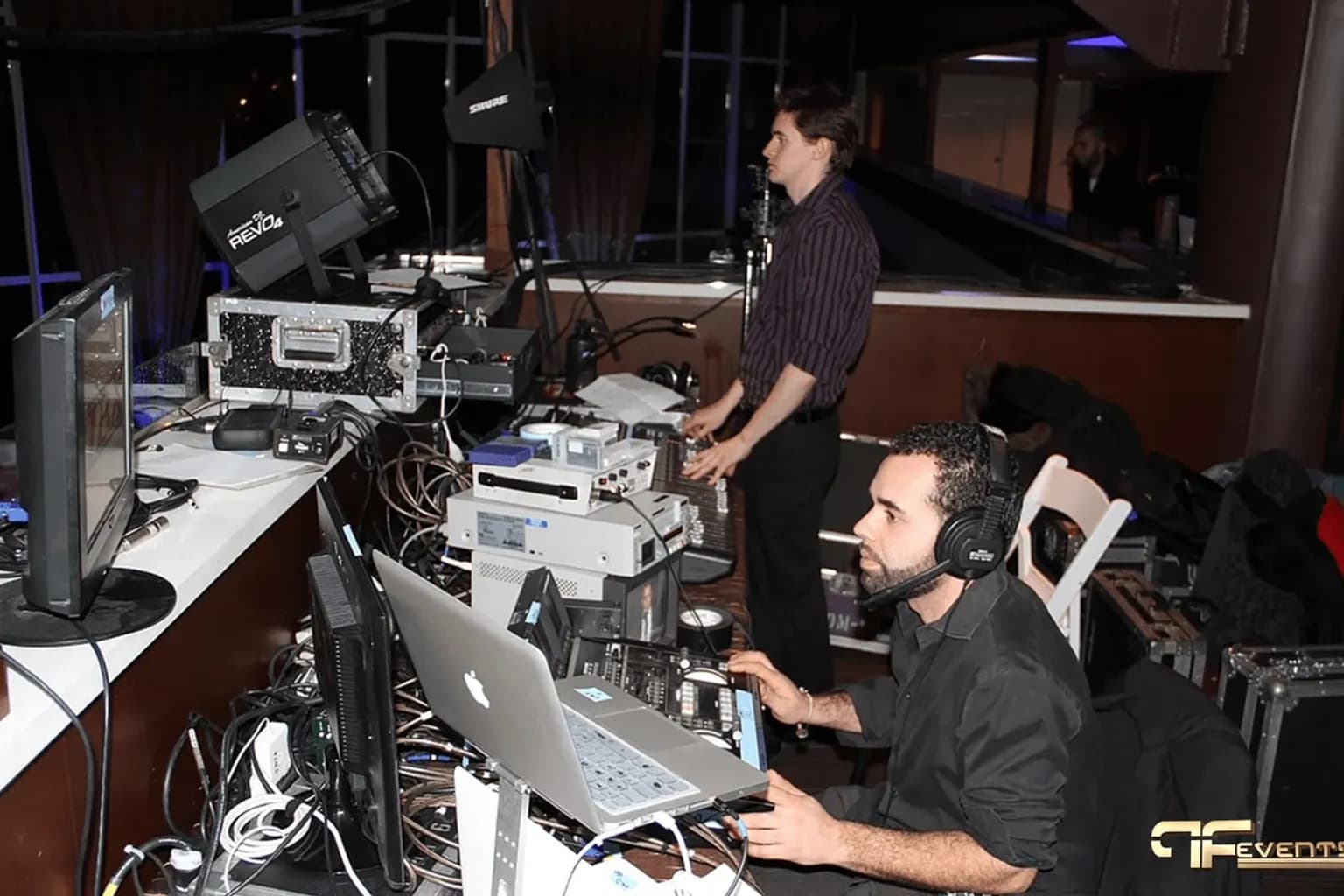
On an awards night, dozens of cues happen in a short time. One person, the show caller, should call every one of them from the cue list, on a headset to the audio engineer, lighting operator, video playback operator, and stage manager.
The stage manager looks after the stage side: lining up presenters, handing over awards in the right order, guiding winners up and off the stage, and keeping the award table organized. Many ceremonies also have an award handler whose only job is to make sure the right trophy reaches the right person.
The control position should have a clear view of the stage and the screen. A crew that can see what the audience sees catches problems before the audience does.
9. Rehearse the presenters and the transitions
A full rehearsal before guests arrive is what turns a good plan into a smooth show. At minimum, walk the host and presenters through the stage: where they enter, where they stand, how they read the teleprompter or notes, and where they exit.
Run at least one complete award cycle with the lighting, music, screen, and microphones, and run the transitions in and out of every segment. Test every video with its sound in the room at show volume. An event rehearsal checklist helps make sure nothing is skipped when time is short.
Give presenters a printed card with the category, the nominees, and the pronunciation of every name. Mispronounced names are the most common, and most avoidable, mistake at an awards ceremony.
10. Plan for the photos, the stream, and what happens next
Every award produces a photo, and many organizations use those photos for months. Agree with the photographer on the photo position, make sure it is well lit, and leave enough time in the cycle for a proper shot.
If the ceremony is being recorded or livestreamed for people who could not attend, plan the camera positions, the program feed, and the audio feed early. Lighting, screens, and sound all change when the camera is part of the audience, and guidance on how to produce a livestream covers the basics.
Finally, plan the end. A strong closing, a clear move to the dance floor or networking, and a lighting change tell guests the formal program is over, so the evening ends on a high rather than trailing off.
Awards Show Production Planning Matrix
| Area | What to confirm | Common risk |
|---|---|---|
| Program | Award cycle timing, category order, speech limits | The ceremony runs long and loses the room |
| Run of show | Segments, dinner service, cue list, show caller | Crew guessing what comes next |
| Stage | Stairs, marks, award table, photo position, backdrop | Winners lost on stage or tripping on cables |
| Lighting | Front light, reveal cues, follow spot, camera levels | Winners in shadow, flat photos |
| Audio | Lectern, handhelds, headsets, spare mics, speech clarity | Dead microphones and unheard acceptance speeches |
| Screens | One show-order deck, proofread names, secure winner slides | Wrong name on screen or a spoiled reveal |
| Music | Category stings, walk-up tracks, transition beds | Long silences while winners walk to the stage |
| Rehearsal | Presenter walkthrough, one full cycle, video playback test | Confusion on stage in front of the whole audience |
Common Awards Show Mistakes to Avoid
Most awards shows that go wrong do not suffer an equipment failure. They suffer from a plan that did not account for how long things really take.
The first mistake is too many categories without a plan to group them. Twenty individual cycles with speeches are a long evening. Grouping smaller categories or presenting some awards during dinner keeps the main program focused.
The second is unlimited acceptance speeches. Agree on a time limit, tell the nominees in advance, and give the host a polite way to keep things moving.
The third is late content. Winner lists, nominee videos, and sponsor logos often arrive the day before the show. Set a content deadline at least a week ahead, and lock the winner slides only once the list is final.
The fourth is skipping the rehearsal. A ceremony that has never been run in the room will discover its problems in front of the audience.
How long should an awards ceremony be?
For most corporate and community awards nights, the formal program works best at 60 to 90 minutes, split around dinner if needed. Beyond that, attention drops quickly. Timing your award cycle in advance is the most reliable way to know whether your program fits.
How much does awards show production cost?
There is no useful flat price. A recognition segment with a lectern microphone and one screen in a hotel ballroom is a very different production from a multi-camera, livestreamed gala with a built stage, LED screens, and programmed lighting.
The main cost drivers are guest count, room size, the number of screens, lighting design, camera and streaming needs, crew size, rehearsal time, and load-in and load-out hours. Knowing which moments matter most lets the production team put the budget where the audience will notice it.
Do you need a teleprompter for an awards show?
Not always, but it helps. A confidence monitor or teleprompter lets the host and presenters read the script and the names while looking at the audience instead of down at a card. For ceremonies with many presenters, it also keeps everyone on the same version of the script.
Plan Your Awards Show Production With Future's Past Events
A great awards night feels effortless to the people in the room. The categories move quickly, the reveals land, the winners are heard, and the photos look like the organization wanted them to look.
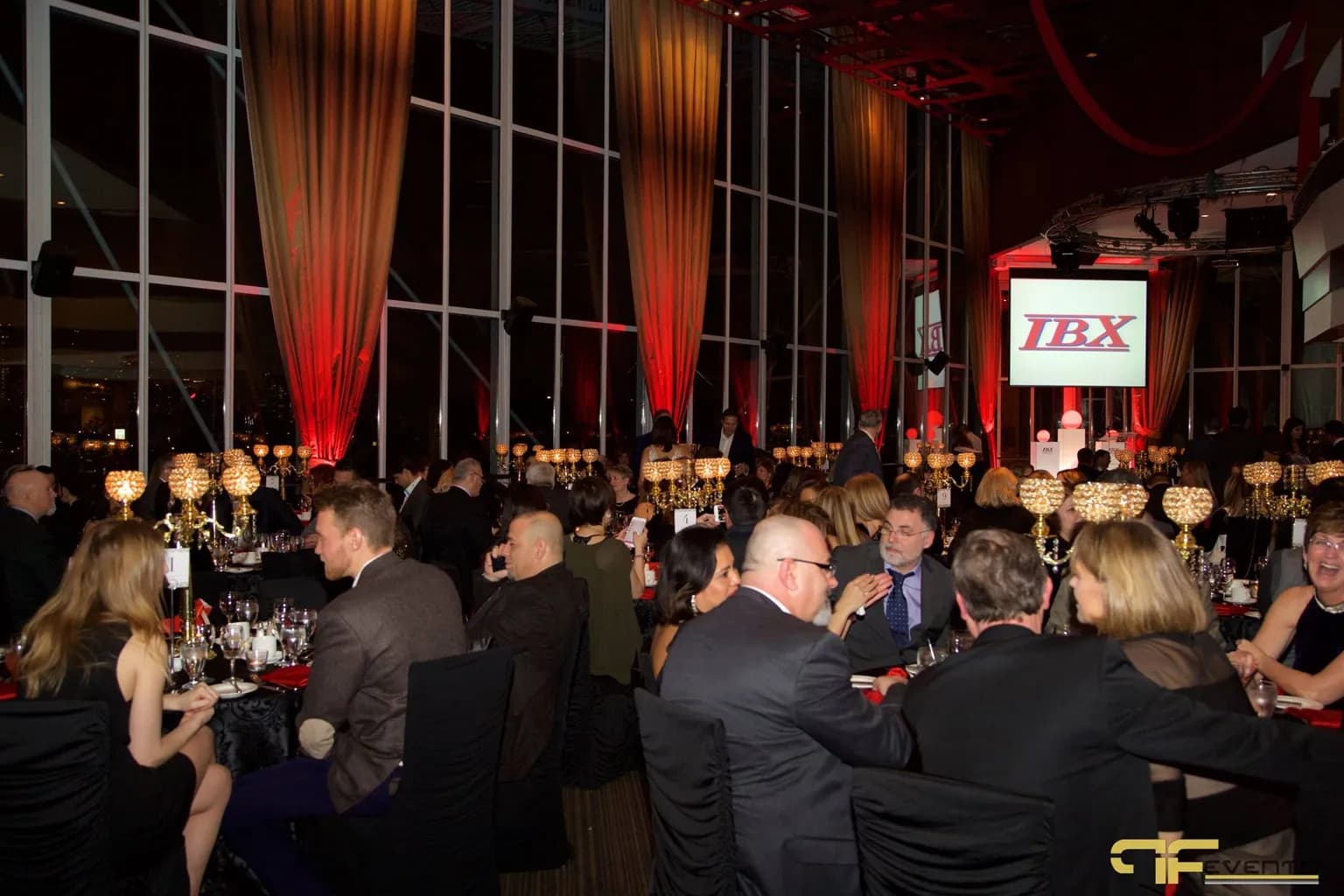
Future's Past Events has more than 20 years of experience producing galas, awards ceremonies, and corporate events across Toronto and the GTA, including ACE's Awards Gala and the IBX Services client appreciation galas in 2018, 2019 and 2020. The team handles staging, lighting, sound, screens, playback, and show calling, so your committee can focus on the people being recognized.
If you are planning an awards ceremony, recognition night, or gala, contact Future's Past Events with your venue, date, guest count, number of categories, and any filming or streaming plans. A clear awards show production plan is what lets the evening run on time and still feel like a celebration.
Related posts
Corporate Holiday Party AV: 9 Steps to a Memorable Year-End Night
Corporate holiday party AV decides whether the evening feels like a celebration or like a conference room with a buffet. The CEO's toast has to be heard over three hundred conversations, the year-in-review video has to play on cue, and the room has to change from dinner to dance floor without…
Town Hall AV: 9 Steps to a Clear, Reliable Corporate Town Hall
Town hall AV can make the difference between a leadership message that feels clear and confident and one that gets lost in weak audio, hard-to-read slides, awkward transitions, or a poor remote experience. A corporate town hall may look like a simple meeting, but once you add executives, audience Q&A, presentations,…

Breakout Room AV Checklist: 12 Steps for Reliable Conference Sessions
A breakout room AV checklist helps conference organizers give smaller sessions the same professional reliability as the main stage. Breakout rooms may use less equipment than a ballroom keynote, but they often create more operational complexity because several sessions can run at the same time, with different…