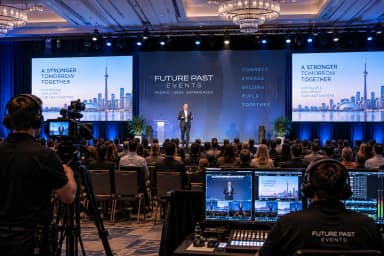
Sales kickoff event production decides whether your SKO sends the team into the new year fired up or quietly checking email. A sales kickoff asks a lot of a single day: leadership has to set the strategy, product teams have to launch what is new, top performers have to be recognized, and every rep has to leave knowing exactly what is expected of them. The production is what holds all of that together.
Most sales kickoffs happen in January and February, which means the real planning happens in the fall. Venues, crews, and equipment for early-year dates are booked months ahead, so connecting the technical plan to your corporate event production early keeps your options open.
What Is a Sales Kickoff Event?
A sales kickoff, or SKO, is the annual meeting where a company brings its sales organization together to start the new fiscal year. It usually combines a strategy keynote from leadership, product updates, training sessions, customer stories, and recognition for the previous year's top performers.
It is part conference, part rally, and part awards night. That mix is what makes SKO production different from a standard corporate meeting: the energy has to stay high for a whole day, and sometimes for two or three.
What does sales kickoff event production include?
Sales kickoff event production covers everything the audience sees and hears: the stage and set, screens and video content, sound and microphones, lighting, walk-up music, breakout room AV, recording or streaming for remote reps, and the show calling that ties the sessions together.
It also includes the planning behind it: the agenda, the run of show, speaker preparation, content deadlines, and rehearsals.
9 Steps to Better Sales Kickoff Event Production
Use these nine steps before the venue contract and agenda are final. Each one protects the energy and the message that a sales kickoff depends on.
1. Start with the message, then build the agenda
Every SKO should answer three questions for the sales team: where the company is going this year, what is changing for them, and why they should be excited about it. Write those answers down before you plan a single session.
Then build the agenda around them. Put the strategy keynote early, while energy is highest. Follow it with product launches and customer stories that support the message, then move into practical training and breakouts. Save recognition for a moment when the room needs a lift.
A clear agenda becomes the backbone of your event run of show, which the venue, presenters, and production crew all work from.
2. Choose a room that fits the format
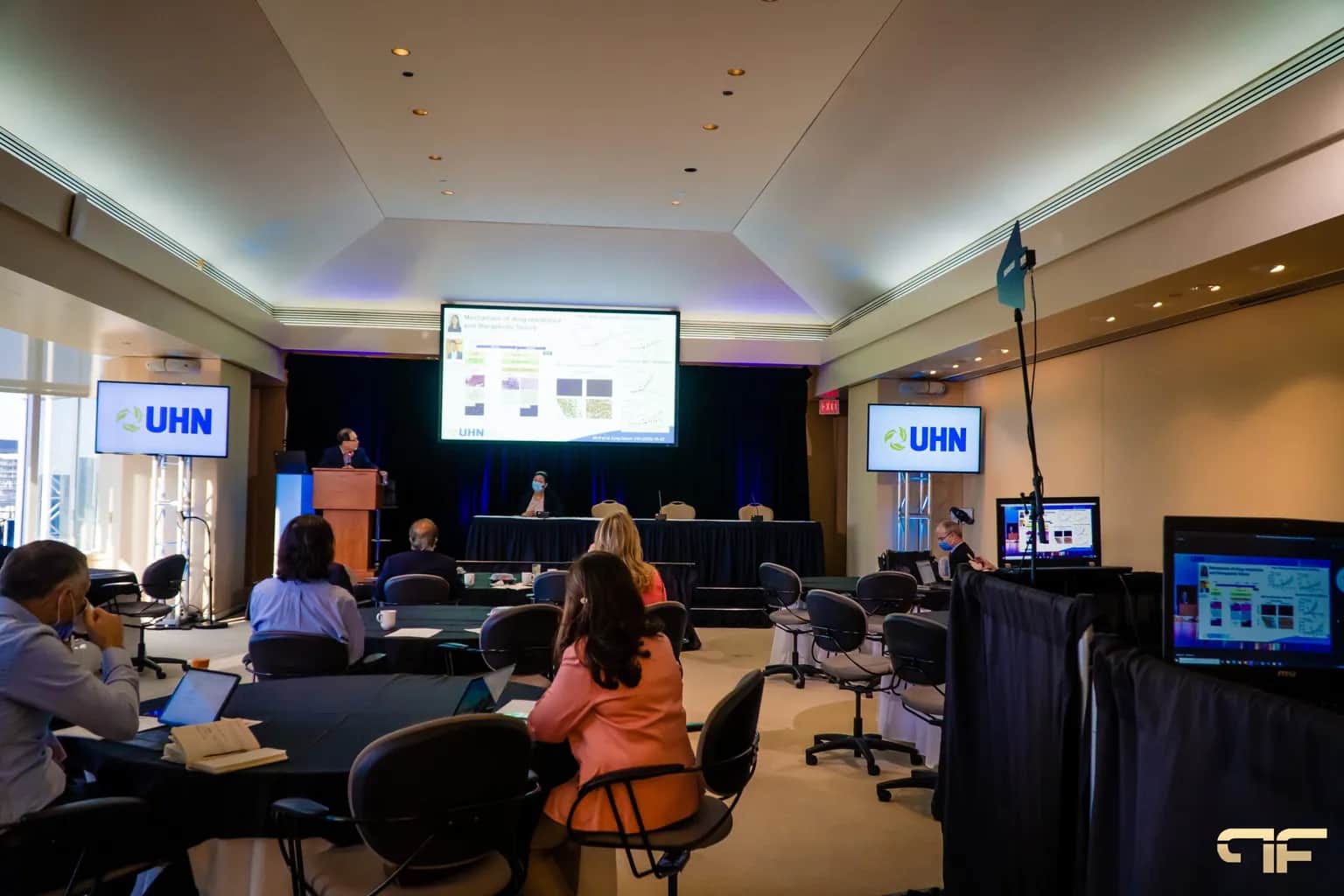
Sales kickoffs usually need two kinds of space: a general session room large enough for the whole team and several breakout rooms for smaller groups. The general session room drives most production decisions.
Check the ceiling height for lighting and screens, the room's width for sightlines, the available power, and the load-in route. A shallow room or low ceiling changes what kind of screen and set you can use. A structured event venue walkthrough checklist helps make sure nothing gets missed.
Plan the seating for the format. Theatre seating suits keynotes; rounds suit workshops and the awards dinner. If the same room changes over during the day, the changeover time belongs in the schedule.
3. Design a stage and set that carry the theme
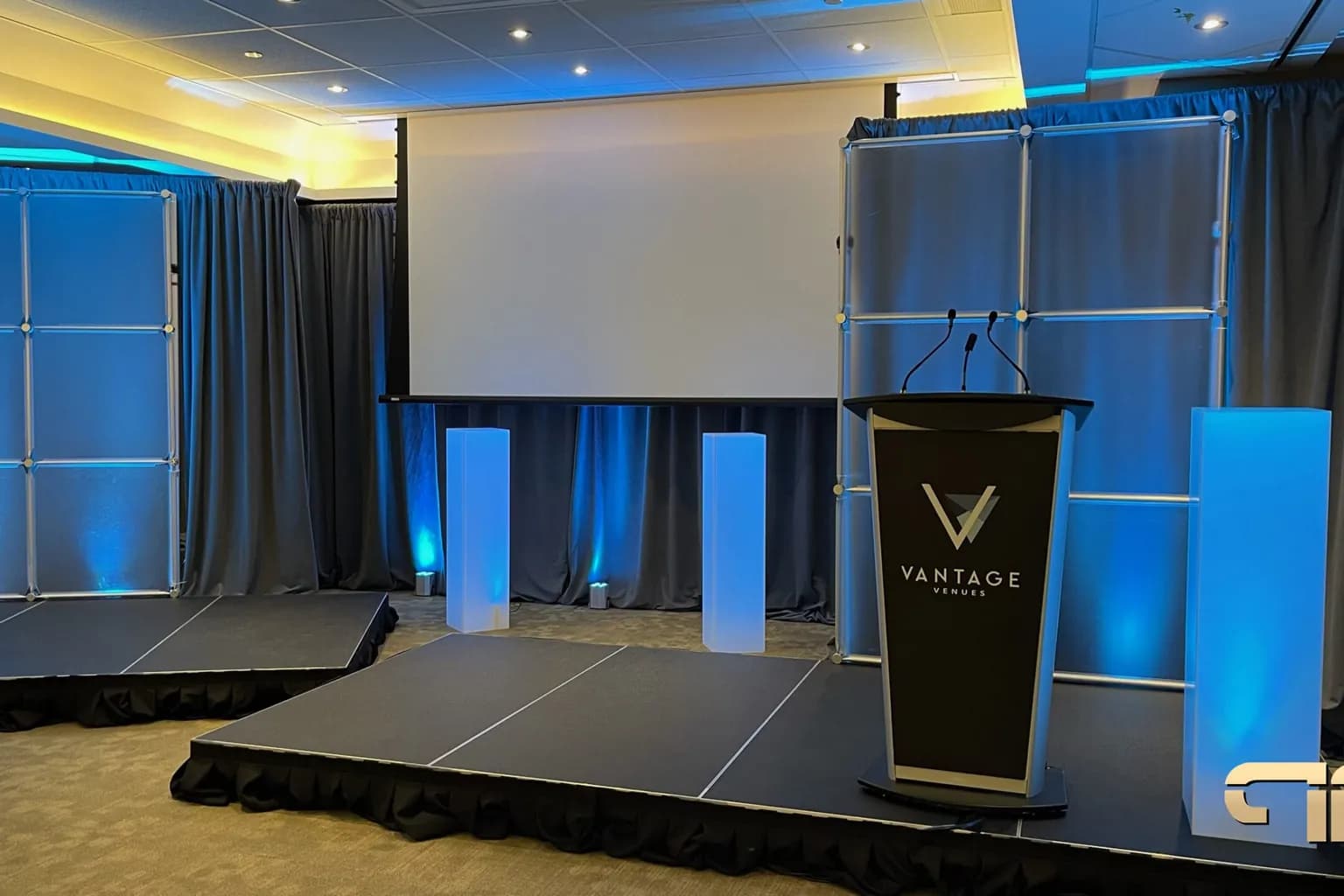
Most SKOs have a theme for the year, and the stage is where it comes to life. A branded set with a large screen, coloured lighting, and the theme graphics makes the general session feel like an event rather than a meeting.
Size the stage for what will happen on it: a single keynote speaker, panel discussions, product demos, and award presentations with several people on stage at once. Guidance on event stage size helps match the stage to the room and the program, and professional staging makes sure it is safe and solid.
Keep the look consistent across the day. Breakout rooms, the registration area, and the evening reception should feel part of the same event.
4. Plan screens and content for a long day
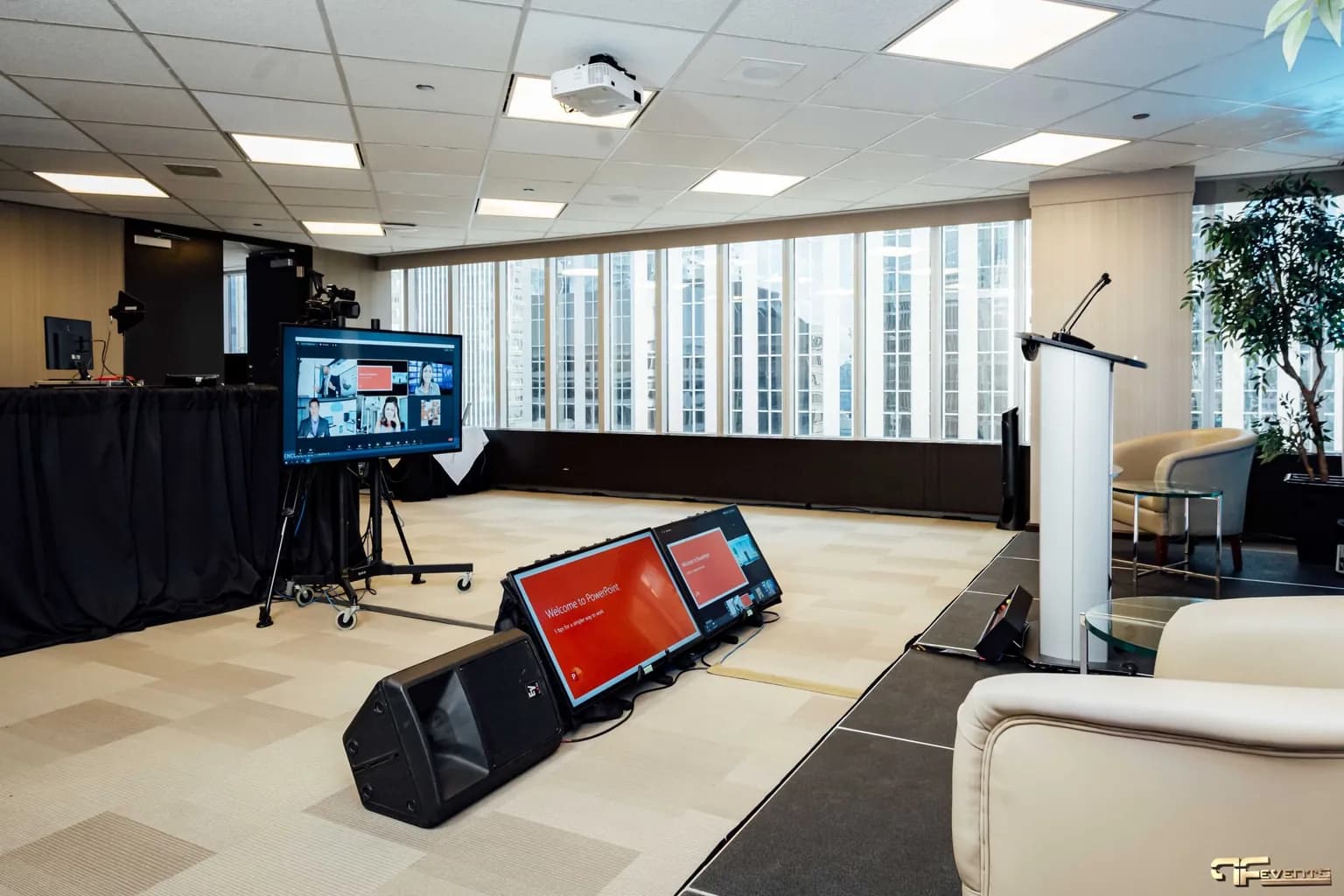
Sales kickoffs are content-heavy. Revenue numbers, product slides, demo videos, customer testimonials, and recognition graphics all have to look sharp and play on cue.
Choose screens that suit the room. In a bright ballroom or a room with windows, an LED screen keeps slides readable; in a darker room, projection can work well. In a wide room, side screens help guests at the edges. A confidence monitor at the front of the stage lets presenters see their slides and notes without turning their backs to the audience.
Collect every presentation early, in one format, and load it onto the playback system in show order. A clear conference presentation management process avoids the classic SKO problem: a presenter arriving with a new version of their deck five minutes before going on stage.
5. Make every voice clear, from keynote to Q&A
Leaders, product managers, customers, and award winners will all speak during the day. Each one needs to be heard clearly in every seat.
Use headset or lapel microphones for keynote speakers who move around the stage, a lectern microphone for scripted remarks, and wireless handhelds for panels and audience Q&A. Plan the Q&A in advance: roaming handhelds or a standing audience microphone keep questions audible to the room and to anyone watching remotely.
A professional audio visual services team will tune the system for speech, keep an engineer on the console all day, and have spare microphones and batteries ready between sessions.
6. Use music and lighting to manage energy
Energy is the measure most SKOs are judged by, and it does not happen by accident. Music and lighting are the production's main tools for building it.
Plan walk-up music for every main-stage speaker, a high-energy opening for the first session of each day, and upbeat music during breaks and transitions. Change the lighting between segments: a bright, focused look for keynotes, a warmer look for panels and customer stories, and a bigger, more dynamic look for openings and awards.
Short transitions matter more than most organizers expect. Ten silent seconds while a speaker walks to the stage feel like a minute; the right track and a lighting change make the same ten seconds feel like part of the show.
7. Give breakout rooms the same care as the main stage
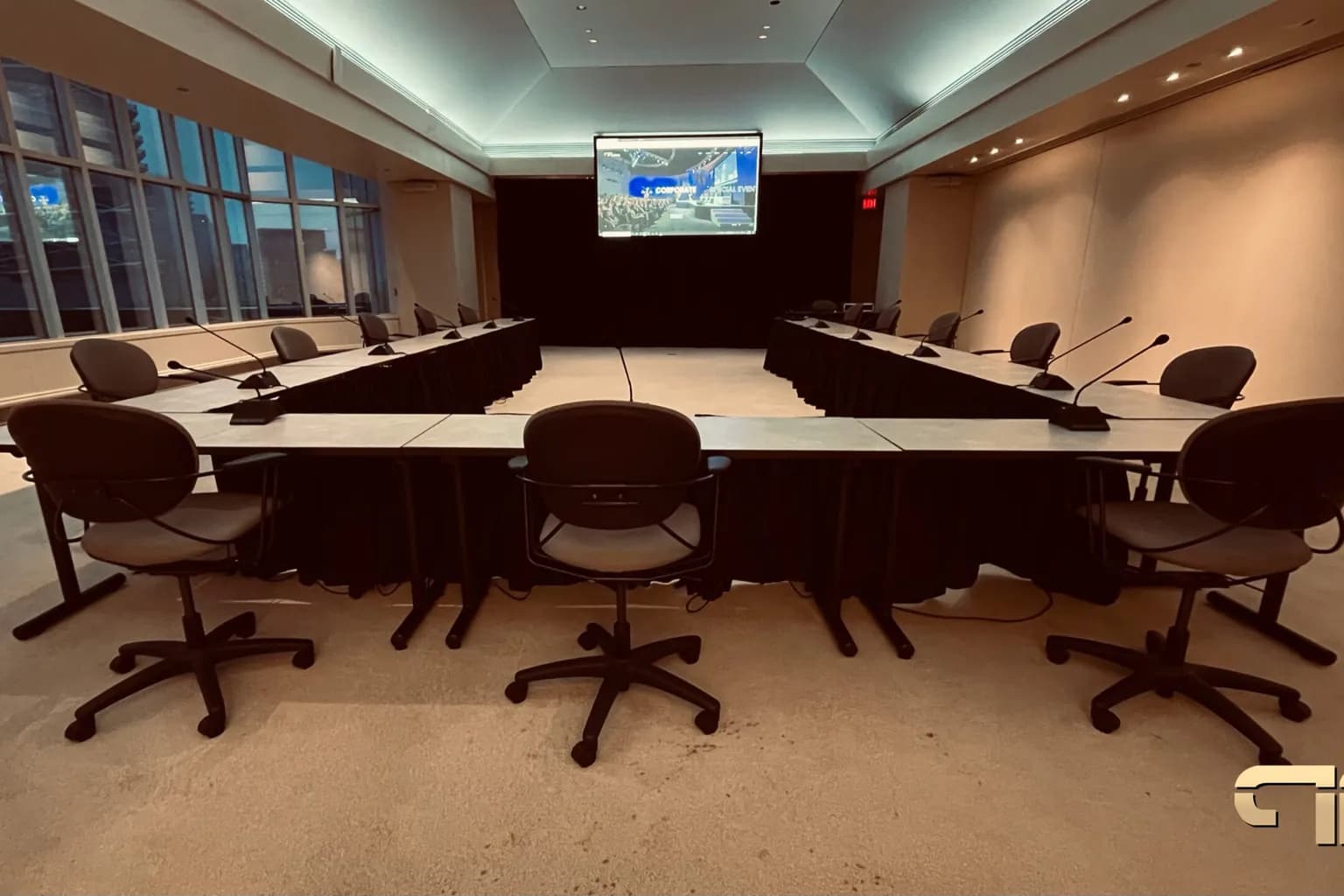
A large part of every SKO happens in breakout rooms: product training, regional meetings, and skills workshops. These sessions often have weaker AV than the main stage, and attendees notice.
Each breakout room needs a screen that is readable from the back, a reliable laptop connection, clear audio for the presenter, and a technician who can solve problems quickly. If sessions are recorded for later training, plan the recording setup per room. A breakout room AV checklist covers the details.
Schedule enough time between sessions for presenters to set up and test their content. A five-minute changeover with a different laptop in every session is a common source of late starts.
8. Plan recognition like a show of its own
Recognizing top performers is one of the most powerful moments of a sales kickoff, and it deserves the same production as an awards ceremony: a show-order presentation with every winner's name checked, walk-up music, a reveal cue on the lights, and a photo position on stage.
Keep it moving. Agree in advance on the number of awards, whether winners speak, and how long each presentation lasts. The same planning that makes a dedicated awards show production run on time applies to the SKO recognition segment.
9. Include remote reps and record the day
Most sales organizations have reps who cannot travel: international teams, new hires, or people covering accounts. A livestream or hybrid format keeps them part of the kickoff instead of reading a summary afterwards.
Plan the camera positions, the program feed with slides and speakers, and the audio feed for remote viewers. Confirm the venue's internet capacity early; event bandwidth requirements for streaming are often higher than the venue's standard package. If you want remote reps to ask questions, decide how those questions reach the stage.
Recording the main sessions is worth it even without a livestream. Keynotes and training sessions become onboarding content for the rest of the year. Hybrid event production brings the in-room and remote experiences together.
Sales Kickoff Event Production Planning Matrix
| Area | What to confirm | Common risk |
|---|---|---|
| Message | The year's strategy, theme, and what changes for reps | A long day with no clear takeaway |
| Venue | General session room, breakouts, ceiling, power, changeovers | Screens and set that do not fit the room |
| Stage | Size for keynotes, panels, demos, and awards; branded set | A cramped stage or a set that looks like a meeting |
| Screens | Screen type and size, side screens, confidence monitors | Slides unreadable from the back or the sides |
| Content | Deck deadline, one playback system, show-order loading | Last-minute deck changes and wrong versions on screen |
| Audio | Headsets, lectern, handhelds, Q&A plan, spares | Questions no one can hear, dead batteries |
| Energy | Walk-up music, transitions, lighting looks per segment | Silent gaps and a room that slowly loses focus |
| Breakouts | Screen, audio, laptop connections, a technician per room | Late starts and training sessions that fall flat |
| Remote reps | Cameras, program feed, internet capacity, recording | A stream that drops or is impossible to hear |
Common Sales Kickoff Production Mistakes to Avoid
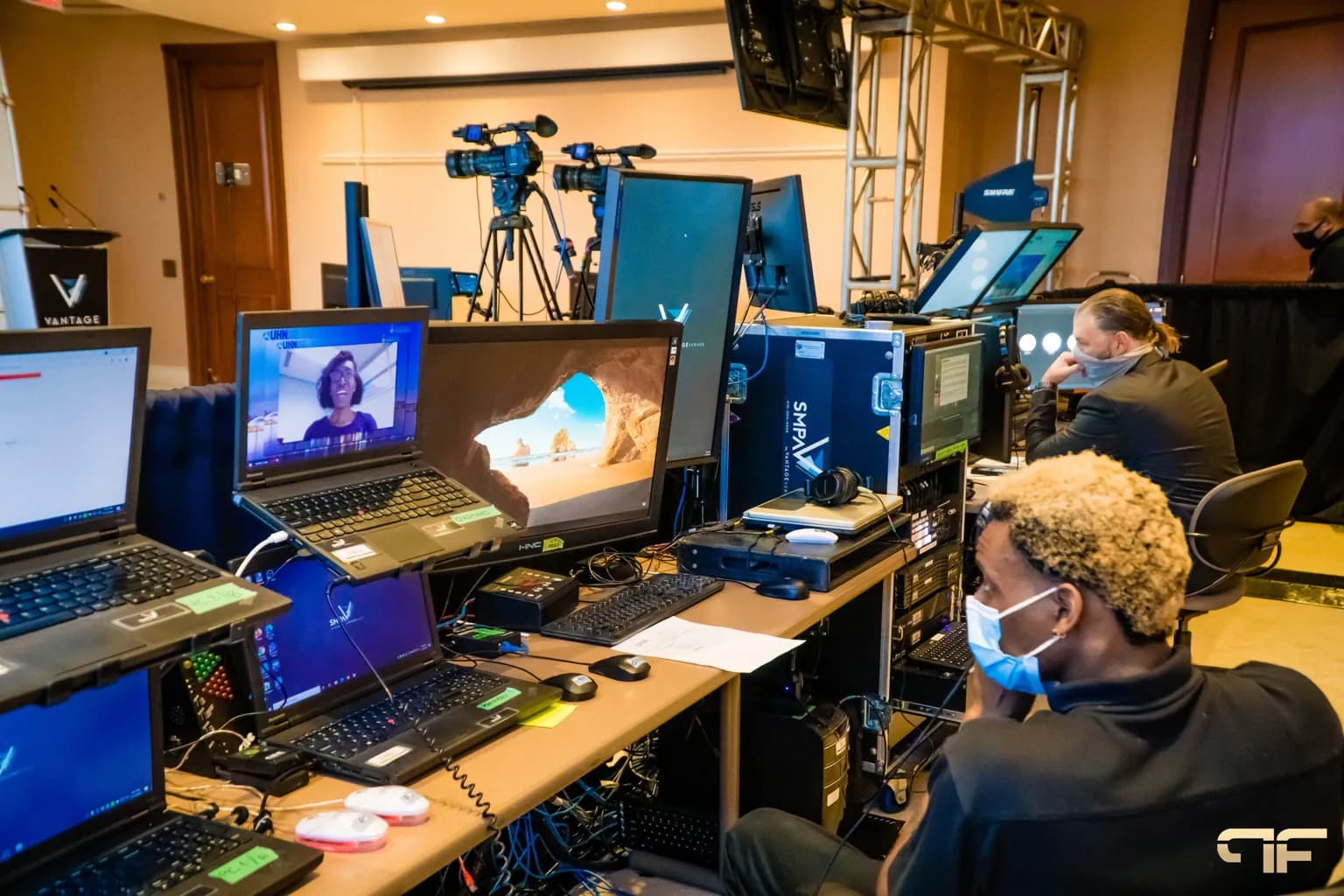
Most SKO problems are not technical failures. They come from treating a full-day, high-stakes event as if it were a large meeting.
The first mistake is an overloaded agenda. Too many speakers and too little time for breaks leave the room exhausted by mid-afternoon. Fewer, stronger sessions keep attention higher.
The second is late content. Product teams often finalize their slides the night before. Set a content deadline at least a week ahead and hold a speaker rehearsal on site.
The third is ignoring transitions. Every changeover between speakers is a chance to lose the room, and walk-up music and lighting cues are an inexpensive way to keep it.
The fourth is forgetting the reps who are not there. A stream that cannot be heard or a recording that never gets shared sends a message to the remote team too.
When should you start planning a sales kickoff?
For a January or February kickoff, start in the fall. Three to four months is a common planning window for a mid-sized SKO, and larger multi-day events often need more. Booking the venue and the production team early matters most, because early-year dates fill up quickly.
How much does sales kickoff production cost?
It depends on the scale. A half-day kickoff for fifty reps in a hotel meeting room needs much less than a two-day event for several hundred people with a built set, LED screens, multiple breakouts, and a livestream.
The main cost drivers are attendance, the number of rooms, screens and set design, lighting, camera and streaming needs, crew size, and the number of days, including rehearsal and load-in. Deciding early which moments matter most lets the budget go where the team will feel it.
Should a sales kickoff be in person or hybrid?
In person creates the energy and connections that most companies want from an SKO, so the main event usually works best in a room. A hybrid stream extends it to reps who cannot travel. Many companies combine the two: a full in-person event with a livestream of the main sessions and recordings of the breakouts.
Plan Your Sales Kickoff Event Production With Future's Past Events
A great sales kickoff feels effortless to the people in the room. The message is clear, the content plays on cue, the energy builds through the day, and every rep leaves knowing what the year looks like.
Future's Past Events has more than 20 years of experience producing corporate events, conferences, and recognition programs across Toronto and the GTA, with staging, lighting, sound, screens, breakout AV, recording, and hybrid streaming. Bringing the production team in during the fall makes it easier to secure early-year dates and design the day around your message.
If you are planning a sales kickoff, national sales meeting, or annual company kickoff, contact Future's Past Events with your dates, venue, attendance, number of breakouts, and any streaming plans. A clear sales kickoff event production plan lets your team focus on the message instead of the equipment.
Related posts
Awards Show Production: 10 Steps to a Ceremony That Runs on Time
Awards show production is what turns a list of winners into a night people remember. Every category needs a clean reveal, every winner needs to reach the stage without a long silence, and the whole program has to finish before the room loses its energy. That only happens when the show is…
Corporate Holiday Party AV: 9 Steps to a Memorable Year-End Night
Corporate holiday party AV decides whether the evening feels like a celebration or like a conference room with a buffet. The CEO's toast has to be heard over three hundred conversations, the year-in-review video has to play on cue, and the room has to change from dinner to dance floor without…
Town Hall AV: 9 Steps to a Clear, Reliable Corporate Town Hall
Town hall AV can make the difference between a leadership message that feels clear and confident and one that gets lost in weak audio, hard-to-read slides, awkward transitions, or a poor remote experience. A corporate town hall may look like a simple meeting, but once you add executives, audience Q&A, presentations,…