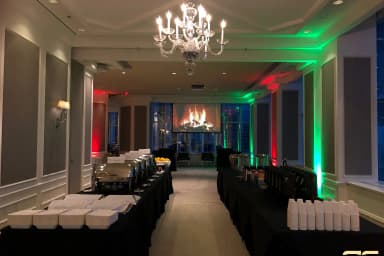
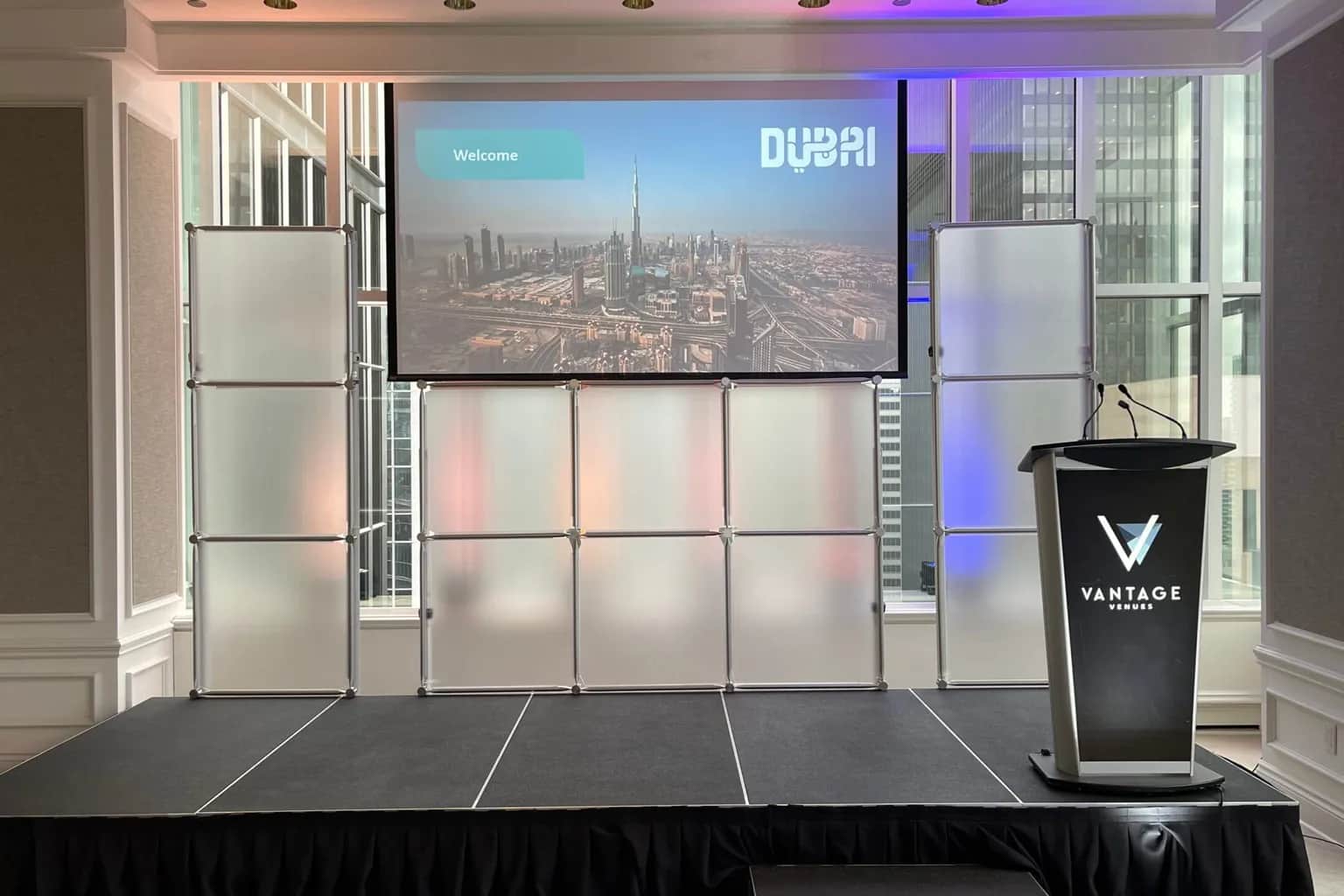
LED wall vs projector is one of the first technical decisions in any event plan, and one of the easiest to get wrong. Both can put a large, sharp image in front of your audience. But they behave very differently in a bright room, a shallow room, or a room full of stage lighting, and the wrong choice shows up immediately: washed-out slides, a screen that blocks half the stage, or a budget spent on brightness nobody needed.
There is no answer that is right for every event. The best screen depends on your room, your content, your audience, and your budget. This guide explains how each technology works, where each one wins, and the questions that decide it for your event.
How an LED Wall and a Projector Create an Image
The difference starts with where the light comes from.
A projector shines light onto a screen, and the audience sees the light reflected back. The image is only as bright as the projector's output after it has travelled across the room and bounced off the surface. Any other light that falls on the screen, from windows, chandeliers, or stage lights, competes with the image and washes it out.
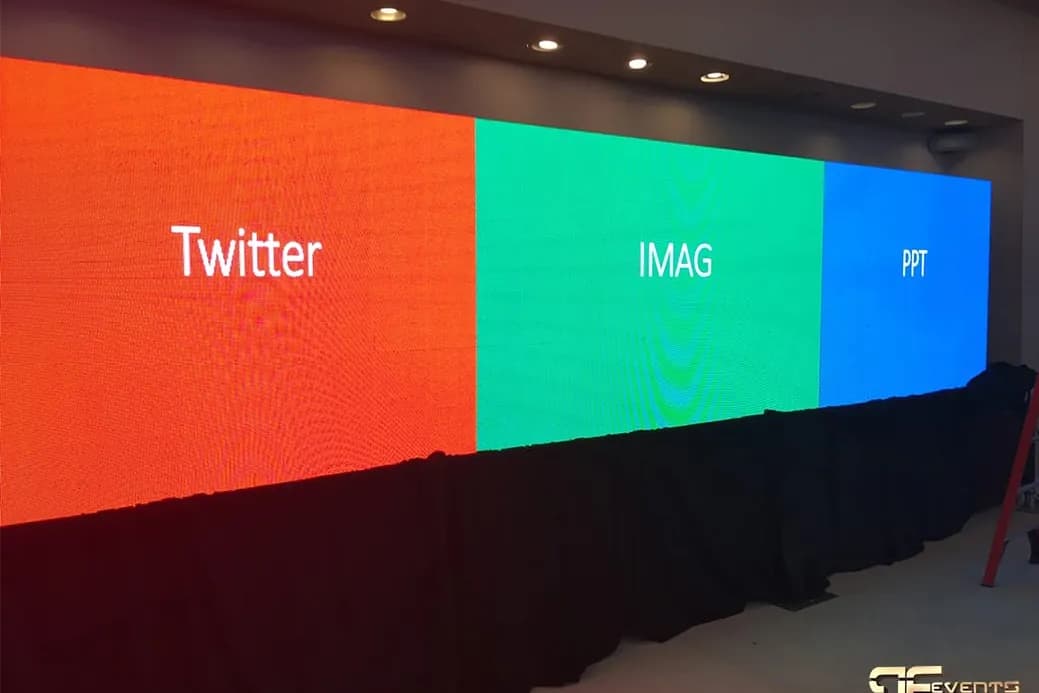
An LED wall is made of modular panels covered in tiny light-emitting diodes. Each diode produces its own light, so the image does not depend on a dark room. The panels are joined together to build a screen of almost any size or shape.
That one difference explains most of the trade-offs that follow.
LED Wall vs Projector: The Key Differences
Brightness and ambient light
This is where LED walls have their biggest advantage. Because they emit light, LED walls stay bright and vivid in rooms with windows, daylight, house lights left on for note-taking, or strong stage lighting.
Projectors perform best in rooms where the light can be controlled. In a darkened ballroom, a correctly sized projector produces a large, clean image. In a bright atrium or a room with a wall of windows, even a powerful projector can look faded, especially in dark areas of the image.
If you cannot control the light in your room, an LED wall is usually the safer choice.
Image quality and contrast
LED walls produce deep blacks, strong contrast, and saturated colours, because each part of the screen can be dimmed or switched off independently. Video, animation, and brand colours tend to look rich and vivid.
A projector's contrast depends heavily on the room. Its black is only as dark as the unlit screen, so in a room with any ambient light, blacks turn grey and colours look softer. In a dark room, modern projectors deliver excellent image quality for presentations and video.
Pixel pitch and viewing distance
An LED wall's sharpness is set by its pixel pitch, the distance between pixels in millimetres. A smaller pitch means more pixels, a sharper image at close range, and a higher cost.
A common rule of thumb is that the closest comfortable viewing distance, in metres, is roughly equal to the pixel pitch in millimetres. A 3 mm wall looks smooth from about three metres away; closer than that, guests may see individual pixels. For a conference where the front row sits close to the stage, pitch matters. For a large room where most guests are far from the screen, a slightly larger pitch is often fine and saves budget.
Projectors do not have visible pixels at normal viewing distances, so fine text and detailed spreadsheets can look smooth on a well-focused projection screen, as long as the room is dark enough.
Room size, throw distance, and stage space
A projector needs a clear path between the lens and the screen, called the throw distance. Front projection puts the projector in the audience area, where people can walk through the beam and cast shadows. Rear projection avoids that, but needs several metres of space behind the screen, which takes depth away from the stage or the room.
LED walls need no throw distance at all. They can be built directly at the back of the stage, which suits shallow rooms, low ceilings, and venues where floor space is tight. A structured walkthrough of the venue tells you quickly whether a projector has the space it needs.
Size, shape, and creative flexibility
Projection screens come in standard sizes and aspect ratios, and very large images are possible when the room has the depth for them. Projection can also be used on unusual surfaces, such as building facades, scrims, and scenic pieces, through projection mapping.
LED walls are modular. Panels can be combined into wide formats, tall columns, curves, or several separate screens that work as one canvas. That makes them popular for stage designs where the screen is part of the set rather than a rectangle above it.
Setup, rigging, and power
Projection is generally lighter and quicker to install. A projector, a screen, and a cable run can often be set up in a few hours with a small crew.
LED walls are heavier and take longer. The panels have to be built on a ground support structure or flown from rigging points, then calibrated so every panel matches. They also draw significantly more power, which needs to be planned with the venue in advance. Our guide to event power requirements covers the questions to ask. Build the extra setup time into your load-in schedule.
Cost
Projection is usually the more economical option, particularly for a single screen in a room where the light can be controlled.
LED walls cost more to rent, transport, build, and run, and the price rises with screen size and finer pixel pitch. For many events, the higher cost is justified by the brightness, the impact, and the freedom to keep the room lit. For others, a well-designed projection setup delivers everything the event needs at a lower budget.
LED Wall vs Projector Comparison Table
| Factor | LED wall | Projector |
|---|---|---|
| Bright rooms | Excellent; stays vivid with lights and daylight | Struggles; image washes out without light control |
| Contrast and colour | Deep blacks, saturated colour | Good in the dark, softer in ambient light |
| Sharpness up close | Depends on pixel pitch | Smooth image, no visible pixels |
| Space needed | No throw distance; fits shallow rooms | Needs throw distance or space behind the screen |
| Shape and size | Modular; wide, tall, curved, or split screens | Standard formats; very large images in deep rooms |
| Setup | Heavier, longer build and calibration | Lighter and quicker to install |
| Power | Higher | Lower |
| Cost | Higher | Usually lower |
Which Is Better for Your Type of Event?
Conferences and corporate meetings
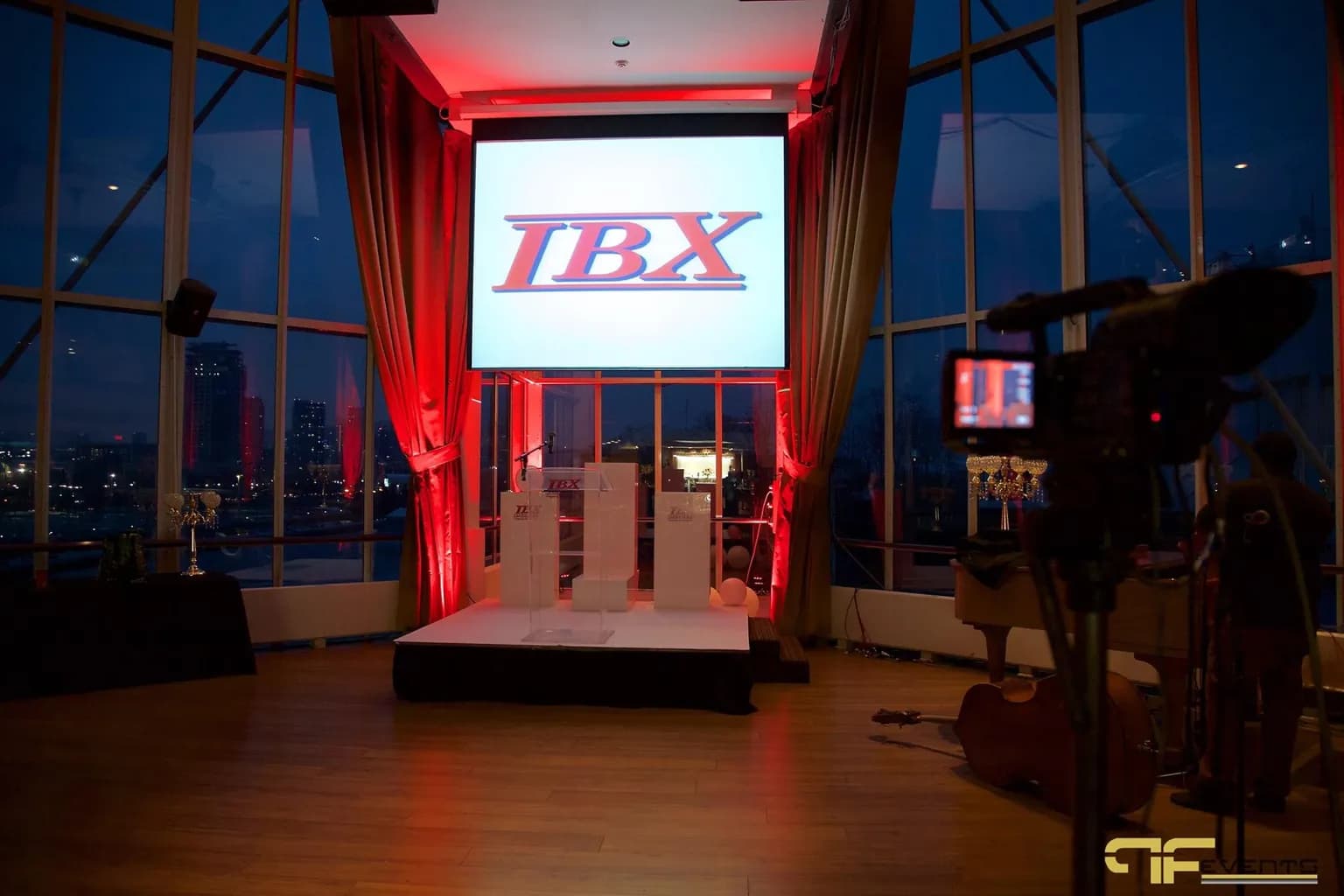
Conferences are content-heavy, often run with the house lights partly up so attendees can take notes, and sometimes in rooms with windows. An LED wall keeps slides readable in those conditions. For a smaller meeting in a room you can darken, projection is often the more economical choice. For breakout rooms, projection or large displays usually make sense.
Galas, awards nights, and celebrations
Galas and awards ceremonies often use dramatic lighting and change the look of the room through the evening. An LED wall can be part of the stage design and stays bright under stage lighting. Projection works well too, especially in a dark ballroom where the screen mainly shows logos, slides, and video.
Product launches and brand events
When the screen is part of the experience, LED walls give the most creative freedom: unusual shapes, bright content, and a seamless canvas for reveals and video. Projection mapping is an alternative when the goal is to transform a building, a vehicle, or a sculptural set.
Outdoor events
Daylight is the hardest environment for any screen. Outdoor-rated LED walls are built to be bright and weather-resistant, so they are the usual choice for daytime events. Projection outdoors generally works only after dark.
Hybrid and filmed events
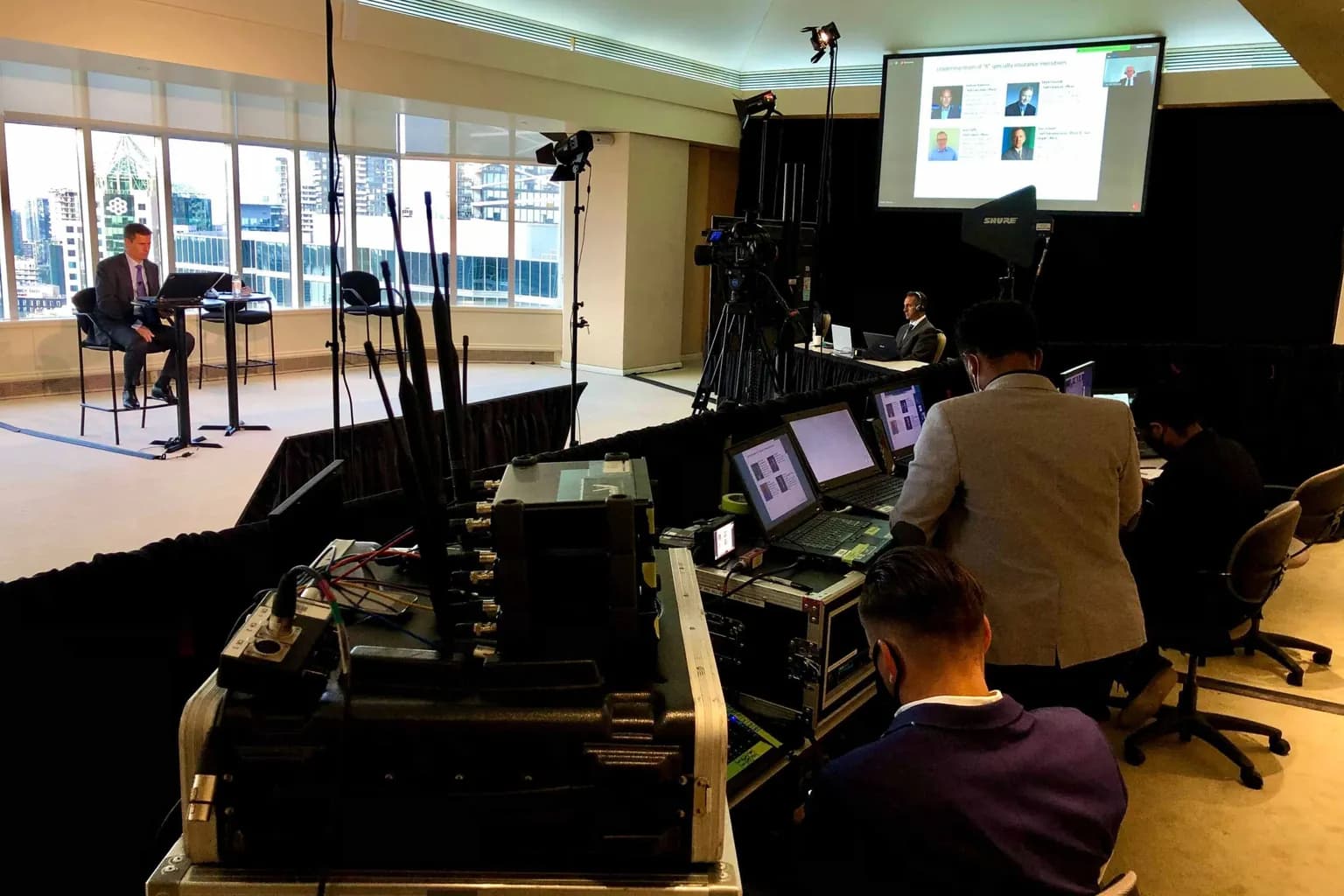
Cameras see screens differently from people. LED walls can look excellent on camera, but they need to be set to the right brightness and checked with the cameras in use, or they can flicker or overexpose. Projection is usually easy to film, as long as the room light is balanced for the camera.
Questions That Decide It for Your Event
When you are unsure, work through these questions in order:
- How bright is the room? Windows, daylight, or house lights that must stay on point towards an LED wall.
- How deep is the room? If there is no space for throw distance or rear projection, an LED wall solves the problem.
- How close is the front row? A close audience needs either a finer pixel pitch or projection.
- Is the screen part of the design? Unusual shapes, curves, and multiple screens favour LED.
- What is the content? Detailed text and spreadsheets look good on projection in a dark room; video and bold graphics shine on LED.
- What is the budget? If the room can be darkened and the screen is a standard size, projection usually delivers more for less.
- How much time is there for load-in? A short setup window may favour projection.
Many events use both: an LED wall on the main stage, with projection or displays in breakout rooms, or projection for side screens beside a central LED wall.
Is an LED wall always better than a projector?
No. An LED wall is better in bright rooms, shallow rooms, outdoors, and when the screen is part of the stage design. A projector can be the better choice in a room where the light is controlled, for standard screen sizes, for projection mapping, and when budget matters most.
What pixel pitch do I need for an event LED wall?
It depends on how close the nearest guests sit. As a rough guide, the minimum comfortable viewing distance in metres is about the same as the pixel pitch in millimetres. Indoor event walls commonly use pitches of around 2 to 4 mm; your AV team can recommend a pitch based on your room layout.
How bright does a projector need to be for an event?
It depends on the screen size and how much light is in the room. A small meeting room with the lights dimmed needs far less output than a large ballroom screen with the house lights partly on. A production team will size the projector to the screen and the room after seeing the venue, rather than relying on a single brightness number.
Choose the Right Screen With Future's Past Events
The right screen makes your content clear, your stage look intentional, and your audience comfortable from the front row to the back. The wrong one is visible to everyone in the room.
Future's Past Events has more than 20 years of experience designing screens, staging, lighting, and sound for conferences, galas, and corporate events across Toronto and the GTA. The team can assess your venue and recommend LED, projection, or a combination of both, including LED screen rental in Toronto and full audio visual services with technicians on site.
If you are deciding between an LED wall and a projector, contact Future's Past Events with your venue, date, room layout, guest count, and the kind of content you plan to show. A short conversation about the room usually settles the question quickly.
Related posts
Sales Kickoff Event Production: 9 Steps to an SKO That Energizes the Team
Sales kickoff event production decides whether your SKO sends the team into the new year fired up or quietly checking email. A sales kickoff asks a lot of a single day: leadership has to set the strategy, product teams have to launch what is new, top performers have to be recognized, and…
Awards Show Production: 10 Steps to a Ceremony That Runs on Time
Awards show production is what turns a list of winners into a night people remember. Every category needs a clean reveal, every winner needs to reach the stage without a long silence, and the whole program has to finish before the room loses its energy. That only happens when the show is…
Corporate Holiday Party AV: 9 Steps to a Memorable Year-End Night
Corporate holiday party AV decides whether the evening feels like a celebration or like a conference room with a buffet. The CEO's toast has to be heard over three hundred conversations, the year-in-review video has to play on cue, and the room has to change from dinner to dance floor without…